
Clear Without Coldness
This week, keep connected with our spirit through challenging times, creating space for love and Shen to flow, and we are NOT exempt from worth and value. Finally living in the unknown.

“We choose to stand in quiet clarity, rooted in truth, honesty, and integrity, trusting that our calm is not weakness but alignment with the Tao’s effortless flow. As we walk this path together, we discover that peace does not ask us to ignore the world, but to meet it wisely, inviting us to read on and uncover how we remain warm, clear, and unshaken within it.”
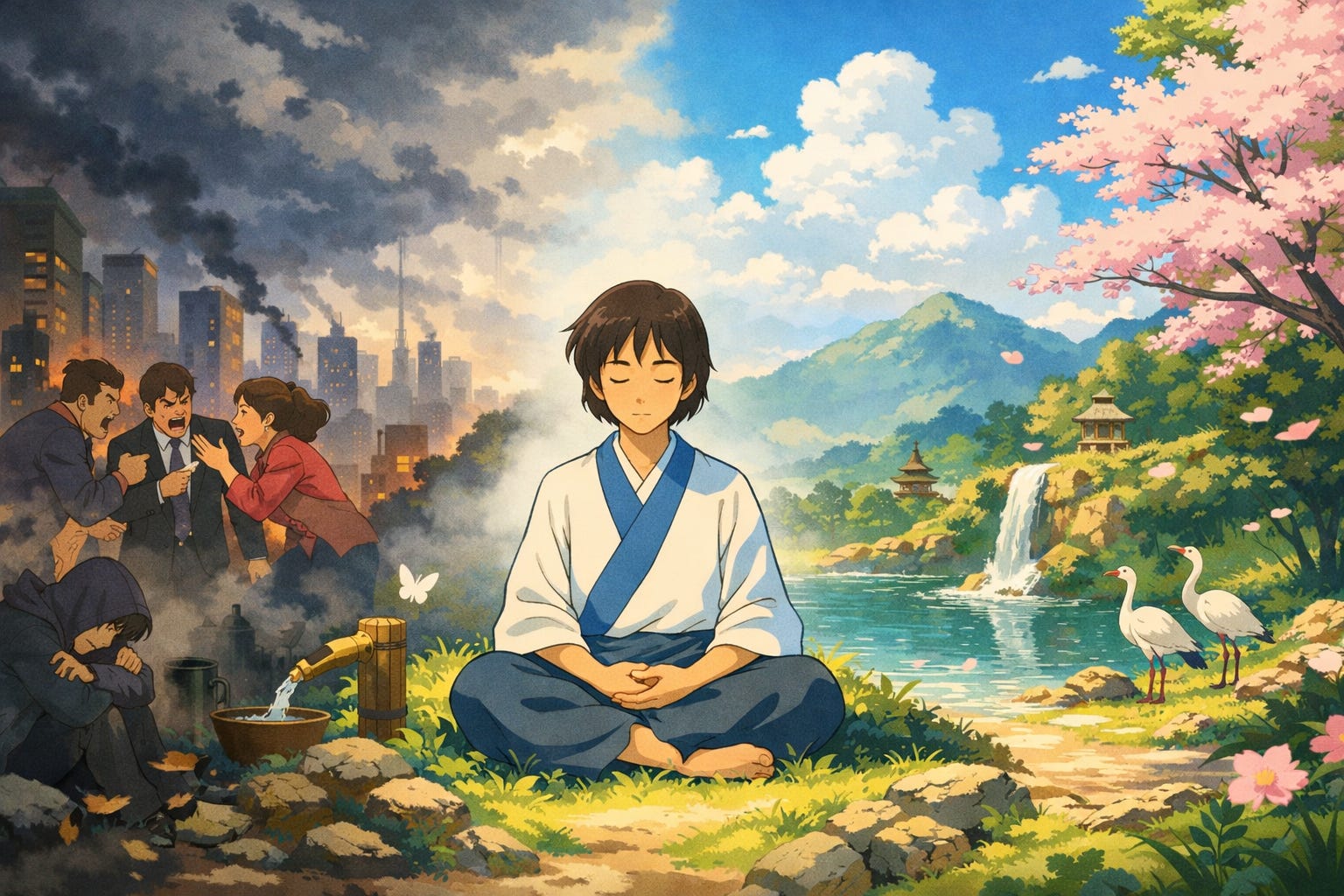
Have you ever looked at the world and questioned how we are meant to stay connected to our spirituality when life seems unfair, unjust, or even against us? When people act in ways that seem harsh, selfish, manipulative, or dishonest, do you begin to doubt the very path you are trying to walk? Have you tried to practise wu wei, effortless effort, only to realise it is far easier when life is calm, people are kind, and everything flows smoothly? And in those moments, do you start to wonder whether staying calm and accepting risks blurs our moral clarity, quietly excusing what you know, deep down, should never be excused?
This is one of the most important questions on the Taoist path, because it brings us out of theory and into real life. It asks what happens when truth meets confusion, when authenticity meets Criticism, Comparing and being Judgmental (CCJ), and when our Shen meets a world where many still act from fear, emotional logic, greed, and unresolved issues. How do we practise wu wei in a world that seems to resist it? Does peace become passivity? Does compassion become weakness? Does acceptance become approval? These are not small questions. They sit at the centre of how we live, how we respond, and how we stay connected to our spirit without being shaped by the very misalignment we claim to oppose.
The answer begins with a distinction that can change everything. Reality itself is not the same thing as the confused behaviour taking place within it. The Tao is not the lie, the manipulation, the cruelty, or the selfish action. The Tao is the deeper order beneath life, the living flow in which all things arise. Human beings, however, still make choices. They can live from Shen, or they can live from beliefs they have never questioned, from indoctrination, from victim or emotional logic, and from their Inner Child’s misguided attempts to gain control, certainty, or sympathy. When we fail to make this distinction, we begin blaming life itself for the choices of misaligned people, and that is where our suffering deepens.
Reality Is Not Misalignment
When rain falls on a prison roof, we do not blame the rain for what happens inside the prison. When the sky stretches above an argument, we do not accuse the sky of causing the shouting below. In the same way, we do not need to confuse the stage with the actors, or the river with the person throwing mud into it. The world is not “bad” because people can behave badly. Reality is not broken because human beings can live out of alignment with it.
This distinction matters because our Inner Child often wants to make everything personal and absolute. It nags, reproaches, and pressures us with emotional logic that says, “If bad people exist, life is unsafe.” Or, “If selfishness is rewarded, truth is losing.” Or, “If people can lie so easily, then there is no point in being honest.” These beliefs create red-light emotions that seem convincing because they are intense. Yet intensity is not the same as truth. We often return to the reminder that emotions are meaningful but not the final authority on reality. They are signals that point us back to the belief beneath them.
That is why we must slow down and ask a better question. Not, “Why is the world like this?” but, “What am I believing about life when I see this?” This simple shift returns power to us. It stops us from carrying the whole world inside our emotional system, and it brings us back to what is actually ours to understand and live.
The Tao Te Ching gives us a powerful direction in Verse 59: “Whether serving the Cosmos or showing the way, keep it simple and follow your truth, honesty, and integrity.” This is vital because the world becomes very noisy when misalignment is on display. People exaggerate, accuse, perform, and defend. Our Inner Child often wants to join that emotional noise, because noise can seem like strength. Yet Taoist wisdom calls us back to simplicity. Not simplistic thinking, but a simple inner standard. The ‘Power of Three’: truth, honesty, and integrity. If we keep returning there, we do not become trapped by the chaos around us.
Acceptance Is Not Approval
One of the greatest confusions in spiritual work is the misunderstanding of acceptance. Many people hear the word and immediately think it means agreement, permission, or passive approval. Yet true acceptance is something much more mature and much more useful. Acceptance means we begin with what is true. We say, “This is happening.” “This person is misunderstanding.” “There is manipulation here.” “There is fear here.” “There is selfishness here.” “There is confusion here.” That is acceptance. It is the refusal to distort reality just because reality is uncomfortable.
Approval is something else entirely. Approval says, “This is good,” or “This should continue.” It carries an element of endorsement, even permission. Acceptance, however, is different. Acceptance simply says, “This is here.” Nothing more. It does not judge, excuse, or justify. It recognises reality as it is, without adding a story about whether it is right or wrong. Taoist wisdom asks us to stop arguing with reality and accept it, so we can meet it honestly. Because if we cannot see clearly what is happening, we cannot respond wisely.
When we confuse acceptance with approval, we resist what is already present, believing that accepting it means we are somehow agreeing with it. But this is the Inner Child’s logic. It believes that acknowledging something makes it acceptable and, therefore, permanent. So it demands that reality be different first, before we take responsibility for how we respond. It wants immediate correction, because it believes peace can only come once the external world is arranged to its preference.
But peace does not work like that. As we’ve explored before, ‘we are not at the mercy of what happens, we are the creators of how we respond to it.’ Acceptance is what allows us to take that responsibility. It creates clarity. And from clarity, we can choose our next step, without denial, resistance, or illusion.
If our peace depends on strangers behaving well, it is permanently unstable. If our alignment depends on liars becoming honest, manipulators becoming sincere, and selfish people becoming compassionate, then we have handed our inner state to forces we do not control. That is not wisdom. That is emotional dependency dressed up as moral concern.
This is where the wu wei teachings become beautifully practical. Wu wei does not mean we become passive and float through life pretending everything is lovely. It means we stop forcing reality to match our demands, and instead respond in alignment with what is true. We see clearly. We choose wisely. We act where action is ours. We release what was never ours to control. As our Tao Te Ching translation reminds us, “authenticity strengthens our virtue and connects us to what does not run dry.” This is not a weakness. It is steadiness.
Discernment Without Poison
This brings us to another essential distinction. We absolutely must judge actions. If someone lies, exploits, manipulates, humiliates, or harms, we should be able to say clearly that the action is misaligned. Truth that cannot name harm is not truth at all. It is avoidance in spiritual clothing. Yet there is a profound difference between judging an action and becoming judgmental about a person.
To judge an action is to discern. It is to say, “This behaviour is dishonest,” or “This choice is harmful.” “And this is why”. Remember ‘what do you believe and why do you believe it’. To become judgmental is something else. It is to step into superiority, emotional intoxication, condemnation, and self-righteousness. It is to reduce a whole human being to one part of their behaviour and then build our identity around reacting to it. At that point, even if we are factually correct, we are no longer inwardly spiritually free.
This is the trap many sincere people fall into. They think staying angry proves they care. They think condemnation proves moral seriousness. They think outrage is the same as courage. But outrage is often our Inner Child trying to regain certainty through emotional heat. It pesters us to stay active because calm seems too vulnerable. It criticises stillness because it doesn’t look dramatic enough. It troubles us that we believe that if we stop condemning, we are letting harm win. Yet real strength is quieter than that.
The I Ching teaching on restraint and power speaks directly to this. We are reminded that “In restraint and humility, we uncover the true essence of strength,” and that true power lies in knowing when to hold back rather than forcefully advance. This is deeply relevant when we are dealing with difficult people and troubling behaviour. We do not need to become cold to be clear. We do not need to become harsh to set boundaries. We do not need to become superior to recognise misalignment.
In our previous teaching, one line captures this beautifully: “From restraint comes clarity. From clarity, alignment. From alignment, compassion.” That sequence matters. First comes restraint, because restraint stops our Inner Child from hijacking the moment. Then comes clarity, because when we are no longer reacting wildly, we can actually see and act from Shen. Then comes alignment, because truth becomes easier to live with when it is not mixed with theatre. And finally, compassion, not as weakness but as the natural result of seeing clearly without poisoning ourselves.
This is what ‘Clear Without Coldness’ really asks of us. Not niceness. Not passivity. Not pretending that everything is fine. It asks for warmth with wisdom, truth without performance, boundaries without bitterness, and compassion without permission for harm.
Returning to Our Centre
So, how do we live this in daily life when the world keeps showing us behaviour that seems deeply confusing?
First, we return to the belief beneath the emotion. If we are overwhelmed by anger, despair, disgust, or hopelessness, we ask, “What am I believing right now?” Perhaps it is, “People should not be like this.” Or, “If lies exist, truth is losing.” Or, “If the world contains selfishness, I cannot be authentic.” Once the belief is named, it can be examined. Does it reflect Shen, or does it reflect our Inner Child’s emotional logic? Does it bring clarity, or does it keep us on the ‘Carousel of Despair’?
Second, we keep our standards personal before we make them global. We ask, “Am I living my truth, honesty, and integrity here?” This question is far more powerful than endlessly asking whether everybody else is. We are not powerless in this world, but our deepest influence begins with the quality of our own conduct. The Tao Te Ching verse on simplicity and authenticity reminds us that “staying true to ourselves strengthens our virtue and lets us guide by example without exhaustion”. This is how we stop adding to the confusion in an already confused world.
Third, we let boundaries serve as an expression of alignment rather than as punishment. We can leave the conversation. We can say “No” instead of the quick “Yes”. We can stop explaining ourselves to people committed to misunderstanding us. We can report what must be reported. We can protect the vulnerable. We can withdraw trust where trust has been broken. None of this requires hatred. None of it requires us to lose our centre. In fact, the clearer the boundary, the less theatre is needed.
Fourth, we must remember that we cannot put our emotions into another person’s body, and they cannot put theirs into ours. What we experience emotionally is created through our interpretations and beliefs. This is not blame, it is freedom. It means no liar gets to determine our worth. No manipulator gets to decide our peace. No selfish person gets to become our internal ruler.
And finally, we take small, consistent, manageable steps. Not grand sweeping vows. Not dramatic reinventions. Just simple daily alignment. We pause before reacting. We name the belief. We choose truer language. We let our Shen lead. We release expectations and CCJ (Criticism, Comparison, and being Judgmental). We do not demand perfection from ourselves while asking for wisdom. We keep returning, one honest choice at a time. This rhythm of small action is already central in our previous teaching, and it belongs here as well, because big change is rarely loud.
As we come to the end of ‘Clear Without Coldness’, we can see that the real task is not to approve of misalignment, nor to become numb to human confusion. The task is to stop handing our spiritual centre over to it. We do not need to deny darkness to live in the light. We do not need to excuse selfishness to remain compassionate. We do not need to be poisoned by condemnation to discern authentically.
We can be warm without being weak, clear without being cold, compassionate without becoming permissive. We can name what is wrong without turning outrage into our identity. And here is the deeper truth: we do not step out of the pattern by fighting it with more emotional force. When we react with anger, condemnation, or moral theatre, we are still moving within the very confusion we claim to change. ‘When we observe the pattern, we cannot be the pattern.’ The Taoist path shows us that patterns dissolve the moment we stop feeding them.
When we return to Shen and guide our Inner Child away from emotional logic and back toward truth, honesty, and integrity, we quietly step outside the cycle. This is why our calm clarity is not weakness but wisdom. We stop multiplying the world’s noise and begin embodying something steadier. That is the deeper path of Taoist maturity. That is wu wei when life is not easy.
So, let us take this into the week ahead in a simple, strong, and manageable way. When our Inner Child complains, badgers, or harangues us with the world’s confusion, let us not follow it into despair. Let us ask instead, “What do I believe right now?” Let us return to truth, honesty, and integrity. Let us choose one aligned action over one dramatic reaction. Let us keep taking small, consistent, manageable steps without expectations and without CCJ.
And let us never doubt ourselves simply because the world is noisy. The world does not need more emotional heat from us. It needs more people willing to live in Shen. It needs more people willing to speak clearly, act cleanly, and remain inwardly aligned while others lose themselves in performance and confusion.
That is the invitation of ‘Clear Without Coldness’. To live with a clear and open spirit and a steady centre of truth, honesty and integrity. To align with our spirit without hardening it. To stay authentic in a world that often rewards pretence. And to remember, again and again, that real change begins when we stop multiplying confusion and start embodying the truth we say we value.
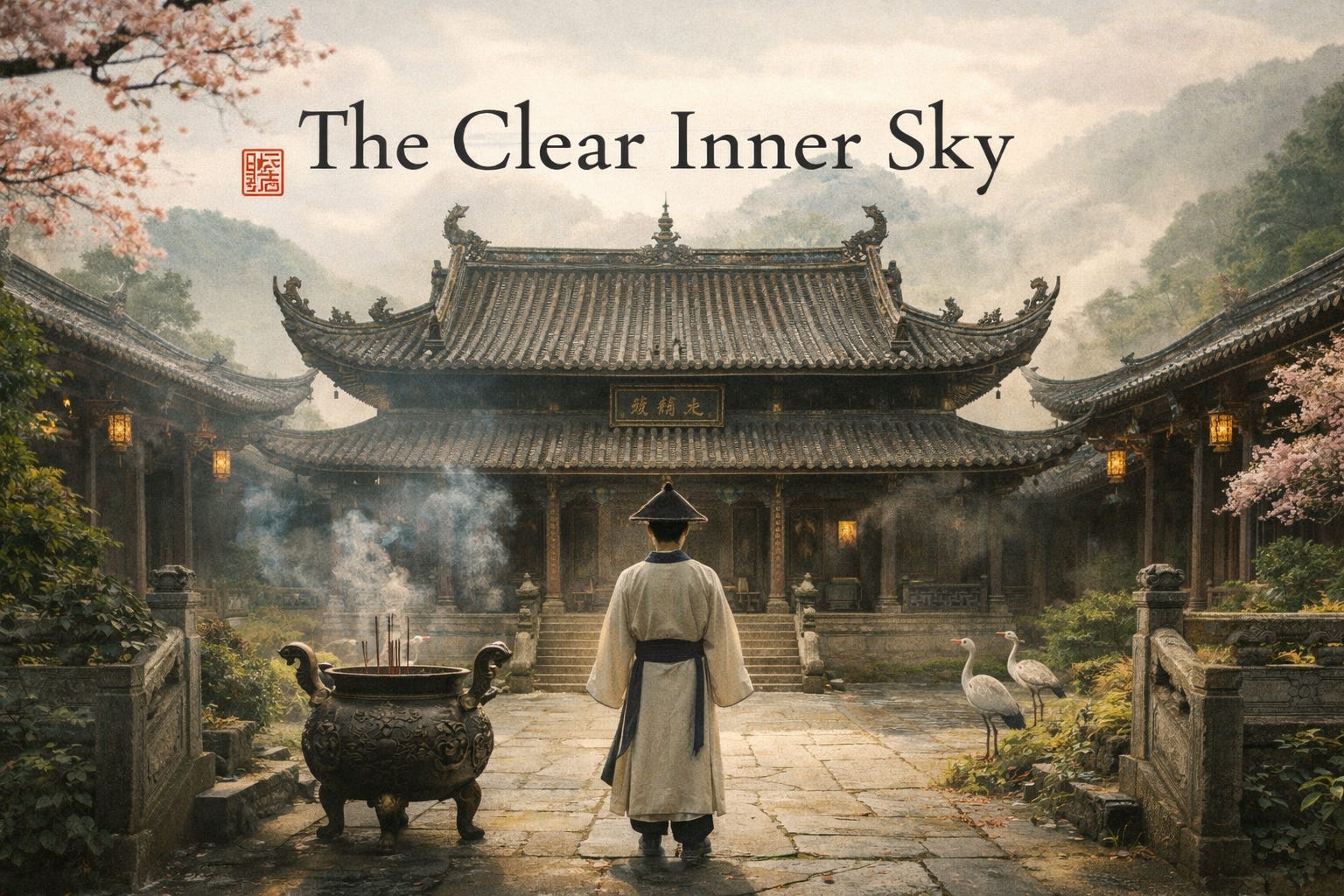
What if the space within us was never meant to be filled by external praise, reassurance, or another person’s love, but kept clear so truth, Qi, and spiritual clarity could move through us? In this journal post, we explore why our Inner Child uses emotional logic to crowd that sacred space with demands and fears, and how Taoist alignment helps us return to the calm, open wisdom of our Shen.
Have you ever noticed how quickly we try to fill an uncomfortable inner space? When silence arrives, do you reach for reassurance? When uncertainty appears, do you search for someone to calm it, explain it, or carry it for you? When a relationship disappoints, or life refuses to conform to our preferences, do you begin to believe that something vital is missing inside you?
This is a painful pattern because it seems so convincing. Our Inner Child nags, complains, and badgers us with the old emotional logic, saying that if someone truly loved us, we would not be this unsettled; if life were going well, we would not be this anxious; if we were enough, we would not need so much reassurance. Yet Taoist wisdom offers us a very different perspective. It teaches us that the quiet inner space is not proof of lack. There is no evidence that we are empty in the wrong way. It is a sacred space, and sacred spaces are meant to remain open.
This matters because many of us have spent years trying to get our life force from the wrong place. We look to people, outcomes, praise, and certainty to provide what only alignment can restore. Then, when those things fail, as they always do, our Inner Child interprets the disappointment as rejection or abandonment. It creates red-light emotions, then uses those emotions as proof that the world, or the people in it, has somehow damaged our worth. But others cannot place worth or emotions in our bodies, nor can they remove them. What we experience emotionally is shaped by our beliefs, interpretations, and the meaning our Inner Child gives to events.
In ‘Clear Inner Sky’, we will explore the sacred function of inner emptiness, the confusion caused when our Inner Child tries to fill that space with expectations, and the Taoist path of returning to wu wei, so that we can live from Shen rather than emotional pressure. We will also consider the counterargument, because some would say that our need for reassurance is natural, that relationships should make us whole, and that emotional intensity must mean something important is happening. Taoism responds with something deeper and steadier: intensity is not the same as truth. Noise is not the same as wisdom. And the space within us is not a void to fear, but a sanctuary to protect.
The Space That Makes Us Useful
One of the most beautiful teachings in our tradition comes through Verse 11 of the Tao Te Ching, where we are reminded: “When a cup is made, it is shaped with a void; It is this space that makes it worthwhile… We also need space and emptiness to live, grow and flourish.”
This is more than poetic philosophy. It is a radical correction to the way our Inner Child sees life. Emotional logic assumes that emptiness means deprivation. It says, “If there is space, something must be missing.” But Taoist wisdom says the opposite. Space is what allows movement. Space is what allows breath. Space is what allows insight, creativity, and alignment. Without space, the wheel cannot turn. Without space, the cup cannot hold. Without space, the room cannot be lived in. And without inner space, Shen cannot be heard clearly.
This helps us understand why so many of us become exhausted. We overload that inner space with what should never have been stored there in the first place. Expectations. Imagined contracts. Emotional bargains. The belief that someone should understand us without us having to speak. The belief that fairness should arrive on demand. The belief that being loved should remove all inner tension. The belief that if another person changes, our emotional world will finally settle.
Yet none of these beliefs is true. They are attempts by our Inner Child to use emotional logic to create a sense of certainty and fairness. That part of us does not want open space. It wants guarantees. It wants promises. It wants protection from uncertainty. So, it clutters our inner life with “should,” “might,” and “what if,” and then wonders why peace has gone missing. In our previous teaching, this was said so clearly: “Emptiness is not a punishment, it is a meeting place.” That is the doorway. The space is not here to torment us. It is here so we can meet ourselves honestly.
When Our Inner Child Crowds the Sanctuary
This is where the deeper teaching begins. The problem is not that Shen disappears. The problem is that our Inner Child becomes so loud that we stop hearing our Shen clearly. Shen does not harangue, panic, or pressure. Shen is steady. It is quiet. It is not dramatic because truth does not need to perform. But our Inner Child, working from emotional logic, often mistakes emotional intensity for wisdom. If the emotion is strong, it leads the person to assume the story must be true.
So, when someone does not respond as hoped, our Inner Child may reproach us with, “See, we are not important.” When life changes direction, it may pester us with the thought, “We are unsafe.” When a relationship cannot carry the weight of our expectations, it may complain, “We are not loved enough.” None of these statements is a fact. They are beliefs masquerading as truth. This is why our teachings continually guide us back to the belief beneath the emotion. Red-light emotions are not punishments. They are helpful signals. As in our previous teaching, “Red-light emotions do not mean we are broken. They mean we are out of alignment.” This changes everything. It means fear is not always danger. Shame is not always the truth. Anxiety is not always wisdom. Often, they are feedback, showing us that our Inner Child is defending a belief that no longer serves reality.
Some may object here. They may say, “But relationships matter. Love matters. Being seen matters.” Of course they do. Taoism does not teach coldness or withdrawal. It does not tell us to become detached from human connection. It teaches us to stop asking connection to do what only alignment can do. No person can become our Source. No relationship can replace Shen. No amount of reassurance can permanently settle a belief that remains false beneath the surface. We may be soothed for a moment, but if the Inner Child still believes, “I am only safe when approved of,” the old distress will return. We do not need more soothing alone. We need wiser beliefs.
Keeping Still Enough to Hear Truth
This is why stillness is such an essential Taoist practice. Not stillness as passivity, and not silence as suppression, but stillness as spiritual honesty. The I Ching, in Hexagram 52, teaches that “keeping still” creates the inner space in which wisdom can flourish, free from emotional turmoil and mental clutter. This is deeply relevant here because if our Inner Child keeps filling the sanctuary with noise, then the first act of alignment is not to chase an answer but to become still enough to notice what belief is making the emotional noise.
This is where wu wei becomes practical rather than abstract. Wu wei is not “doing nothing.” It refuses to force a solution out of fear. It is the disciplined softness of not crowding the moment with panic. It is allowing reality to be what it is long enough for truth to surface. Our Inner Child hates this at first. It badgers us with urgency. It insists we must fix, chase, explain, or secure. But if we stay still, even briefly, a different intelligence begins to emerge. We see that the moment is not as dangerous as our Inner Child suggested. We see that uncertainty is not rejection. We see that emptiness is not absence. We see that our sacred inner space works best when it is not packed full of demands.
Returning to Our Clear Inner Sky
A helpful image from our previous teaching compares our deeper nature to the sky. Storms pass through it, clouds gather and disperse, yet the sky itself remains vast and undamaged. This is a beautiful way to understand Shen. Our emotions move through us. Our beliefs create weather. Red-light emotions can be intense, but they are not our identity. They are not the whole sky. They are events within it.
When we forget this, our Inner Child identifies with every storm. It says, “I am the fear. I am the rejection. I am the uncertainty.” But Shen says something else. Shen knows we are the awareness in which those experiences arise. This does not deny the emotion. It places it in context. It reminds us that peace, contentment, and joy can arise from Shen and reflect spiritual alignment. At the same time, many other emotions are generated by our Inner Child’s beliefs and signal disharmony. The work is not to reject our emotions. The work is to distinguish where they come from.
This distinction is the difference between bondage and freedom. If we think every emotion is a sacred truth, we will be ruled by emotional weather. If we learn to ask, “What belief created this?” we reclaim authorship. We stop living as though someone else can validate us into wholeness or reject us out of it. We begin to understand that our worth is not earned, negotiated, or borrowed. It is expressed more clearly when the inner space is uncluttered.
This is why ‘Clear Inner Sky’ is not a teaching about becoming distant from life. It is a teaching about becoming available to life. When our inner space is no longer crowded with old emotional contracts, we can love more freely, listen more honestly, and act more naturally. We no longer use people as ‘proof of worth’. We no longer use outcomes as identity. We no longer demand that others refill what only truth can restore. A beautiful supporting line from our previous teaching says it perfectly: “We can be here with ourselves and remain whole.” Let us pause there, because that line carries tremendous dignity. We can be here, in uncertainty, in silence, in transition, in disappointment, and remain whole. That is not resignation. That is power. That is alignment. That is spiritual adulthood.
So, what do we do with this in ordinary life? We begin. The next time a red-light emotion rises, we resist the urge to blame the world or chase reassurance. We pause. We breathe. We ask, “What am I believing right now?” Then we go one step further and ask, “Is this belief aligned with our Shen, or is it the emotional logic of our Inner Child?” That single question can loosen years of confusion. It helps us step off the ‘Carousel of Despair’ and back into flow.
Let us end by returning to the title, ‘Clear Inner Sky’. This title reminds us that our task is not to force every cloud away, nor to pretend life is always calm. Our task is to remember the sky. To protect our sacred space. To stop filling it with fear, fantasy, and emotional demands. To let it remain open enough for the Tao to move through us. And from that place, let us take the next small, consistent, manageable step. Not ten dramatic steps, just one. One honest pause. One belief is questioned, one moment of refusing Criticism, Comparing, and being Judgmental (CCJ). One act of remembering that no one else can carry our Shen for us, and no one else can take it away. We honour our worth by aligning with it. We return to flow by clearing the space. We trust ourselves by choosing truth over noise.
So, let us walk forward gently, wisely, and without doubting our value. Let us protect our sacred inner space with the ‘Power of Three,’ truth, honesty, and integrity. Let us guide our Inner Child, not obey it. Let us stop asking the world to refill what was never empty in the first place. And let us live ‘Clear Inner Sky’ one quiet, grounded, beautiful step at a time.
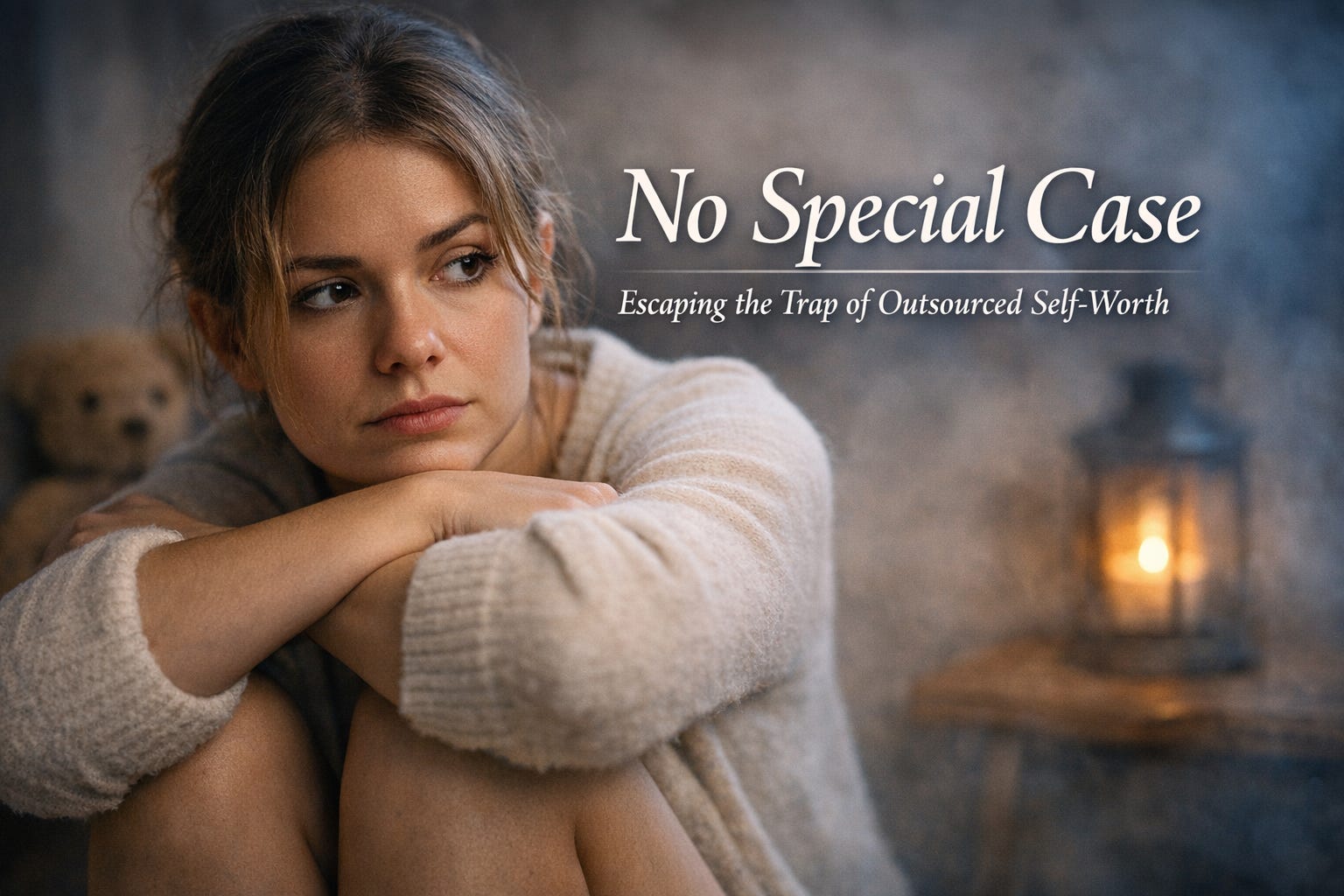
Have you quietly made yourself the exception to truth, believing everyone else is born with innate worth while you must earn yours through praise, approval, and getting things right? In this journal post, we explore how our Inner Child builds a private rulebook around criticism, why this keeps us trapped in fluctuating self-value, and how Taoist wisdom guides us back into alignment with the calm, equal truth of Shen.
Have you ever noticed how quickly one comment can change the way we see ourselves? One raised eyebrow, one opinion, one criticism, one moment of disapproval, and suddenly our whole inner world seems to tilt. We replay the words, analyse the tone, defend ourselves in our minds, or withdraw in shame as if something fundamental has been exposed. Why does that happen? Why can one person’s opinion seem to carry so much power? Why do some of us live as though praise adds to our worth and criticism subtracts from it?
This matters because many of us do not merely react to criticism; we interpret it. Our Inner Child turns an ordinary moment of disagreement into a verdict. It nags, chastises, and reproaches us with the old emotional logic: if someone criticises us, we must be wrong; if we are wrong, we must be lacking; if we are lacking, then our worth must be uncertain. From there, life becomes exhausting. We try to be good, careful, pleasing, agreeable, helpful, and beyond reproach, not because these things are always authentic, but because we hope they will finally secure the value we fear we do not naturally possess.
Yet this whole system rests on a hidden distortion. It is not only the belief that our worth is conditional. It is something even more subtle. It is the belief that everyone else may live by one truth, but we are the exception. Everyone else may be born worthy, but we must earn it. Everyone else may survive criticism intact, but for us, criticism reveals a private flaw. This is a painful illusion, and it deserves a fresh doorway.
In this journal post, we will explore how our Inner Child creates this private rulebook, why criticism becomes so personal when worth has been outsourced, and how Taoist and wu wei wisdom lead us back to equality with reality. We will also look at the counterargument, because many would say that being deeply affected by criticism proves sensitivity, humility, or conscientiousness. But Taoist wisdom asks us to go deeper. Is it humility, or is it a hidden belief that we are a special case, outside the truth that governs all life? That question may change everything.
The Private Rulebook of Our Inner Child
Our Inner Child does not use Shen logic. It uses emotional logic, which is immediate, protective, and extreme. It tends to divide life into simple categories: good or bad, approved of or rejected, safe or unsafe. When criticism appears, our Inner Child often does not hear, “Someone sees this differently.” It hears, “Something is wrong with us.” This is why the reaction can seem so disproportionate. The event is current, but the meaning attached to it is ancient.
In our previous teaching, we explored this through the idea of the “Worthiness Bank,” where praise is treated like a deposit and criticism like a withdrawal. This image is helpful, but we are going one step further here. The more hidden issue is not simply that our Inner Child keeps score. It is that our Inner Child believes the scoreboard applies to us differently than it applies to everyone else. It builds a private rulebook. In that rulebook, another person may make a mistake and remain worthy, but if we make one, our value is questioned. Another person may receive criticism and remain calm, but if we are criticised, our entire identity seems under threat, because we have to be perfect!
This is what was described in the teaching on special pleading and the “privileged mindset,” where our Inner Child tries to exempt itself from ordinary reality, not because it is arrogant in the usual sense, but because it is frightened and desperate to justify the emotional pain it causes. It says, “My case is different. The usual truth does not fully apply to me.” This may seem like self-doubt, but hidden inside it is a subtle form of self-exception and perfection. We have quietly made ourselves the exception to the principle of innate worth.
And this is where suffering deepens. Because once we believe we are the exception, we begin managing life through protection and performance. We monitor people’s reactions. We justify ourselves before anyone has accused us. We become experts in explaining, proving, softening, pleasing, and over-correcting. We hope that if we perform well enough, we will finally be accepted as someone naturally worthy. But we were never outside it.
When Criticism Becomes a Verdict
If our worth has been outsourced, then criticism will always seem dangerous. Not because criticism actually changes our value, but because our Inner Child uses other people’s reactions as a measuring stick. In that state, life becomes unstable. Praise lifts us temporarily, criticism drops us suddenly, and we begin living in fluctuation rather than truth.
One of the clearest teachings on this reminds us: “Our worth was never meant to be outsourced.” That sentence is small, but it carries enormous freedom. It means that the problem is not criticism itself. The problem is the authority we have handed to it. When we let another person’s opinion become the courtroom where our worth is decided, we create an impossible life. We are no longer living in Shen. We are living on borrowed verdicts.
In our previous teaching, this was described with striking clarity: “Our Inner Child often tries to drag our worth into an imaginary courtroom and demand a verdict.” That courtroom image opens a powerful doorway. Many of us do not simply hear criticism; we put it ourselves on trial. We gather evidence, build arguments, rehearse our defence, and search for reassurance as though our existence has been accused. But worth is not a verdict. Shen is not on trial. A person may dislike our tone, question our choice, misunderstand our boundary, or disagree with our decision, but none of that has the authority to announce spiritual truth.
This is where the counterargument often appears. Some would say, “But criticism helps us grow. Surely being affected by it means we care.” Yes, criticism can be useful. Taoism does not teach us to become closed, proud, or unreachable. It teaches discernment. If criticism is accurate, we can learn. If it is inaccurate, we can let it pass. If it is mixed, we can separate what is true from what is projection. The issue is not whether criticism exists. The issue is whether we mistake it for revelation.
A criticism may reveal another person’s opinion. It may reveal a blind spot. It may reveal their fear, preferences, or communication style. But it does not reveal our spiritual worth. When our Inner Child turns criticism into a verdict, it is not being truthful; it is defending an old belief: “I am only safe when approved of.” That belief deserves questioning, not obedience.
Equality With Reality
The Tao does not create one law for others and another for us. It does not say that one person is born worthy and another must earn the right to belong. Taoist wisdom returns us to equality with reality. This does not make us ordinary in a dull sense. It makes us equal in a liberating sense. We are not above or beneath anyone, and we are not outside the truth.
A powerful line from the Tao Te Ching helps here: “Fame or loss, success or failure, each leads the mind away from truth. Hold to what is real, and all will settle into harmony.” This verse matters because it removes the drama. Praise and criticism, success and failure, approval and disapproval are all unstable grounds for building identity. They pull the mind away from truth by inviting comparison, performance, and fear. What is real is deeper. What is real is Shen, our spiritual essence, untouched by applause and unchanged by disapproval.
The I Ching offers another steadying insight: “Great accumulation leads to inner strength. Preserve and understand what you have learned, cultivating quiet confidence.” This is not loud confidence, not performance confidence, not the confidence of proving everyone wrong. It is quiet confidence, the kind that grows when we stop asking the outside world to define the inside world. We cultivate it by observing our beliefs, questioning our emotional conclusions, and returning again and again to what is true.
This also challenges another hidden distortion. Some of us believe that if we stop taking criticism personally, we will become careless or arrogant. But Taoist wisdom points to a third way. We do not become careless; we become clear. We do not become arrogant; we become aligned. We are still open to learning, but we are no longer available for collapse. We can receive feedback without revealing our identity. We can apologise when we are out of alignment without turning it into self-condemnation. We can stand in authenticity without needing every person around us to agree.
In one of our previous teachings, we wrote: “Emotion is not truth; it is a response to our interpretation of events.” This is one of the most freeing reminders we can hold. If criticism creates shame, the shame is not proof. It is information. It points us toward a belief. And the real question becomes, “What must we believe to create this reaction?” Perhaps the belief is, “If someone disapproves of me, I lose value.” Or, “If I am criticised, I must be wrong in my being, not just in a behaviour.” Once named, these beliefs can be examined. And once examined, they begin to loosen.
Returning Through wu wei
So, how do we live this teaching in ordinary moments, especially when criticism lands hard, and our Inner Child immediately starts badgering us with old conclusions? We begin with wu wei. Not forcing ourselves to be unaffected, not pretending to care, and not suppressing the emotion, but pausing long enough to let truth catch up with the reaction.
Wu wei invites us to stop performing emergency surgery on our worth every time someone has an opinion. Instead, we ask quieter questions. “What did we make this mean? What belief did our Inner Child rush to protect? Are we responding to what was said, or to what our Inner Child concluded from it?” These questions are not abstract. They are practical ways of stepping off the ‘Carousel of Despair’ and back into alignment. In our previous teaching, we were reminded: “Familiarity is not the same as truth. A belief can be old, loud, and well practised, and still be untrue.” That matters deeply here. The belief that we are the exception may be old. It may be loud. It may seem convincing because we have rehearsed it for years. But old is not the same as true. Familiarity is not the same as reality.
There is a calmer way to live. We can guide our Inner Child with loving authority rather than letting it run the meaning-making process. We can say, “A criticism is not a verdict. Another person’s discomfort is not the measure of our worth. We are allowed to learn without collapsing. We are allowed to disagree without becoming wrong in our being.” This is not arrogance. It is spiritual maturity. It is choosing truth, honesty, and integrity over performance, panic, and people-pleasing.
Let us now return to the title, ‘No Special Case’. This title is not a rejection. It is a release. We are not being told that we are unimportant. We are being reminded that we are not excluded from truth. We are not the only ones who must earn what everyone else was given freely. We are not the exception to innate worth. The Tao has not singled us out for less. Our Inner Child may have built that story through emotional pain, misunderstanding, and old emotional logic, but it is still only a story.
So, let us walk forward differently. Let us stop placing our identity in public hands. Let us stop asking critics to tell us who we are. Let us stop turning every disagreement into evidence against ourselves. Instead, let us take small, consistent, manageable steps without expectation or Criticism, Comparing and being Judgmental (CCJ). Let us question the belief beneath the blush, the shame, the over-explaining, and the panic. Let us remember that no one can place worth in us, and no one can remove it. They may offer feedback, preference, agreement, or disapproval, but they cannot alter Shen.
And when our Inner Child next nags, reproaches, or pressures us to prove that we are good enough, let us answer with quiet authority: we do not need a special rulebook to belong. We do not need an exception clause to explain our emotional pain. We do not need to earn entry into what has always been ours. We belong already. We are worthy already. We can learn, grow, apologise, and change, but none of that begins with lack.
Let ‘No Special Case’ remain with us as both comfort and correction. We are not outside the Tao. We are not outside truth. We are not outside worth. Never doubt yourself. Keep taking the next small, consistent, manageable step. Let truth be steadier than emotion. Let Shen be stronger than old conclusions. Let authenticity replace performance. And let us return, again and again, to the liberating simplicity of this teaching: ‘we were never the exception to worth, only the creators of a belief that said we were.’
Moments of Inspiration…
Quiet Uncertainty
Have we ever noticed how often we try to future-proof life, as if enough planning, pleasing, or overthinking could protect us from every change ahead? Beneath that urge is often our Inner Child, quietly believing that certainty means safety and that uncertainty must mean danger. Yet Taoist wisdom offers us a gentler truth: life was never designed to be controlled. It was designed to be lived, one honest step at a time. As one of our earlier teachings reminds us, ‘The unknown is not the enemy; it is our home.’
This changes everything. If uncertainty is our home, then we are not lost when life becomes unclear. We are simply standing where all real growth begins. The Tao does not offer guarantees; it offers alignment. Wu wei teaches us not to force an answer out of tomorrow, but to meet today with truth, honesty, and integrity. When we stop demanding certainty, we begin to notice something calmer and stronger within us. Shen has not panicked. Shen has remained steady.
Our Inner Child may still ask for a map, a forecast, a promise that nothing hard will come. But we can answer with loving authority: we do not need to know everything to take the next step. We only need to trust that we can meet what comes, because we always have!
Uncertainty is not where we fall apart. It is where we return to ourselves.
Affirm: “We release the illusion of future proofing, trust the wisdom of our Shen, and walk the uncertain path with calm presence, quiet courage, and effortless grace.”
Let us carry this into the week ahead: pause before predicting, soften before controlling, and take one small, aligned, wonderful step into the living mystery of the Tao.
In the Next ‘Inner Circle’ (Paid) Journal…
Borrowed Safety
Belonging Without Bargain
The Future Loop
Moments of Inspiration
In the Next Free Journal…
Before Belief Speaks
Urgency Is Not Truth
When Reins Align
Moments of Inspiration
Journal #F076 13/04/2026
Contact: info@wuweiwisdom.com
Website: www.wuweiwisdom.com
YouTube: www.youtube.com/user/WuWeiWisdom
Facebook Community: www.facebook.com/groups/wuweiwisdomcommunity/