
Leaving the Pit
This week, are the emotional traps exhausting you? Do you always speak your truth? Is every mistake a withdrawal of your worth? Finally, learning our ‘Life Lessons’.

“We gently release the comfort of familiar emotional patterns and choose to trust the quiet wisdom of our Shen, knowing that true peace begins the moment we step beyond what merely seems safe. As we continue this journey together, may we discover that the unfamiliar path of truth, honesty, integrity, and wu wei has always been leading us home to the freedom, clarity, and authentic life we have been seeking.”
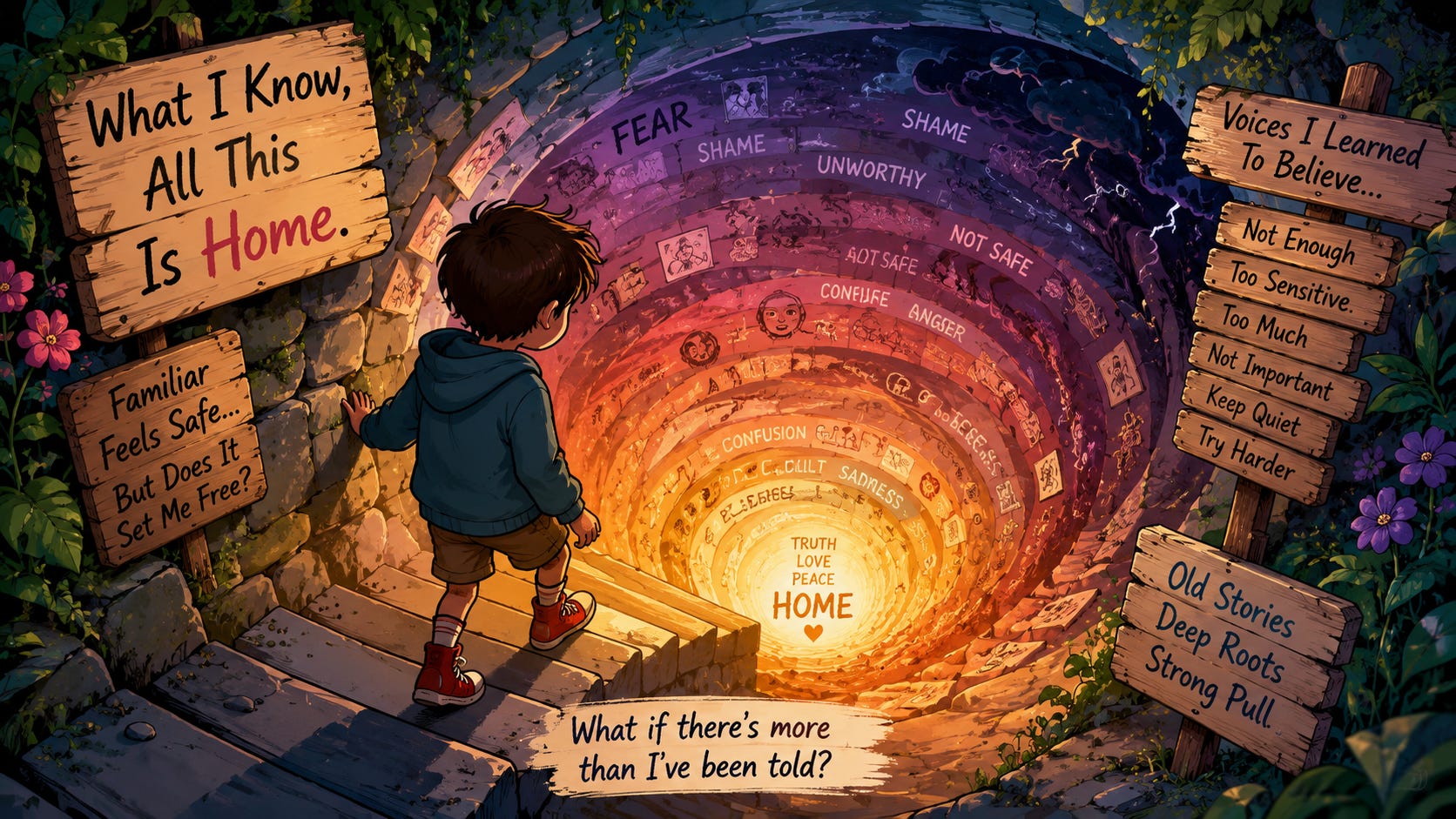
Why do we continue returning to emotional patterns that exhaust us, even when we know they no longer serve us? In this journal post, we explore the hidden comfort of emotional familiarity, the quiet ways our Inner Child defends old identities, and how Taoist wisdom invites us beyond the safety of emotional repetition into the natural flow of authenticity, trust, and alignment. Through the lens of ‘The Pit of Familiarity’, we uncover why familiar pain can seem safer than unfamiliar peace, and how small, honest steps can guide us back toward our Shen and the effortless flow of wu wei.
Have you ever noticed yourself repeating the same emotional cycle, even though you know it leads to frustration, confusion, or sadness? Have you ever promised yourself that this time would be different, only to find yourself reacting in familiar ways once again? Perhaps you’ve wondered why change can seem so difficult, especially when part of you longs for peace, clarity, and emotional freedom. These are not signs of weakness or failure. They reveal something far more subtle and profound about the way our Inner Child interprets safety, certainty, and identity through what we call ‘Emotional Logic’.
In this teaching, we are going to explore a deeper Taoist insight into why many of us remain emotionally trapped inside what we may call ‘The Pit of Familiarity’. This pit is not merely emotional pain. It is the emotional environment our Inner Child has become accustomed to. Even when uncomfortable, it can seem safer than the unknown. The familiar argument, insecurity, need for reassurance, and the familiar emotional struggle all form a structure that our Inner Child learns to call home. Over time, this structure can become so normal that peace itself starts to seem unfamiliar and even threatening.
This is why transformation cannot happen through emotional force, pressure, or self-criticism. Lasting change emerges through awareness, honesty, and alignment with our Shen. Our Tao Te Ching translation reminds us in Verse 40: “Returning is the motion of the Tao. Yielding is the way of the Tao.” Returning does not mean going backwards. It means returning to clarity, to truth, honesty and integrity, what we often call the ‘Power of Three’. As we explore this teaching together, we begin to understand why our Inner Child can become emotionally attached to familiar suffering, and how wu wei gently guides us beyond the walls of emotional repetition and into the wider openness of life itself.
The Emotional Safety of Familiarity
One of the most misunderstood aspects of emotional growth is this: our Inner Child does not always seek happiness; it seeks familiarity. This distinction changes everything. If our early experiences taught us that uncertainty was dangerous, criticism was normal, or emotional instability was expected, then our Inner Child builds a belief system around those experiences. Over time, those patterns stop seeming unusual and start seeming natural. The emotional environment becomes predictable, and predictability creates the illusion of control.
This is why many people unknowingly defend the very patterns that upset them. Our Inner Child reasons through ‘Emotional Logic’, not ‘Shen Logic’. It does not ask, “Is this belief aligned with truth?” It asks, “Does this seem familiar?” If the answer is “yes”, our Inner Child relaxes into that pattern, even if the pattern creates red-light emotions. Familiar pain can seem emotionally safer than unfamiliar peace because our Inner Child at least believes it understands the rules of the environment.
In our previous teaching, “Anchored in Truth”, we explored the idea that “Emotions are messengers, not masters. They are signs, not destinations.” This teaching becomes even more meaningful here because emotions often point us toward hidden emotional attachments we have mistaken for identity. Anxiety may not simply be anxiety. It may be our Inner Child badgering us to stay within old emotional boundaries because stepping beyond them seems uncertain. Shame may not be proof of inadequacy. It may be the discomfort of confronting a belief that no longer aligns with our Shen.
So, when we attempt to grow, our Inner Child often reproaches us with emotional arguments. “What if we fail?” “What if people reject us?” “What if we lose control?” Yet beneath these questions lies an even deeper fear: “Who will we be without this familiar emotional identity?” This is why emotional repetition can become so persuasive. Our Inner Child has confused familiarity with truth and emotional intensity with validity.
‘Stillness arrives the moment we stop calling emotional chaos our home.’
The Tao teaches us that life is movement, flow, and transformation. Nature never clings rigidly to one season. Rivers do not argue with their direction. Clouds do not criticise themselves for changing shape. Yet human beings often remain trapped inside emotional identities long after they have outgrown them because our Inner Child believes certainty protects us. This creates what we call the ‘Carousel of Despair’, where the same emotional patterns recur under different names and circumstances, leading us to believe that external situations are the problem. At the same time, the deeper belief structure remains untouched.
The Pit and the View from Within
Imagine standing at the bottom of a deep pit. From inside it, the world appears narrow. The walls seem high, the sky seems distant, and the opening above appears difficult to reach. After enough time, the pit, although temporary, begins to define reality itself. This is how emotional familiarity operates. The longer we remain inside a limiting emotional belief system, the more normal it becomes.
Our Inner Child then starts defending the pit. Not because it enjoys suffering, but because the pit provides emotional predictability. Outside the pit lies uncertainty, responsibility, openness, and new perspectives. Inside the pit lies the known. Our Inner Child pressures us to stay because the familiar feels emotionally manageable, even when it leads to exhaustion.
This is where many people misunderstand emotional alignment. They believe growth means instantly escaping discomfort or becoming permanently peaceful. Yet Taoist wisdom points us toward something gentler and more sustainable. Wu wei is not emotional force. It is the gradual alignment with truth through small, honest, manageable steps. Our Tao Te Ching translation beautifully reminds us: “The Tao opens and closes like a pair of bellows, receiving and letting go but never holding on.”
Holding on to emotional familiarity tightens the emotional system. Letting go creates spaciousness. This spaciousness can initially seem uncomfortable because our Inner Child interprets openness as uncertainty. Yet the Tao continually invites us toward expansion, not contraction. Emotional maturity develops when we learn to distinguish between emotions arising from Shen and emotions created by our Inner Child’s unresolved issues.
For example, peace, contentment, clarity, and groundedness often emerge from alignment with Shen. They carry steadiness. They do not pressure, harangue, or manipulate. By contrast, many red-light emotions created by our Inner Child carry a sense of urgency, blame, control, and emotional bargaining. Our Inner Child may insist: “If they change, then we’ll finally feel safe.” Or: “If everyone approves of us, then we’ll finally be enough.” But this creates emotional captivity because our emotional state becomes dependent upon external conditions rather than internal alignment.
The deeper truth is this: ‘we cannot place our emotions into another person’s body, nor can they place emotions into ours’. What we emotionally experience emerges from the meaning we create through our beliefs and interpretations. Once we understand this, we stop trying to manage others’ emotions to stabilise ourselves. We begin returning responsibility to where it belongs, within our own awareness.
Beyond Emotional Identity
One of the quietest yet most profound fears within human life is the fear of losing identity. Many people unconsciously build identities around emotional patterns without realising it. They become the anxious one, the rejected one, the people pleaser, the misunderstood one, the one who always struggles. Over time, these emotional identities stop seeming temporary and start seeming personal.
Our Inner Child clings tightly to these identities because they create emotional familiarity. Even when painful, they provide a script our Inner Child understands. Letting go of these identities can initially seem disorientating because the old emotional structure no longer provides certainty. This is why genuine transformation often creates emotional resistance before it creates peace.
In our previous teaching, “Before Belief Speaks”, we explored how our Inner Child absorbs patterns long before conscious reasoning develops. Our child’s mind learns through repetition, emotional atmosphere, and interpretation. If approval seemed conditional, our Inner Child may construct beliefs around proving worth. If emotional unpredictability seemed normal, our Inner Child may later recreate instability simply because it recognises the emotional pattern.
This is where the ‘Golden Thread Process’ becomes invaluable. Rather than merely reacting to emotions, we trace the emotional experience back to the underlying belief. We ask: “What belief created this emotional response?” Then we ask an even more important question: “Does this belief align with truth, honesty and integrity?”
This process softens emotional identification because we stop assuming every emotion represents truth. Instead, we begin observing the emotional equation beneath it. We realise that our Inner Child often uses emotions to avoid accountability, preserve old identities, or maintain emotional certainty. This awareness is not criticism. It is compassion guided by wisdom.
‘Freedom begins when familiarity stops deciding what is true.’
As our awareness deepens, we begin recognising that emotional alignment does not require perfection. It asks for authenticity. It asks for honesty. It asks for willingness. The Tao does not demand dramatic leaps. It encourages natural movement. Small, consistent, manageable steps create profound transformation over time because they gradually teach our Inner Child that openness is survivable.
The Gentle Climb Toward Alignment
There is something deeply beautiful about realising that we do not need to force ourselves out of ‘The Pit of Familiarity’. Force often strengthens resistance. The more harshly we criticise ourselves, the more our Inner Child defends the old emotional identity. Lasting alignment grows through patience, awareness, and steady honesty.
This is why Taoism continually guides us back toward simplicity. Our Tao Te Ching translation reminds us in Verse 59: “When rooted deeply, foundation is firm. When aligned with the Tao, nothing is lost. Everything returns to balance.” Emotional balance is not created through control. It emerges through alignment with reality rather than emotional fantasy.
When we stop demanding emotional certainty from life, we become more adaptable. When we stop asking others to complete us emotionally, we become more grounded. When we stop defending old emotional identities, we create space for authenticity to emerge naturally. This is the quiet wisdom of wu wei. Effortless effort does not mean doing nothing. It means flowing with truth rather than struggling against it.
There will still be moments when our Inner Child complains, criticises, or pressures us to return to familiar emotional reactions. Yet each moment also becomes an opportunity to pause and ask: “What belief is creating this emotional response?” This simple question interrupts unconscious repetition and restores conscious awareness. Over time, we stop reacting automatically and begin responding intentionally.
The journey beyond ‘The Pit of Familiarity’ is not about becoming emotionally flawless. It is about becoming emotionally honest. We learn to stop measuring truth by emotional intensity. We stop allowing familiarity to define reality. We begin to recognise that our Shen has always remained steady beneath the emotional turbulence caused by unresolved beliefs.
As we gradually loosen our attachment to emotional certainty, life starts opening in unexpected ways. Relationships soften because we stop demanding emotional guarantees. Decisions become clearer because we stop filtering everything through fear. Our emotional system relaxes because we are no longer trying to control every possible outcome. Instead, we begin trusting ourselves to respond wisely to whatever life presents.
This is the deeper invitation of ‘Leaving the Pit’. It is not about rejecting our Inner Child or criticising the past. It is about gently guiding ourselves toward wider perspectives, healthier emotional equations, and deeper alignment with our Shen. We stop calling familiar suffering safety. We stop confusing emotional repetition with truth. We begin trusting that openness itself can become a new form of emotional stability.
So, if you recognise yourself within this teaching, please remember this gently and honestly: you are not broken because old emotional patterns still arise. You are learning to see them differently. Every moment of awareness weakens unconscious repetition. Every honest reflection loosens the grip of emotional familiarity. Every small step taken without Criticism, Comparing and being Judgemental (CCJ) strengthens your connection to truth, honesty and integrity.
As you continue your journey beyond ‘Leaving the Pit’, trust that your Shen already carries the wisdom needed for this path. You do not need to future-proof every possibility before moving forward. You do not need emotional certainty before taking the next step. Life itself unfolds through movement, adaptation, and flow. The Tao has never demanded perfection from you. It gently encourages alignment.
And perhaps that is the quiet doorway we have been searching for all along. Not the elimination of uncertainty, but the courage to stop mistaking familiarity for freedom.
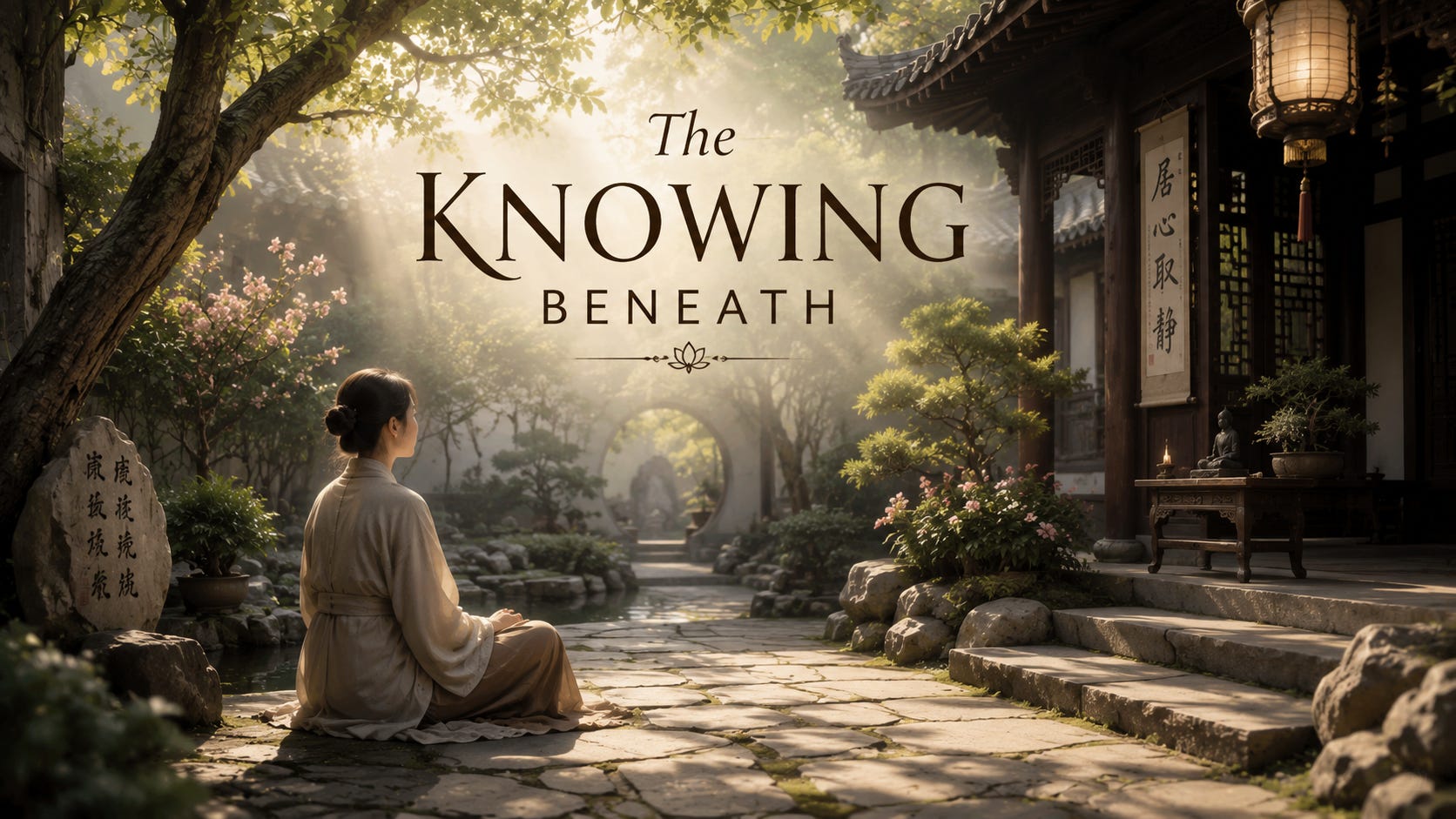
Have you ever walked away from a conversation with an uncomfortable recognition quietly following behind you? Perhaps you agreed with something you did not truly believe. Perhaps you softened your truth to avoid conflict. Perhaps you explained yourself too much because you wanted approval, reassurance, or emotional safety. Then later, often in the stillness of the evening, something deeper within us gently recognises, “That wasn’t fully honest.” Not dishonest in a cruel or dramatic sense, but misaligned. You knew. Deep down, you already knew your truth.
This subtle but essential distinction sits at the heart of ‘The Knowing Beneath’. Many of us understand intellectually that there is a difference between the reactive voice of our Inner Child and the calmer wisdom of Shen. Yet in daily life, especially in emotionally charged moments, the two can become deeply confused. The Inner Child creates a sense of urgency, emotional arguments, pressure, a need for justification, and a need to protect itself. Shen does not pressure or panic. Shen recognises. Shen aligns through ‘The Power of Three’: truth, honesty and integrity.
The challenge is that the voice of our Inner Child often seems more convincing because it speaks through emotional intensity. It creates emotional equations that seem logical in the moment: “If we tell the truth, they may reject us.” “If we admit what we truly want, we may look selfish.” “If we disagree, we may lose connection.” These reactions are not proof of truth; they are examples of ‘Emotional Logic’, where the emotional system attempts to regain certainty, control, or familiarity.
In our previous teaching, ‘Before Belief Speaks’, we explored how our Inner Child absorbs meaning long before it develops mature understanding. It interprets experiences through emotional survival rather than Shen clarity. Over time, these early interpretations become internal rules about safety, acceptance, and belonging. Many adults continue to live by those childlike conclusions without realising it. This is why we can know something quietly within ourselves while simultaneously arguing against it emotionally. Our Inner Child wants emotional protection. Shen wants alignment.
When Emotional Relief Pretends to Be Truth
One of the most confusing aspects of this inner tug-of-war is that emotional relief can temporarily seem like the truth. Imagine agreeing with someone to avoid discomfort. The momentary tension disappears, and our Inner Child immediately interprets that relief as success. It says, “Good, we stayed safe.” Yet later, perhaps hours or days afterwards, a quiet unease returns. Something within us remains unsettled because Shen recognises that we abandoned authenticity in favour of emotional comfort.
This happens more often than many realise. We may flatter when we secretly disagree. We may overpromise because we fear disappointing others. We may hide our true intentions behind politeness to maintain control over how others perceive us. Sometimes we even convince ourselves that these reactions are kindness, maturity, or compassion. Yet underneath the emotional negotiation, Shen quietly recognises the truth.
This does not make us bad people. It makes us human. Our Inner Child learned very early that emotional discomfort seemed dangerous. Rejection, criticism, embarrassment, exclusion, or disapproval became emotionally magnified within the childlike mind. As a result, our Inner Child developed strategies to avoid those experiences at almost any cost. Pleasing others, avoiding confrontation, gently manipulating outcomes, withholding honesty, and seeking reassurance became methods of emotional self-protection.
The difficulty is that these strategies slowly disconnect us from ourselves. We stop asking, “What is true?” and begin asking, “What will keep me emotionally comfortable?” That subtle shift becomes the beginning of ‘The Maze of Confusion’. We may appear calm on the outside while drifting further away from our Shen alignment on the inside.
Our Tao Te Ching translation reminds us in Verse 59: “When rooted deeply, foundation is firm. When aligned with the Tao, nothing is lost. Everything returns to balance.” Shen seeks that rootedness. Our Inner Child seeks emotional escape routes.
‘Emotional relief may calm the moment, but only truth settles the Shen.’
The Quiet Voice We Override
Many people assume Shen will speak loudly or dramatically, but Shen rarely arrives through emotional force. Shen often appears as a simple recognition beneath the noise. A quiet knowing. A moment of clarity that does not require performance, explanation, or urgency.
We have all experienced this. The moment before saying something untrue, when a quiet inner pause appears, before sending the message, or the moment before exaggerating, avoiding, placating, or emotionally defending ourselves. Something within us already recognises the misalignment. Yet our Inner Child quickly begins negotiating: “It’s easier this way.” “Don’t upset them.” “Just keep the peace.” “Avoid the discomfort.” This is why many people later reflect, “I knew that wasn’t right.” Shen recognised the truth before the emotional system overrode it.
In our previous teaching, “Anchored in Truth,” we wrote: “Emotions are messengers, not masters.” This is incredibly important here because emotional intensity does not equate to spiritual alignment. A strong emotion can seem persuasive even while rooted in avoidance, fear, control, or identity protection.
This becomes even clearer when we explore conscience. Many people confuse conscience with guilt or self-criticism, but they are not the same. Guilt often belongs to our Inner Child because it fears punishment, rejection, or disapproval. Conscience belongs to Shen because it recognises movement away from truth. Conscience does not attack us. It gently redirects us.
There is great wisdom in learning this distinction. Without it, people either become emotionally reactive or emotionally avoidant. They either follow every feeling impulsively or suppress their emotional world entirely. Shen offers another path. Shen allows us to acknowledge emotions compassionately while still asking: “What belief created this reaction?”
This is the essence of ‘The Shen Test’. Before reacting, justifying, explaining, or defending ourselves, we pause and ask: “Is this rooted in truth, honesty and integrity?” If the answer becomes tangled in emotional permission, image management, avoidance, or manipulation, then our Inner Child may be trying to regain emotional control.
The Emotional Equations Beneath Our Behaviour
One of the deeper teachings emerging through Wu Wei Wisdom is the understanding that our Inner Child does not simply defend emotions; it defends identity. This is why certain truths seem so uncomfortable to admit.
‘If we admit we were manipulative, what does that say about us? If we stop people-pleasing, will others still accept us? If we admit we wanted control, can we still see ourselves as kind? If we tell the truth about our intentions, will we still belong?’ These hidden emotional equations operate quietly beneath the surface of everyday life. Our Inner Child fears that honesty will threaten identity itself. So, it creates explanations, excuses, blame, emotional pressure, and self-justification to preserve a familiar image.
This is why familiarity becomes so powerful. In our teachings, we often refer to ‘The Pit of Familiarity.’ Many people unconsciously prefer familiar emotional discomfort over unfamiliar truth because the old emotional patterns at least seem predictable. Our Inner Child would rather remain emotionally familiar than exposed to the unknown. Yet Shen continues to recognise what is real beneath the performance.
Our I Ching translation beautifully reflects this through Hexagram 61: “Inner truth arises not from reaction, but from stillness. In stillness, we meet what is real.” Shen does not need emotional theatrics to know the truth. It simply recognises alignment or misalignment quietly and consistently.
‘The Inner Child seeks certainty through control; Shen recognises safety within truth itself.’
Returning to Honest Alignment
So, how do we begin distinguishing these voices more clearly without criticising or rejecting our Inner Child? We begin by changing our relationship with discomfort. Many people assume discomfort automatically means something is wrong. Yet discomfort often means our Inner Child is losing emotional control over an old belief system. When we begin speaking more honestly, setting boundaries, admitting hidden motives, or releasing emotional manipulation, our Inner Child may panic temporarily because familiar emotional strategies are no longer working.
This is where wu wei becomes so important. It invites us into alignment rather than force. We stop battling ourselves internally. We stop trying to suppress emotions or perform spiritual perfection. Instead, we observe honestly, respond consciously, and move gently toward greater authenticity.
We may begin by saying: “We understand why this reaction appeared.” “We understand the belief beneath it.” “But we no longer need emotional avoidance to protect ourselves.” This is not emotional suppression. It is emotional maturity. Our Inner Child does not need shaming, criticism, or punishment. It needs guidance. It needs reassurance that honesty is survivable. That authenticity will not destroy us. That truth creates genuine alignment even when temporary discomfort appears.
Many of our red-light emotions arise when one part of us already knows the truth while another part desperately tries to avoid it. That internal split creates red-light emotions like tension, exhaustion, anxiety, defensiveness, and emotional confusion. The moment we stop negotiating against ourselves, something remarkable begins to soften within us.
We become quieter, emotionally clearer, less defensive, reactive, and performative, not because life becomes perfect, but because we stop abandoning ourselves in search of emotional permission. In our previous teaching, ‘Already Whole’, we explored how our Inner Child often seeks validation externally because it has forgotten its connection to Shen. This new teaching deepens that understanding further. The more we align with Shen, the less we need to manipulate outcomes, manage perceptions, or force emotional reassurance from others. Truth itself becomes stabilising.
The Tao never pressures the river to flow. It simply flows because flowing is its nature. Shen moves in the same way. Quietly. Clearly. Without emotional bargaining. This is why ‘The Knowing Beneath’ matters so deeply. It reminds us that spiritual alignment is not about becoming emotionally perfect. It is about becoming increasingly honest with ourselves. Honest about our motives, our fears, and honest about when our Inner Child is seeking control disguised as protection.
Perhaps most importantly, we become honest enough to pause when we already know, not with criticism or punishment, but with the quiet intention of returning to alignment. Let us keep taking small, consistent, manageable steps, free from expectation and CCJ. As emotional urgency loses its authority, the quiet wisdom of our Shen becomes clearer, patiently guiding us back to authenticity, the effortless flow of wu wei, and the enduring calm of the Tao.
In ‘The Knowing Beneath’, we discover that truth rarely shouts. It simply remains quietly present beneath every excuse, every justification, and every emotional negotiation, waiting for us to recognise what, deep down, we already knew.
Have you ever noticed how quickly your Inner Child starts keeping score? One mistake, and it complains that you have lost value. One moment of praise, and it relaxes as though you have earned a temporary place in the world. One person disapproves, and the old calculation begins again: “What must we do now to become acceptable?”
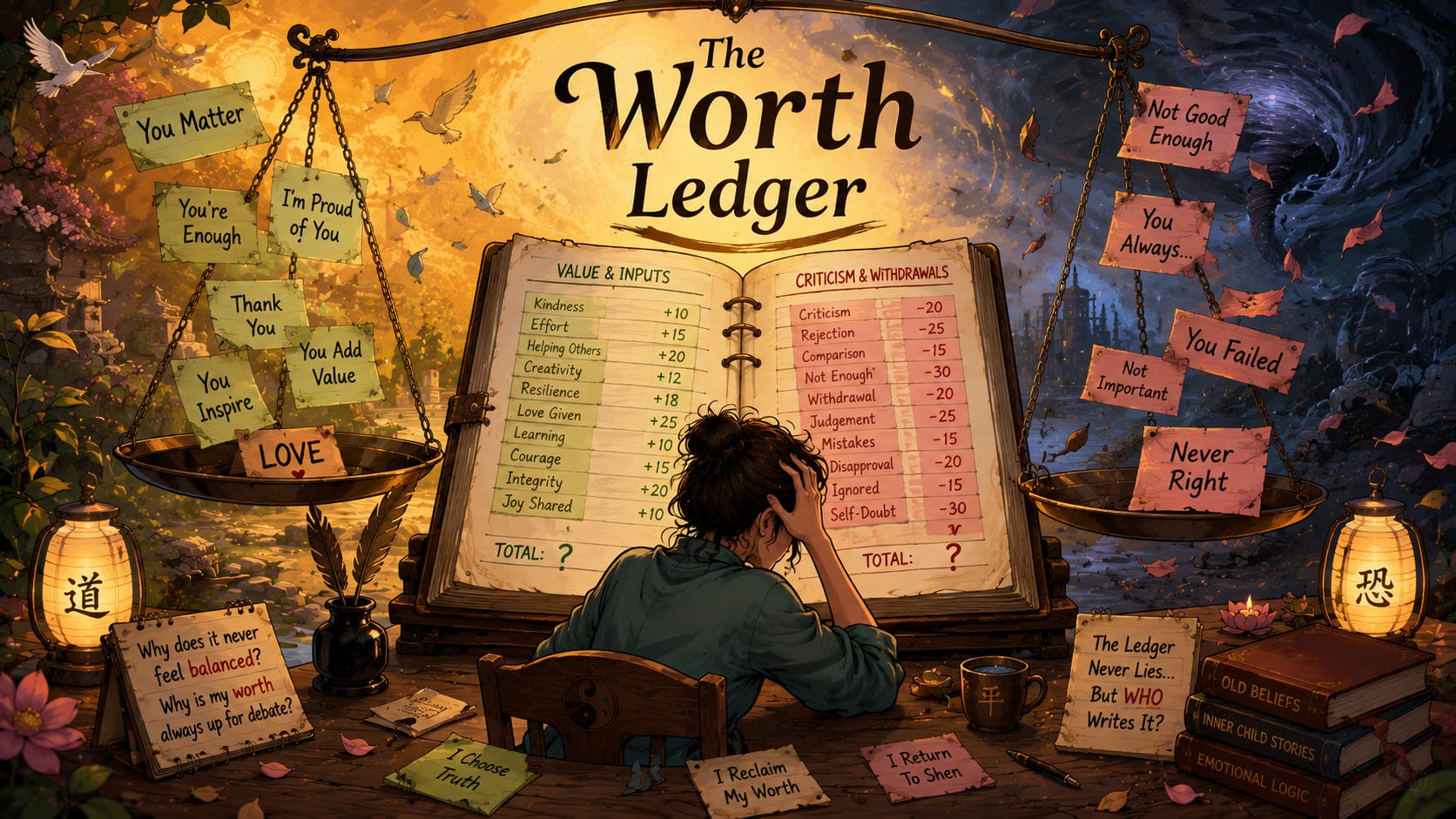
This is the hidden suffering behind so much people-pleasing, over-delivering, self-abandonment, and emotional exhaustion. We are not simply trying to be kind or helpful; we are often trying to settle an imaginary account that was never real in the first place. In this journal post, we will look at worth as a false emotional ledger, a balance sheet our Inner Child creates through ‘Emotional Logic’. We will explore why praise can seem like payment, why mistakes can seem like debt, why authority figures can seem to hold our value in their hands, and how Taoist wisdom guides us back to Shen, where our worth has never been earned, borrowed, reduced, or lost.
The Hidden Accounting of Worth
Many of us learned very early that approval seemed to bring safety. When we behaved well, pleased others, stayed useful, stayed quiet, performed beautifully, or avoided upsetting anyone, life seemed smoother. Our Inner Child noticed the pattern and formed a simple equation: approval equals value, disapproval equals rejection and danger. This was not wisdom; it was emotional survival. From that place, our Inner Child began building a private account book, adding credit when we were praised and recording debt when we made mistakes. This is why a small criticism can seem so large. It is not only a comment; it becomes an emotional withdrawal. A delayed reply, a disappointed face, a missed opportunity, a failed conversation; each one may be entered into the ledger as proof that our value has dropped.
So, we begin to live cautiously. We over-explain, over-give, over-work, and over-apologise. We may ignore our own Shen, our own truth, honesty and integrity, because the ledger says survival depends on pleasing the person in front of us, the ‘Quick Yes’. Yet this is how the ‘Maze of Confusion’ is created. We tell ourselves we are being loving, responsible, or loyal when, beneath the behaviour, our Inner Child is pestering us with fear: “Do more, or we will not be enough.” The tragedy is that this type of effort never brings lasting peace. It only teaches our Inner Child that worth must be paid for again tomorrow.
‘Worth cannot be earned by abandoning the very truth that proves we are already whole.’
The Tao does not ask us to become careless or selfish. It asks us to become honest. There is a profound difference between giving from Shen and giving from emotional debt. When we give from Shen, there is steadiness, warmth, clarity, and natural generosity. When we give from emotional debt, there is pressure, resentment, hidden expectation, and fear of consequence. The action may look the same from the outside, but the inner source is completely different. This is why ‘The Shen Test’ is so important. We pause and ask, “Am I choosing this from truth, honesty and integrity, or am I trying to purchase approval?” That one question can interrupt years of unconscious people-pleasing.
When Mistakes Become Debt
Our Inner Child often treats mistakes as moral debt. It says, “Because we got that wrong, we now owe pain, regret, self-punishment, or extra performance.” This is one of the clearest signs of ‘Emotional Logic’. A mistake becomes more than a ‘Life Lesson’; it becomes an identity sentence. Instead of saying, “We made a choice, and now we can learn,” our Inner Child reproaches us with, “This proves we are not enough.” That belief creates red-light emotion, and then the emotion seems to confirm the belief. This is how the ‘Carousel of Despair’ keeps spinning.
Yet our Shen does not use punishment as a teaching method. Shen guides through clarity, conscience, and alignment. If we make a promise, we honour it because integrity matters, not because honouring it will finally make us worthy. If we complete a commitment, we do so because our word has value, not because our value depends on the outcome. This distinction is subtle but life-changing. We can do the right thing without using it as a receipt for worth.
Our Tao Te Ching translation reminds us in Verse 19: “So, release the wanting and grasping; Realise that you already have everything you need. Then trust the rest will arrive when needed; Having no desires or expectations is the way of nature and the Tao.” This does not ask us to stop caring. It invites us to stop grasping for proof. We can create, serve, build, repair, apologise, complete, and grow while remaining rooted in the truth that our worth is already intact. This is wu wei action without emotional bargaining.
In our previous teaching, we said, “The Tao does not keep score. It just flows.” This line opens a doorway. If the Tao does not keep score, why do we keep trying to prove ourselves to life? Why do we act as though every success adds value and every difficulty subtracts it? The Tao flows through the mountain stream and the muddy river alike. It does not pause to decide which one deserves existence. In the same way, Shen is already within us before the applause, apology, achievement, and misunderstanding. Our value is not waiting at the end of a better performance.
The Authority Trap
For many of us, authority figures become emotional accountants. A parent, partner, employer, teacher, audience, client, or spiritual guide may seem to hold the stamp of approval our Inner Child craves. If they praise us, we seem safe. If they criticise us, we seem exposed. If they ignore us, we may ‘feel’ rejected and then blame them for putting that emotion in us. But no person can put worth into our body, and no person can remove it. Others can speak, judge, withdraw, approve, misunderstand, or celebrate. What we create emotionally comes from the meaning we give to their behaviour.
This is where we must bring in ‘The Power of Three’: truth, honesty and integrity. Truth asks, “What actually happened?” Honesty asks, “What am I believing about what happened?” Integrity asks, “What is the next aligned step?” These three questions take us out of the worth ledger and back into adult authorship. If someone disapproves, we do not need to collapse, attack, explain for hours, or perform harder. We can examine the feedback, correct what is ours, release what is not ours, and remain connected to Shen.
Our Inner Child may not like this at first. It may badger us with, “But we need them to understand us.” It may pressure us with, “But if they are unhappy, we are unsafe.” It may chastise us with, “Try harder, prove more, become more useful.” We answer with steadiness: “We can listen without handing over our worth. We can improve without insulting ourselves. We can honour others without abandoning Shen.” This is emotional maturity. This is the movement from ‘Emotional Logic’ to ‘Shen Logic’.
The Old Familiar Ledger
One reason this pattern continues is familiarity. Our Inner Child may prefer the old ledger because it knows how to use it. It knows how to earn, perform, apologise, charm, hide, impress, and panic. This is ‘The Pit of Familiarity’. The old way may be painful, but it is known. Shen’s guided alignment may seem strange at first because it lacks the drama of proving. It offers something quieter and far stronger: inner authority.
This creates a ‘Dual Belief System’. One part of us knows the teaching: worth is innate. Another part still behaves as though worth must be earned. We may say, “I know I am enough,” while still over-working for approval, shrinking around strong personalities, or creating shame after mistakes. This is not a failure. It is the exact place where the teaching becomes real. The purpose is not to shame ourselves for having the old belief; the purpose is to see the old belief clearly enough that it can no longer run our lives unnoticed.
‘The moment we stop paying imaginary debt, we begin spending our energy on truth.’
The ‘Golden Thread Process’ helps us here. When a red-light emotion appears, we trace it back gently. We ask, “What belief created this emotion?” If the answer is, “I believe I have disappointed them, so I have lost value,” we have found the ledger. If the answer is, “I believe I must be useful to be safe,” we have found the old equation. If the answer is, “I believe I owe perfection because I made a mistake,” we have found the debt story. Once the belief is visible, Shen can question it. Was it ever true? Who taught it to us? Does it align with our truth, honesty and integrity? Would we teach this belief to a child we love? If not, why are we still letting it govern us?
Living Beyond the Ledger
The way forward is beautifully practical. We begin by separating worth from conduct. Our worth is innate; our conduct is chosen. We can take responsibility for our conduct without putting our worth on trial. This gives us a cleaner conscience. When we have made a mistake, we correct it. When we have made a promise, we honour it. When we need a boundary, we speak it. When we are tired, we listen. When we are tempted to people-please, we pause and return to Shen. This is not passivity; this is mature alignment.
So, let us stop asking, “What must I do to be worth something?” and begin asking, “What is the next truthful, honest, and integral step?” The first question keeps us trapped in emotional accounting. The second question returns us to Tao flow. Small, consistent, manageable steps matter because they rebuild inner trust. We do not need grand declarations or dramatic reinventions. We need one honest choice, then another, made without expectations and without Criticism, Comparing and being Judgemental (CCJ).
This is the heart of ‘The Worth Ledger‘. We are not here to balance an account of imagined inadequacy. We are here to recognise that our Inner Child invented the account to help us stay safe. We can thank our Inner Child for trying to protect us, then guide it firmly back to reality. We can say, “We do not earn worth by pleasing. We express worth by aligning. We do not repay mistakes with shame. We learn, correct, and continue. We do not ask authority figures to confirm our Shen. We live from it.”
Let this be our practice this week. Notice when the ledger appears. Notice when praise seems like credit, when criticism seems like debt, when usefulness seems like safety, when regret seems like punishment. Then pause, breathe, and return to Shen. Take the next small step in wu wei without demanding certainty from the world. Never doubt yourself because an old belief has become loud. Loudness is not truth. Familiarity is not wisdom. Emotional pressure is not authentic guidance.
The Tao has never asked us to prove we deserve to exist. Shen has never waited for permission to shine. In ‘The Worth Ledger‘, we finally close the old account and return to the truth that was always beneath it: our worth is innate, our value is steady, and our life becomes lighter when we stop trying to earn what has always been ours.
Moments of Inspiration…
Lessons, Not Sentences
Have you ever made a mistake and then carried it far beyond the moment itself? Perhaps your Inner Child replays it, criticises you, or insists that one poor choice reveals who you truly are. Yet a mistake is not an identity. It is information.
We learn through living, and living includes wrong turns, misunderstandings, and choices we would make differently today. The Tao does not shame the river when it meets a stone. The water adjusts, discovers another way, and continues. This is wu wei: responding wisely without fighting what has already happened.
Our previous teaching, ‘The Next Step’, reminds us to reframe mistakes as “teachers rather than life sentences.” This distinction changes everything. When we treat a mistake as a sentence, we remain imprisoned by yesterday. When we receive it as a ‘Life Lesson’, we ask: “What is this showing us? What belief guided that old choice? What would truth, honesty, and integrity invite us to do now?”
We do not need punishment to become responsible. We need clarity. We can acknowledge what happened, repair what is ours, learn what matters, and move forward without CCJ. Our worth has not been reduced. Shen remains whole beneath every imperfect decision, quietly guiding us towards greater wisdom.
Let us count our mistakes not as evidence against us, but as steps within our unfolding understanding and spiritual growth. This week, choose one old mistake, name the lesson it carried, and release the emotional sentence attached to it. Then take one small, honest step forward in your flow.
Affirm: We honour every ‘Life Lesson’ with courage and compassion, trusting that our mistakes do not define us; they refine our understanding and gently return us to Shen, alignment, and the flow of the Tao.
In the Next ‘Inner Circle’ (Paid) Journal…
Quietly Managing Reality
When Belonging Costs Us
Knowing Without Changing
Moments of Inspiration
In the Next Free Journal…
Love Lost In Translation
A Stranger To Ourselves
What We Couldn’t Know
Moments of Inspiration
Journal #F093 03/08/2026
Contact: info@wuweiwisdom.com
Website: www.wuweiwisdom.com
YouTube: www.youtube.com/user/WuWeiWisdom
Facebook Community: www.facebook.com/groups/wuweiwisdomcommunity/