
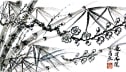
Love Lost In Translation
This week, do those old emotions become too familiar? Are you spending time understanding others and not yourself? How could you know what you did not know? Remember the uniqueness of snowflakes.

“With each honest reflection, we translate yesterday’s misunderstandings into today’s wisdom, allowing our Inner Child to exchange emotional confusion for quiet clarity. As we walk gently with the Tao, we remember that genuine love does not ask us to prove our worth; it simply invites us to recognise the truth of who we have always been.”

Have you ever found yourself looking back on a relationship, a friendship, or even a family connection and wondering why you stayed emotionally attached to something that seemed to create so much confusion? Have you ever caught yourself missing someone who rarely appreciated you, defending someone who repeatedly disappointed you, or hoping that one more conversation, one more act of kindness, or one more opportunity would finally produce the connection you longed for?
Most of us have experienced moments like these, and when we do, we often assume the answer lies in our need for love, approval, or belonging. Yet there is another possibility, one that reaches much deeper into the foundations of our emotional world. What if we are not searching for love at all? What if we are protecting a definition of love that our Inner Child created long ago, a definition that once helped us make sense of life but now quietly shapes our relationships, our choices, and our emotional experiences without our awareness?
This teaching may seem subtle at first, yet it touches many of the subjects we explore through Taoist and Wu Wei Wisdom. It touches on self-worth, relationships, validation, attachment, people-pleasing, emotional dependency, and even the way we understand ourselves. It is easy to assume that our struggles arise because we have not yet received enough love, understanding, or reassurance. Yet many people receive those things and still find themselves trapped within the same emotional patterns. The reason is often hidden beneath the surface. Before we can understand why we create certain emotions, we must understand the meanings our Inner Child attached to the experiences that gave rise to those emotions. The challenge is that our Inner Child does not simply remember the past. It interprets the past, creates explanations and builds emotional equations. Then, after years of repetition, those equations become so familiar that they seem like unquestionable truths.
When we are children, we enter a world that is far larger and more complicated than we can fully understand. We depend upon adults for everything. We depend on them for guidance, protection, a sense of belonging, encouragement, and emotional security. Because of this dependency, our Inner Child naturally becomes an expert at finding meaning. It watches expressions, listens to tone of voice, notices approval, criticism, distance, affection, silence, and emotional inconsistency. Then it begins building conclusions about what all those experiences must mean. The child does not have the luxury of objective analysis. It cannot stand back and calmly evaluate the unresolved issues of the adults around it. Instead, it asks a much simpler question. It asks, “What does this mean about me?” The answers to that question can quietly influence an entire lifetime.
If approval follows achievement, our Inner Child may learn that love must be earned. If attention comes mainly through distress, it may associate suffering with connection. Inconsistent affection can make love seem unpredictable, while frequent criticism can become confused with caring. These conclusions are rarely conscious; they develop through repeated experience as our Inner Child tries to create certainty within uncertainty. This is not about perfection or truth. It is a child’s attempt to understand, adapt, and survive.
This is where a subtle but profound misunderstanding begins to take shape. We often assume the problem is that pain has become confused with love. Yet the deeper confusion is that our Inner Child starts treating emotional intensity as proof of meaning. The more powerful the emotion, the more convincing it seems. Anxiety appears to confirm that something matters. Longing seems to validate love. Waiting feels like devotion, and sacrifice becomes confused with worth. Without realising it, we begin trusting the strength of the emotion more than the truth of the belief that created it.
‘When intensity becomes evidence, clarity becomes difficult to recognise.’
This emotional equation can follow us far beyond childhood. Years later, we may find ourselves drawn towards people who recreate familiar emotional climates. We may become fascinated by those who are difficult to understand, reach, or please. We may invest enormous amounts of energy trying to gain approval, secure commitment, or prove our value. From the outside, these patterns can seem puzzling. Yet from the perspective of our Inner Child, they make perfect sense because they resemble the emotional world it learned to navigate long ago. Familiarity often disguises itself as truth.
One of the quieter teachings of Taoism is that familiarity and wisdom are not the same thing. Something can seem correct simply because it is known. Something can seem safe simply because it is familiar. This is the subtle pull of ‘The Pit of Familiarity’. Our Inner Child often prefers what it recognises over what is aligned. This helps explain why calmness can sometimes seem strange, why consistency can seem less exciting than unpredictability, and why healthy relationships may initially appear less compelling than relationships that create strong emotional reactions. The issue is not that we consciously seek suffering. The issue is that our Inner Child may still be using emotional intensity as evidence that something matters.
A powerful counterargument often arises at this point. Many people say, “Surely strong emotions mean something.” In one sense they do. Emotions always mean something. Yet they do not necessarily mean what we assume. In our teachings, we often remind ourselves that emotions are consequences of what we believe, not proof of what is real or true. A red-light emotion tells us that a belief has been activated. It tells us that our Inner Child is interpreting reality in a particular way. What it does not do is automatically confirm the accuracy of that interpretation. The emotion is real. The belief may not be.
This is where many students begin to recognise the difference between ‘Emotional Logic’ and ‘Shen Logic’. Emotional Logic says, “If this hurts, it must matter.” “If I cannot stop thinking about this person, they must be important.” “If I am anxious, something valuable must be at risk.” ‘Shen Logic’ approaches the situation differently. Shen asks, “What belief created this experience?” “Is this interpretation aligned with truth?” “Would I teach this belief to a child I love?” These questions do not dismiss emotion. They help us understand its source.
The teaching becomes even more interesting when we explore why these old emotional equations can remain active long after we recognise them. If awareness alone created transformation, many of our challenges would disappear the moment we understood them. Yet most people discover that understanding a pattern and changing a pattern are two very different experiences. The reason often lies in identity. Our Inner Child does not merely protect beliefs. It protects identities built around those beliefs.
Perhaps we became the one who waits, the one who rescues, or became the ones who understand, forgive, explain, accommodate, and keep trying long after others would have walked away. These identities may seem compassionate on the surface, yet beneath them often sits a familiar emotional equation. If love must be earned, then proving ourselves becomes important. If love requires sacrifice, then self-neglect becomes meaningful. If approval creates value, then seeking approval becomes a lifelong project.
This is why letting go of old patterns can seem surprisingly uncomfortable. We are not simply changing behaviour. We are questioning an identity that may have existed for decades. Our Inner Child often treats that identity as a source of safety. It nags, reproaches, and pressures us to return to familiar emotional territory because it believes the old model protects us. Yet what it is actually protecting is not truth. It is protecting a misunderstanding that once seemed necessary.
‘Our Inner Child may not be seeking love at all; it may be protecting a definition of love that once made the world seem safer.’
This single insight can change the way we view many of our relationships. Suddenly, we begin seeing that our struggles are not always about the people involved. They are often about the meanings we attached to those people. We realise that we were not chasing love. We were chasing confirmation of an old emotional equation. We were hoping reality would finally validate a belief that had been quietly guiding us for years.
At this point, some people worry that they are being asked to reject the people who shaped them. That is not the teaching. Taoist wisdom rarely asks us to move towards blame. Instead, it invites us towards clarity. A parent may have loved us deeply while still acting from unresolved issues. A partner may have cared for us while lacking the emotional maturity to express that care consistently. Human beings are complex. The goal is not to decide whether love existed. The goal is to stop confusing certain behaviours with love itself.
This distinction creates tremendous freedom. We no longer need to prove that someone was entirely good or bad. We no longer need to defend painful experiences by calling them love, nor do we need to condemn every mistake as evidence of malice. We can see more clearly. We can acknowledge what happened, recognise the interpretations our Inner Child created, and choose whether those interpretations still deserve a place in our lives.
Our Tao Te Ching translation offers a beautiful reminder in Verse 52: “Do not exhaust yourself looking externally for her; look inside, she is there, waiting.” These words point directly towards Shen. The more we search outside ourselves for proof of worth, love, acceptance, or proof of value, the more exhausted we become. Our Inner Child continues to chase evidence, while Shen quietly reminds us that what we seek has never been missing. The search itself often arises from the belief that something essential has been lost. Shen recognises that our value was never removed in the first place.
As we return to our Shen, our whole way of seeing begins to change. We become less interested in how intensely a relationship makes us react and more interested in whether it nurtures truth, honesty, and integrity. We recognise that another cannot give genuine validation because it begins with remaining faithful to ourselves. Even our red-light emotions lose their authority. They no longer dictate our next step but become quiet teachers, pointing us towards the beliefs waiting to be understood, questioned, and gently transformed.
This is the essence of the ‘Golden Thread Process’. We follow the emotion back to the belief. We gently question the belief. We allow Shen to offer a broader perspective. Slowly, the old translation begins to loosen. We discover that calmness can be meaningful. Consistency can be beautiful. Reliability can be attractive. Peace can be deeply nourishing. Love no longer needs to be proven through suffering because we are no longer using suffering as evidence.
As we conclude ‘Love Lost In Translation’, perhaps the most compassionate insight is this. Our Inner Child was never trying to create confusion. It was trying to create certainty. It was trying to make sense of a complicated world using the limited information available at the time. Those old translations deserve understanding. They deserve patience. Yet they do not need to remain in charge of our future.
The Tao does not ask us to become someone new. It invites us to release what no longer reflects reality. Each time we question an old emotional equation, each time we choose authenticity over performance, each time we return to ‘The Power of Three’: truth, honesty and integrity, we move a little closer to the quiet wisdom of Shen. So, take small, consistent, manageable steps. Allow yourself curiosity instead of CCJ; notice where emotional intensity has become evidence. Notice where familiarity has disguised itself as truth. Then gently return to what you already know within.
Love does not become more valuable because it is difficult to obtain. Worth does not become more real because someone else recognises it. Your Shen has never required permission to exist. The translation may have become confused, yet beneath every misunderstanding, beneath every old belief, beneath every familiar emotional equation, the truth has been patiently waiting for you to remember it.
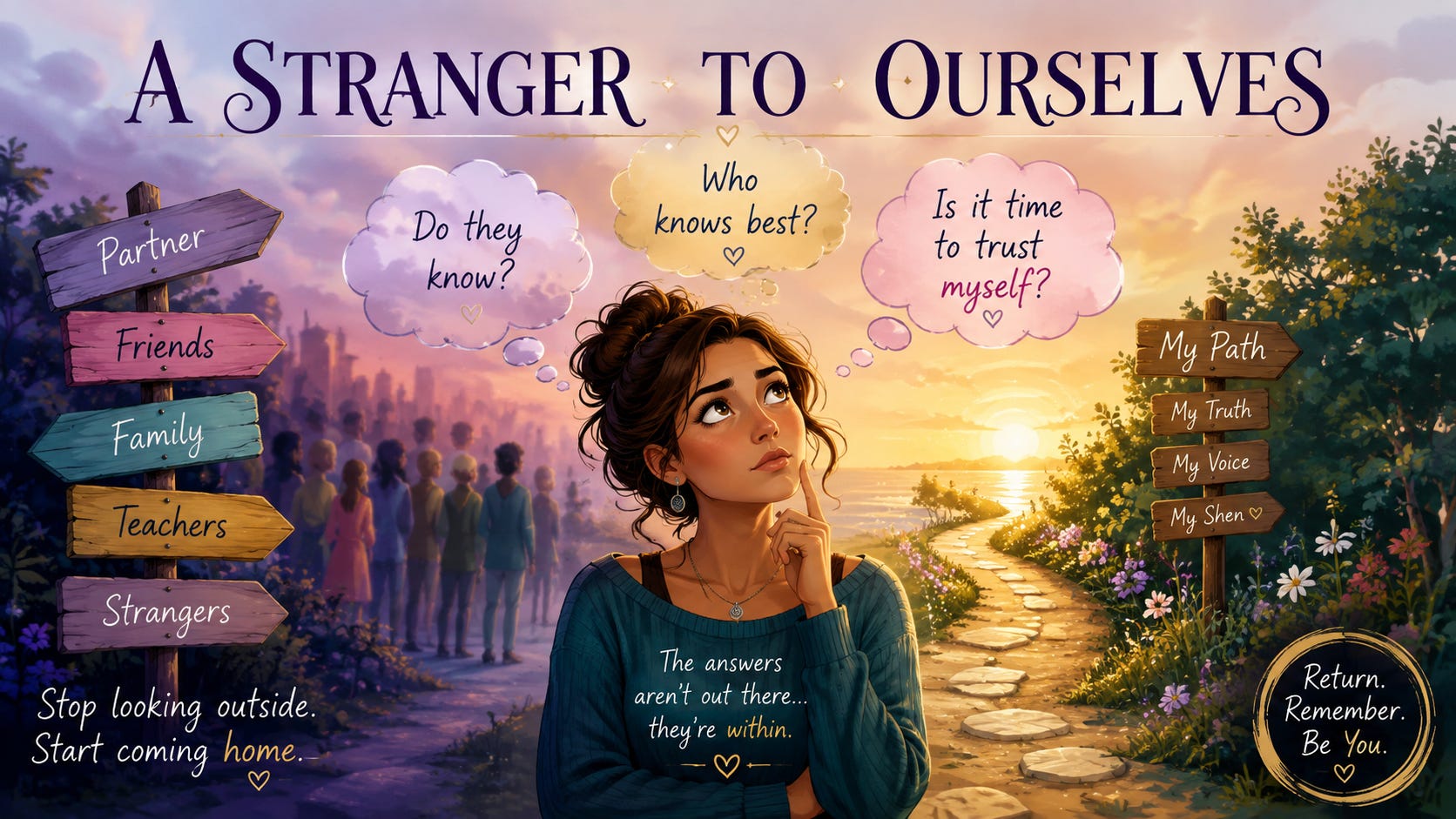
Many of us spend years trying to become more confident, more decisive, and more trusting of ourselves. Yet what if confidence is not the real issue? What if we have become more familiar with everyone else’s thoughts, expectations, reactions, and opinions than we have with our own Shen?
In this journal post, we explore how our Inner Child can become fluent in other people while remaining a stranger to itself, and how Taoist wisdom gently guides us back towards authenticity, familiarity, and self-trust through the practice of becoming reacquainted with who we truly are. For instance, have you ever found yourself asking several people for advice before making a decision, only to discover that none of their answers truly settled the uncertainty you were trying to escape? Have you ever looked at someone else’s confidence and assumed they possessed something you lacked? Have you ever delayed a choice, postponed a dream, or doubted your own judgement because another person’s opinion seemed more trustworthy than your own?
Many of us recognise these experiences. We often describe them as self-doubt, insecurity, uncertainty, or a lack of confidence. Yet perhaps there is another way of understanding what is happening beneath the surface. What if we do not struggle to trust ourselves because we lack wisdom? What if we struggle because we have become strangers to ourselves?
This possibility may seem surprisingly simple, but simplicity often reveals the deepest truths. Our Inner Child prefers complicated explanations because they keep it searching. It can spend years chasing confidence, certainty, or the perfect answer while overlooking something far more fundamental.
Trust grows through familiarity. We trust what we know, what we spend time with, and what we observe repeatedly. If that’s true, then perhaps the real question isn’t whether we trust ourselves or what feels familiar. The real question is: how well do we truly know ourselves, and how aware are we of the familiar patterns guiding our lives?
For many of us, this question reveals an uncomfortable reality. We know how our partner reacts under stress, how our friends think, what our family values are, and what our favourite teacher would recommend. We may even know what strangers would say about a particular issue. Yet when we pause and ask what genuinely aligns with our Shen, a curious silence sometimes appears. Our Inner Child immediately searches for another voice because it has become far more familiar with everyone else’s guidance than its own. This is not a failure. It is simply a habit. And all habitual choices can be understood, questioned, and gradually transformed.
Familiar With Everyone Else
Most of us were never taught how to develop a relationship with ourselves. We were taught how to behave. We were taught how to fit in. We were taught how to read situations, avoid mistakes, gain approval, and navigate the expectations of the people around us. From an early age, our Inner Child became a skilled observer. It learned how to identify moods, anticipate reactions, recognise criticism, and interpret approval. It became remarkably good at understanding what other people wanted.
These abilities often served a useful purpose. They helped us navigate family life. They helped us build friendships. They helped us avoid conflict and foster a sense of belonging. Yet there was a hidden cost to this constant outward attention. The more we focused on understanding others, the less time we spent understanding ourselves.
This creates a fascinating emotional equation. The more familiar someone becomes, the more trustworthy they seem. We know what to expect from them. Their reactions appear predictable. Their opinions appear stable. Familiarity quietly transforms into trust. Yet when it comes to ourselves, the opposite often occurs. Because we have spent less time observing our own beliefs, values, assumptions, and interpretations, we ‘feel’ uncertain. Our Inner Child concludes that uncertainty means inadequacy. It assumes that someone else must know better.
The issue is rarely capability. The issue is familiarity. This single insight can illuminate many of the challenges on the Taoist path. The desire for reassurance. The tendency to seek approval. The habit of comparing ourselves to others. The fear of making mistakes. The pressure to get everything right before taking action. Beneath many of these struggles sits the same quiet reality. We became familiar with everyone else’s map and neglected our own.
Borrowed Certainty
One of the most common responses to uncertainty is the search for borrowed certainty. We look for someone who seems more confident, more experienced, or more knowledgeable than we are. Then we borrow their perspective in the hope that it will remove our discomfort.
There is nothing inherently wrong with learning from others. Teachers can offer wisdom. Friends can offer support. Books can provide insight. Guidance has value. Yet a subtle shift occurs when guidance becomes dependency. Instead of learning from others while remaining connected to our Shen, our Inner Child begins treating external opinions as superior to its own observations. It creates a belief that says, “Someone else will know what to do.”
The more often this belief is repeated, the stronger it becomes. Eventually, uncertainty triggers an automatic response. Rather than pausing to consult our own understanding, we immediately look outside ourselves. We ask, compare, analyse, and seek validation. The emotional relief that follows seems to confirm the strategy. Yet the relief is temporary because the underlying issue remains untouched. We have not become more familiar with ourselves. We have borrowed certainty from someone else.
This is why so many people remain trapped in cycles of reassurance seeking. Every answer creates a brief sense of safety, yet the need for another answer soon returns. The Inner Child is trying to cope with unfamiliarity in external information. Shen understands that a different approach is required. Our Tao Te Ching translation reminds us in Verse 52: “Knowing one’s origin, one remains steady. Though the world seems to shift, one stays anchored.” The verse points towards an important truth. Stability does not emerge because life becomes predictable. Stability emerges because we become rooted in something deeper than prediction. We become familiar with our origin. We become familiar with our Shen.
The Unknown Is Not The Problem
Many people believe they fear the unknown. Yet when we look more carefully, the unknown may not be the real issue at all. Life has always been unknown. Tomorrow is unknown. Next year is unknown. Even the next conversation we have is unknown. The Tao unfolds through uncertainty. It always has. The deeper challenge is often our relationship with uncertainty.
Our Inner Child often imagines that certainty exists somewhere outside itself. It believes there must be someone who knows exactly what will happen next, someone who possesses the perfect map, answer, or the understanding that will finally remove uncertainty from our lives. If only we could find the right guide, teacher, partner, or the right set of instructions, then perhaps the discomfort of not knowing would disappear. Yet life rarely unfolds in this way. Certainty never truly arrives because the unknown is woven into the fabric of existence itself. Life continues to unfold, the future remains unwritten, and the Tao continues to move whether we understand its direction or not. What gradually changes is not the world around us but our relationship with it.
As we become more familiar with ourselves, we begin recognising something remarkable that has been quietly present all along. Every challenge we have ever overcome was once unfamiliar territory. Every difficult conversation once seemed uncertain; every meaningful decision involved stepping into the unknown without guarantees. In truth, we have been responding to uncertainty throughout our entire lives. We may not have noticed it because our attention was focused on searching for certainty rather than recognising our own capacity to meet whatever appeared before us.
This realisation gently shifts something within us. We stop demanding certainty from life and begin developing trust in ourselves. We stop searching endlessly for guarantees and start recognising our ability to respond with wisdom, adaptability, and authenticity. The question gradually changes from, “How can I control what happens next?” to, “How can I meet what happens next in alignment with my Shen?” This is a very different relationship with life because it no longer depends upon prediction. It depends upon presence.
This is where wu wei reveals its deeper wisdom. Wu wei is often described as effortless effort, yet beneath those words sits a profound trust in the unfolding nature of life itself. It does not ask us to know everything, control everything, or predict everything. Instead, it invites us into harmony with what is already emerging. The more familiar we become with our Shen, the less we need certainty to create safety, because we begin trusting something far more reliable: our ability to respond to life one step, one moment, and one choice at a time.
The Observer We Forgot
One of the most beautiful discoveries on this journey is the realisation that there has always been a deeper awareness quietly accompanying us through every experience we have ever created. Beneath the anxiety, uncertainty and the endless commentary of our Inner Child, there exists a quieter presence that observes. While our Inner Child may become caught in fearful predictions, create red-light emotions, and then use those emotions as evidence that its worries must be true, this deeper awareness remains unchanged. It notices the fear without becoming fearful. It recognises confusion without becoming lost within it. It watches the emotional storms come and go, yet none of them defines it.
This observing presence is closer to our Shen. Unlike the Inner Child, it is not searching for certainty, reassurance, or proof that everything will be okay. It is already present, quietly witnessing the entire experience. Perhaps this is why so many spiritual traditions place such importance on awareness. Awareness changes our relationship with life. Instead of becoming entangled in every thought that passes through our mind, we learn to observe our thoughts with curiosity. Instead of becoming consumed by every emotion we create, we begin exploring the beliefs, assumptions, and interpretations that gave rise to those emotions in the first place.
This is where the teachings become profoundly practical. Through the ‘Golden Thread Process’, we gently follow the emotion back to the belief that created it. Through ‘The Shen Test’, we examine whether that belief aligns with truth, honesty, and integrity. Through ‘The Power of Three’, we learn to question old assumptions and return to a clearer understanding of ourselves. Over time, we begin to recognise that we are neither the fearful voice predicting disaster nor the emotional reaction that follows. We are the awareness capable of observing both. As this understanding deepens, our relationship with ourselves begins to change. The stranger we once believed ourselves to be gradually becomes familiar, and in that familiarity we discover a steadiness that was present all along, patiently waiting beneath the noise of the Inner Child.
As this process unfolds, something remarkable happens. We stop treating ourselves as strangers. We stop assuming that another person knows us better than we know ourselves. We stop placing our trust entirely in borrowed certainty. Familiarity begins to grow. Curiosity replaces judgement. Observation replaces assumption. Slowly, trust follows.
The invitation hidden within ‘A Stranger To Ourselves’ is surprisingly gentle. It does not ask us to become more confident overnight. It does not ask us to eliminate uncertainty. It does not ask us to stop learning from others. Instead, it invites us to become curious about our relationship with ourselves.
Many of us spent years studying other people because we believed safety, wisdom, and certainty lived outside us. We learned how to navigate their expectations, interpret their reactions, and adapt to their preferences. Yet while doing so, we often neglected the one relationship that would accompany us throughout every challenge, every decision, every success, and every setback. We neglected our relationship with our own Shen.
Perhaps this is why the title ‘A Stranger To Ourselves’ resonates so deeply. It captures an experience that many people quietly carry without ever naming. Other people’s voices become familiar while our own remains uncertain. Their maps often seem easier to trust than our own path. We spend so much time observing others that we rarely pause long enough to understand ourselves.
The wonderful news is that authentic familiarity can be cultivated. It grows through attention, reflection, and honesty. Every time we observe our beliefs without CCJ, trace a red-light emotion back to its source, or pause before seeking reassurance to consult our own Shen, we deepen our relationship with ourselves. What may have been neglected for many years gradually becomes trusted once again.
So, never doubt yourself, because uncertainty will still arise. Uncertainty is part of life. The Tao has always moved through the unknown. Instead, take small, consistent, manageable steps. Become interested in your own wisdom. Become familiar with your conscience. Become familiar with the observer within. Over time, the stranger becomes a companion, the companion becomes a guide, and the guide reveals that what we were searching for was never absent.
It was patiently waiting for us to become familiar with who we truly are. And that, perhaps, is the deeper teaching hidden within ‘A Stranger To Ourselves’.
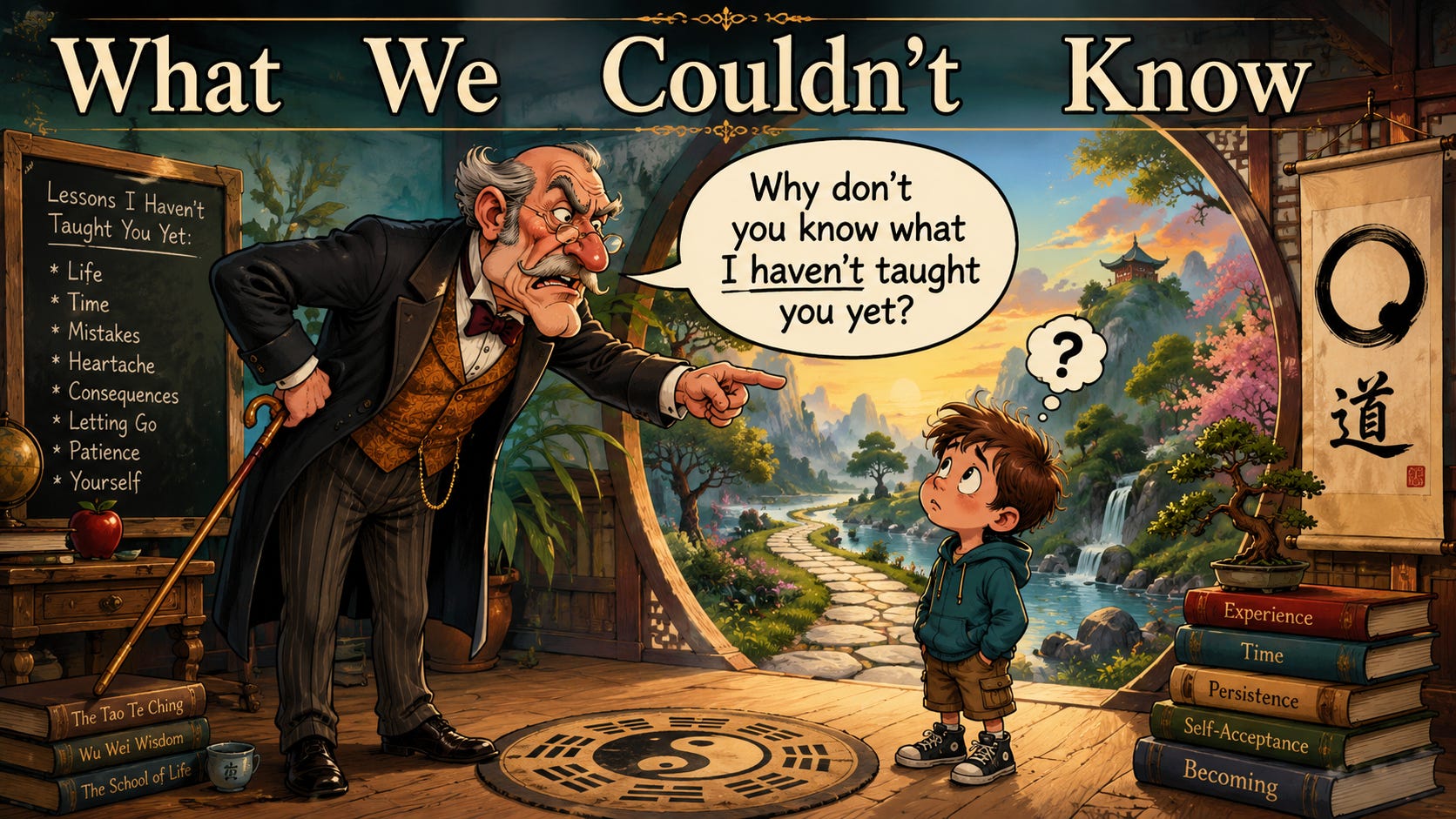
Have you ever looked back at a decision and wondered why you did not see the consequences coming? Have you ever criticised yourself for a choice that seemed obvious in hindsight, yet felt impossible to understand at the time? Do you sometimes question whether you can trust yourself because life unfolded differently than you expected? In this journal post, we explore a subtle emotional equation that quietly shapes many lives. It is the belief that self-trust depends upon prediction. Through Taoist wisdom, wu wei, and the insights of our Inner Child and Shen, we will discover that true self-trust has never been about knowing what will happen next. It has always been about trusting ourselves to meet life honestly as it unfolds.
When Yesterday Meets Today
One of the strangest things we do as human beings is to place our current wisdom in the hands of our younger selves’ mindset and then criticise that younger self for not knowing what we know now. We revisit old decisions, relationships, fears, and old adaptations with the benefit of hindsight, then wonder why things seem so obvious. Yet hindsight is a peculiar teacher. It quietly removes uncertainty from the story. It shows us the ending and then convinces us that we should have recognised it from the beginning.
Many of us have experienced moments when we look back and think, “I should have known better.” The phrase seems innocent enough, yet it hides a powerful assumption. It assumes that the information available today was somehow available then. It assumes that the lessons learned through experience should have been understood before the experience occurred. It assumes that growth was unnecessary because wisdom should have existed from the start.
Our Inner Child often uses this form of ‘Emotional Logic’ without realising it. It looks at a past decision and sees only the outcome. It overlooks the uncertainty, the limited understanding, and the emotional environment of the time. From today’s perspective, the path seems obvious. Yet if we step back and look more honestly, we begin to recognise that the younger version of ourselves was navigating life with a very different map.
This is where many people become trapped within ‘The Maze of Confusion’. They mistake hindsight for foresight. They confuse growth with failure. They believe that because they can now see what happened, they should have been able to predict it all along. The result is a lingering sense of self-doubt that quietly follows them into the present.
The deeper question is not whether we made the perfect choice. The deeper question is whether we are judging the past fairly. A traveller crossing unfamiliar terrain can only make decisions based upon the landmarks visible at the time. Looking at a completed map years later does not prove the traveller was foolish. It simply proves that the map has become more detailed. In the same way, our current awareness does not prove our past ignorance. It proves that learning has taken place.
The Hidden Contract
As we explore this further, another fascinating belief begins to emerge. Many of us carry an unconscious contract with ourselves. We rarely speak it aloud, yet it quietly influences our relationship with trust. The contract says something like this: “If I trust myself, I should be able to predict what will happen.”
The moment we see those words written down, they begin to lose their authority. Life has never operated according to that agreement. The Tao does not provide guarantees before inviting us to participate. Nature does not reveal every outcome before asking a seed to grow. Yet our Inner Child continues negotiating with reality as though certainty should arrive first.
This hidden contract explains why so many people struggle with self-trust. They imagine trust means being right. They imagine trust means making perfect decisions. They imagine trust means avoiding mistakes and foreseeing consequences. Every unexpected outcome becomes evidence against themselves. Yet when we pause and apply the ‘Golden Thread Process’, we discover something remarkable. The red-light emotion usually does not point to a poor decision. It often points to a flawed belief about trust itself. Trust has become confused with prediction.
The emotional system says, “You did not see this coming; therefore, you cannot trust yourself.” Shen responds differently. Shen understands that uncertainty is woven into life. Shen understands that learning unfolds through experience. Shen does not require a perfect forecast before taking a step.
“Growth does not prove we should have known sooner. Growth proves that we were willing to learn.”
Beyond The Forecast
A great deal of emotional suffering comes from demanding certainty from a future that has not yet arrived. Our Inner Child nags, reproaches, and pressures us to find guarantees. It wants reassurance that every choice will lead exactly where we hope. It wants proof that discomfort can be avoided. It wants evidence that change will be safe.
This search appears sensible on the surface, yet it creates a subtle trap. The more certainty we demand before acting, the less willing we become to participate in life. We stand at the edge of new experiences waiting for answers that can only emerge through experience itself. Nature offers a very different teaching.
A river does not know every bend it will encounter on its journey to the sea. It responds to each curve as it appears. A tree does not possess a blueprint for every storm it will face during its lifetime. It develops strength through meeting the weather as it arrives. Neither the river nor the tree depends upon prediction to fulfil its nature.
This is one of the profound gifts of wu wei; it does not teach us to become passive. It teaches us to participate without demanding impossible guarantees. It encourages us to align with life rather than attempt to control every outcome. In our previous teaching, we explored the phrase: “I am never surprised by what I already know.”
Many readers interpreted this as a teaching about intuition. Yet there is another layer worth considering. Sometimes we are not surprised by a truth because our Shen recognised it long before our Inner Child accepted it. The challenge was never the absence of understanding. The challenge was trusting what had already become visible.
There is an important distinction here. Recognising a truth is not the same as predicting its consequences. We can recognise that a chapter of life is ending, a relationship has changed, or that growth is calling us forward, without knowing exactly what comes next. Trusting ourselves in those moments is not an act of prediction. It is an act of participation.
The Weight of Hindsight
One of the most compassionate insights we can develop is the ability to view our past with honesty rather than criticism. Many people spend years carrying regret because they believe they should have understood things sooner. They judge themselves through the lens of information that did not exist at the time. This creates an impossible standard.
Imagine asking a child to solve a puzzle using pieces that have not yet been provided. Imagine criticising a gardener because a seed did not immediately reveal the shape of the mature tree. The expectation itself contains the misunderstanding.
Our Inner Child often protects itself through criticism. It believes that if it judges the past harshly enough, it will prevent future mistakes. Yet this strategy rarely creates wisdom. More often, it creates hesitation, doubt, and a reluctance to trust ourselves.
When we apply ‘The Shen Test’ through the ‘Power of Three’: truth, honesty and integrity, a different perspective begins to emerge. The younger version of ourselves was not failing. The younger version was adapting. Every choice made sense within the understanding available at the time. This does not mean every decision produced the outcome we wanted. It means that life was unfolding exactly as learning unfolds through experience, reflection and growth. There is great freedom in recognising this distinction.
We no longer need to carry the burden of expecting our former self to possess today’s awareness. We can appreciate the path without becoming trapped within it. We can honour the adaptations that once helped us navigate life while recognising that some of them are no longer necessary. This is not about excusing ourselves. It is about understanding ourselves.
“The younger version of us was not failing. The younger version of us was learning in real time.”
Trusting The Unknown
At the heart of ‘What We Couldn’t Know’ lies a simple yet transformative insight. Self-trust has never depended upon our ability to predict life. Self-trust emerges from our willingness to meet life honestly as it unfolds. This changes everything. When trust is based upon prediction, every unexpected outcome becomes a threat. Every mistake becomes evidence against ourselves. Every uncertainty becomes a reason to hesitate.
When trust is based upon alignment, a different relationship develops. We begin recognising that uncertainty is not proof of inadequacy. It is a natural part of existence. We stop demanding guarantees and start cultivating resilience. We become less concerned with controlling life and more interested in participating fully within it.
Our Tao Te Ching translation reminds us: “Recognising the opposites and extremes, it means discovering wu wei.” One extreme demands complete certainty before taking a step. The other rushes forward without reflection. Wu wei occupies a quieter place. It encourages thoughtful participation. It trusts the unfolding process without demanding perfect knowledge of the destination.
This teaching becomes especially important when our Inner Child turns its attention to the past and begins measuring past decisions against knowledge that only arrives later. Questions such as “Why didn’t I know?” seem reasonable on the surface, yet they quietly assume that learning should have occurred before the experience that created it. A more useful reflection might be, “How could I have known what had not yet been learned?” Approaching the past in this way does not remove accountability; it places accountability within a realistic understanding of how human beings grow.
Wisdom emerges through participation in life, not through perfect prediction of it. As this insight deepens, many of the criticisms we direct towards ourselves begin to lose their authority. The past stops appearing as a catalogue of mistakes and starts revealing itself as a series of experiences through which greater awareness emerged. In doing so, we gradually step beyond ‘The Carousel of Despair’ and into a more compassionate relationship with our own journey, one that allows trust to grow alongside understanding.
As we begin exploring life from this perspective, our relationship with uncertainty gradually changes. We stop seeing uncertainty as evidence that something is wrong. We begin recognising it as the space where learning, growth, and authenticity emerge.
Conclusion
As we reflect upon ‘What We Couldn’t Know’, perhaps the most important insight is that self-trust was never meant to be built upon certainty. The future has always contained unknowns. No amount of preparation, intelligence, or caution can eliminate them. Life unfolds through discovery, not prediction.
This understanding invites us to treat our past with greater compassion. The younger versions of ourselves did not possess today’s wisdom because it had not yet been learned. Every lesson, every adaptation, every unexpected turn contributed to the awareness we now possess. Looking back and demanding more from that version of ourselves serves little purpose. But looking back with understanding allows us to appreciate our journey.
The Tao does not ask us to become fortune tellers. It asks us to become aligned. It asks us to trust our capacity to learn, adapt, and respond. It invites us to meet life with openness rather than fear. When we stop measuring ourselves against impossible standards of prediction, we discover a quieter form of confidence. We recognise that wisdom is not demonstrated by knowing everything in advance. Wisdom is demonstrated by how we engage with what appears before us.
So, as you continue your own journey, take small, consistent, manageable steps. Notice when your Inner Child begins creating stories about certainty, mistakes, or missed opportunities. Follow the thread back to the belief beneath the emotion. Apply ‘The Shen Test’. Ask whether the belief aligns with truth, honesty and integrity. Allow yourself to step beyond CCJ, and gently return to the flow of the Tao.
The invitation within ‘What We Couldn’t Know’ is not to become more certain. It is to become more trusting. Trusting our ability to learn, adapt, and meet life with authenticity. The future will always contain mysteries, yet our Shen has never required complete certainty before taking the next step. It simply asks us to walk the path, remain open to learning, and trust that what cannot be known today will reveal itself in its own time.
Moments of Inspiration…
No Two Snowflakes
How often do we compare ourselves with someone else and quietly conclude that we somehow fall short? Our Inner Child looks at another person’s success, confidence, appearance or achievements and asks, “Why can’t I be more like them?” Yet perhaps we have been asking the wrong question all along.
Comparing ourselves to another person is like comparing one unique snowflake with another. Both are created from the same water, both are equally beautiful, and yet no two have ever been identical. To declare that one snowflake is better than another is to misunderstand the very nature of creation.
The Tao never creates duplicates. Nature delights in diversity, not uniformity. Every tree bends differently in the wind, every river finds its own course, and every snowflake forms through a journey that can never be repeated. Why then do we expect ourselves to become someone else before believing we are enough?
Our Inner Child often believes comparison will keep us safe, inspire us, or make us improve. Instead, it usually creates CCJ, pulling us further away from the quiet wisdom of our Shen. The moment we stop measuring ourselves against others, we discover something far more valuable. We begin measuring ourselves against truth, honesty and integrity. This is the gentle path of wu wei, where we stop striving to become another person and begin unfolding into the person we have always been.
Perhaps the greatest achievement is not becoming more like someone else, but becoming more fully ourselves.
Affirm: “We honour our unique path, trusting that our Shen was never created to compete, only to shine with its own quiet brilliance.”
As we move through this week, notice every moment your Inner Child invites comparison. Pause, smile with compassion, and remember the snowflake. Then gently return to your own path. The Tao has never asked us to be someone else; it simply invites us to become who we have always been.
In the Next ‘Inner Circle’ (Paid) Journal…
Who Holds Permission
Pattern Dependency
Resisting Life
Moments of Inspiration
In the Next Free Journal…
The Myth of Arrival
The Measuring Stick
Truth Is Truth
Moments of Inspiration
Journal #F094 10/08/2026
Contact: info@wuweiwisdom.com
Website: www.wuweiwisdom.com
YouTube: www.youtube.com/user/WuWeiWisdom
Facebook Community: www.facebook.com/groups/wuweiwisdomcommunity/