
Misread Danger
This week, turn emotional alarms into peaceful strength. Do you rehearse defeat? Change "I can't cope” into an opportunity. Finally, never sacrifice your truth to an emotion.

“We pause and remind ourselves that not every inner alarm speaks truth; sometimes it is our Inner Child protecting us from a danger that no longer exists, and in that gentle awareness, we begin to return to the steady guidance of our Shen. As we soften, question, and breathe, we rediscover a quieter way forward, where control gives way to clarity, and we are invited to explore this journey of alignment, one honest step at a time.”
Have you ever reacted to an awkward conversation as though your whole life were under threat? Have you ever tried to control a person, a moment, or an outcome, not because you were cruel, but because something in you believed disaster was near? Have you ever stood at the edge of responsibility and thought, “If I admit this, then I must be bad”?
This is where many of us quietly struggle. We know there are parts of us that overreact, defend, manipulate, rehearse, pressure, or try to manage the emotional weather around us. Yet the moment we begin to look honestly at those patterns, our Inner Child can quickly turn the spotlight into a courtroom. It nags, criticises, and reproaches: “See, this proves something is wrong with us.” But Taoist and Wu Wei Wisdom offer us gentler, more accurate teachings. What seems “bad” is often not wickedness, but misalignment. What seems like a moral failure is often a frightened strategy using ‘Emotional Logic’, not ‘Shen logic’.
In this journal post, we will explore a subtle but life-changing shift. We will look at why our Inner Child can confuse emotional discomfort with actual danger, why control becomes so tempting when old beliefs are activated, why balance in nature is not about destroying opposites, and why focusing the mind is not a dramatic act of force, but a quiet return to truth. We will also explore how our energy depletes when we live in constant alert, and why the path back is not harsh self-correction but realignment through clarity, rest, and effortless effort. This matters because until we understand the belief beneath the emotion, we will keep trying to fix the symptom while the root remains untouched.
When Emotion Pretends to Be an Emergency
Our Inner Child does not reason as our Shen does. It uses ‘Emotional Logic’. It interprets moments through old beliefs, early impressions, and exaggerated conclusions. A child cannot easily distinguish between “This is uncomfortable” and “This is dangerous.” To the young mind, rejection can seem like annihilation, criticism can seem like exile, and not being chosen can seem like the end of safety itself. So, when an adult moment touches those old beliefs, the body can react as though it is under physical threat, even when the present situation is emotional, relational, or symbolic.
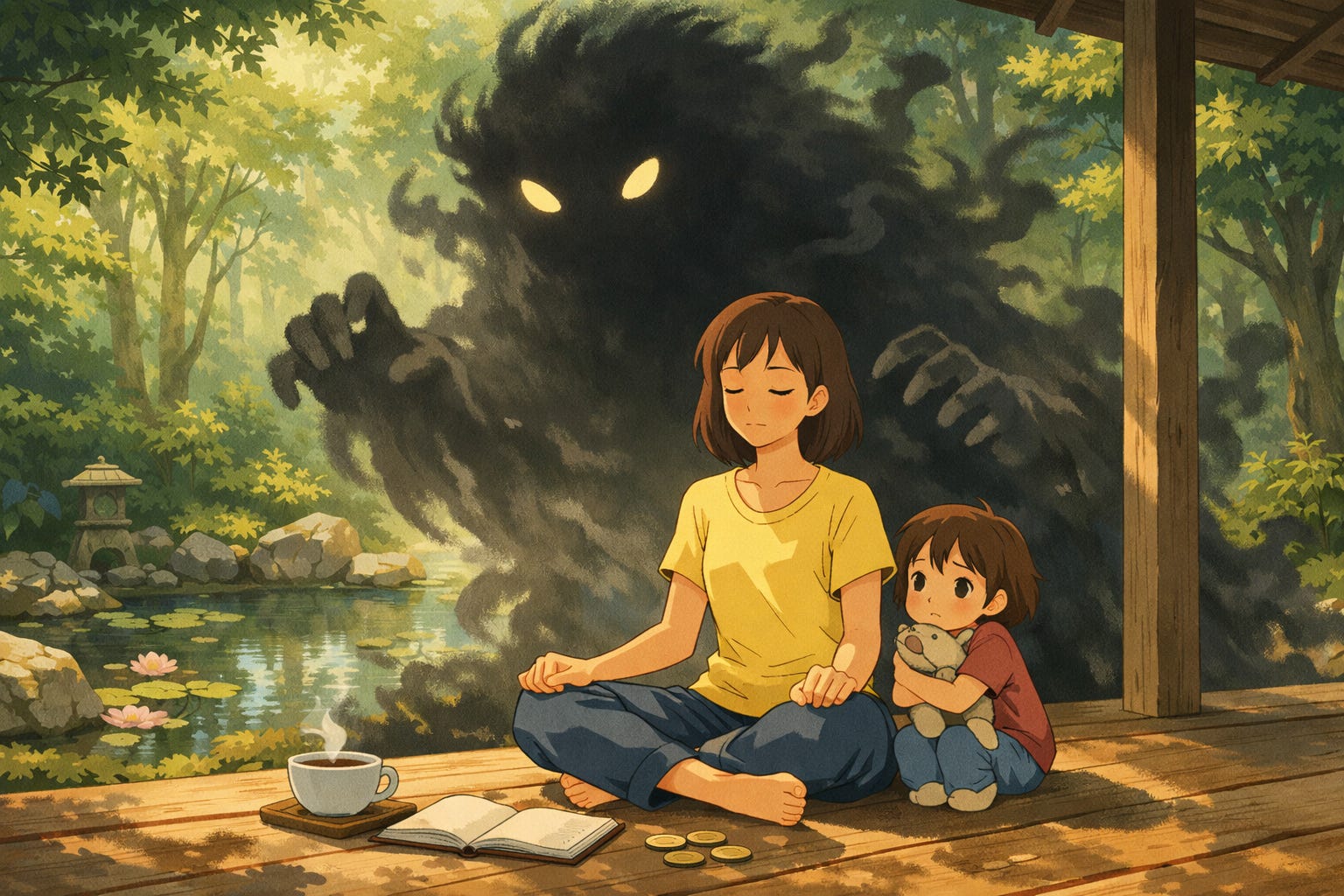
This is why some of our most troubling behaviours make more sense when viewed through the lens of ‘Misread Danger’. We may try to control because control seems like protection. We may manipulate because that seems like survival. We may become rigid, defensive, or overbearing because our Inner Child believes that if it does not take charge, something terrible will happen. That does not make us bad. It means an old alarm system is still ringing.
In our previous teaching, we were reminded: “We begin by turning inward, guided by the ‘Golden Thread Process’ of inner inquiry, which rests on a simple yet transformative question: ‘What do we believe, and why do we believe it?’” That question is the doorway out of confusion. Instead of asking only, “Why did I react like that?” we ask, “What did I believe that warranted that reaction?” Often, the answer is startling. We were not responding to reality as it is. We were responding to a belief that discomfort meant danger.
This distinction matters deeply. If we call ourselves bad, we collapse into shame. If we recognise misalignment, we can become honest without becoming cruel. We can say, “This strategy once tried to protect us, but it no longer aligns with my truth.” That is accountability without self-abandonment. It is how we begin to step off the ‘Carousel of Despair’.
The False Virtue of Control
There is often a hidden innocence inside controlling behaviour, although that innocence does not remove responsibility. Our Inner Child may believe that by managing everyone else, predicting every outcome, and staying emotionally armed, it can prevent the rise of fear, shame, or rejection. Yet this is not genuine safety. It is false safety built on a misalignment.
The counterargument is easy to understand. Some might say, “But control helps us prepare. It keeps us from being blindsided. It protects us.” And yes, there is wisdom in practical preparation. Taoism is not asking us to become careless. But there is a profound difference between wise readiness and fear-based rehearsal. One is rooted in clarity, the other in panic. One conserves energy, the other burns through it.
In our previous teaching, we read: “What do you believe right now? Why do you think this discomfort means danger?” This is the very question control tries to avoid. Control wants action before reflection. It wants movement before truth. But wu wei teaches something far more stable. It teaches us to pause long enough for the truth of our Shen to lead. Not passivity, not avoidance, but an authentic response that arises from the ‘Power of Three’, our truth, honesty and integrity, rather than emotions like fear or anxiety.
When we mistake emotional discomfort for real danger, we wear ourselves out. We are not always tired just because life is busy. Often, we are tired because we expend so much energy guarding ourselves from things that are not actually happening. We brace for rejection, imagine the worst, and try to protect ourselves from future pain before it even arrives. Over time, this drains us. Our minds become crowded, our thinking becomes stiff, and we lose touch with the calm guidance of our Shen. When the mind is full of fear and alarm, it is very hard to let in new truth.
Emptying the Cup
A child’s mind absorbs quickly because it is spacious. Our adult mind often resists new truths because it is full of old experiences and conclusions. When our Inner Child has built an entire safety system around certain beliefs, those beliefs do not step aside easily. They harangue us, pressure us, and insist that the old map is still correct. Yet if we want a new understanding, we must create room for it.
One of the profound teachings of our Tao Te Ching translation says: “Learn to be empty if you want the Tao to enter.” This is not an invitation to become blank or detached from life. It is an invitation to loosen our grip on rigid interpretations. To empty the cup means to stop worshipping old thoughts simply because they are familiar. It means saying, “Perhaps this belief protected us once, but perhaps it is no longer true.”
This is where many readers may discover a breakthrough. Emptying the mind does not mean fighting with every thought. It means refusing to let every thought become authority. It means resting enough to observe rather than obey. It means breathing long enough to hear the quieter voice beneath the emotional noise. Verse 16 brings this home beautifully: “Empty yourself of everything. Let the mind rest at peace. The ten thousand things rise and fall while the self watches their return. They grow and flourish and then return to the source. Returning to the source is stillness, which is the way of nature.” Stillness here is not laziness. It aligns with our Shen spirituality. It is the refusal to let panic define reality.
And this also speaks to energy. When we stop treating every emotional disturbance as an emergency, we reclaim enormous inner resources. The energy that was spent on overexplaining, controlling, pleasing, rehearsing, and worrying can finally return to us. Our system softens. Our authenticity rises. We become more teachable, more stable, and more capable of leading our Inner Child with loving authority.
Not Opposites, but Balance
Another important thread in this teaching is the insight that positive and negative do not need to destroy one another. In nature, opposites complement each other. This is deeply Taoist. Yin and Yang are not moral labels. They are movements of life. Receptivity and action, softness and firmness, rest and expression, all have their rightful place. The problem is not that we contain opposites. The problem begins when one side is hijacked by the other.
When aligned, our fierceness becomes a healthy boundary. When misaligned, it becomes control. Our softness, when aligned, becomes openness and grace. When misaligned, it becomes appeasement or collapse. So, the goal is not to erase whole parts of ourselves in pursuit of some polished spiritual image. The goal is to bring every part back into a harmonious relationship.
This is where a phrase like my “bad side” becomes misleading. It tempts us to split ourselves into heroes and villains. Yet Taoism invites integration, not inner war. We do not need to absorb or destroy our intensity. We need to educate it. We do not need to condemn our fear. We need to understand the belief that gave rise to it. We do not need to shame our reactions. We need to ask whether they align with our Shen.
In our previous teaching, we were reminded: “Reality does not align with our beliefs; we must align our beliefs with reality.” There is the heart of the matter. Our suffering often increases when we demand that life obey an old emotional script. Healing, or rather alignment, begins when we let truth update the script.
There is something deeply hopeful when you begin to have the gentle insight that the same childhood fear cannot be recreated in quite the same way now. That means truth has already entered. The old belief is no longer in control. The adult self knows more. Our Shen knows more. The fear may still arise, but it no longer owns the entire house. This is how real change often begins, not with fireworks, but with interruption. The old pattern rises, and for one sacred moment, we do not fully believe it.
Returning to Centre
What then do we do when our Inner Child creates emotional storms from outdated beliefs? We do not ridicule it, nor do we obey it. We guide it. We become the calm adult within, rooted in the ‘Power of Three’: truth, honesty, and integrity. We ask what belief is active. We notice the urge to call discomfort “danger.” We create space. We rest. We breathe. We choose not to Criticise, Compare, or become Judgmental (CCJ) toward ourselves or others. We take the next small, manageable step.
This is where wu wei becomes a living practice. Effortless effort is not doing nothing. It is doing what is aligned without the strain of fear-based force. It is letting truth lead instead of panic. It is moving from the spiritual centre rather than from emotional chaos. And from that place, our Inner Child gradually learns something life-changing: safety does not come from controlling everything. Safety comes from being a ‘good sailor’ and growing our capacity to meet reality as it is.
Let us return now to ‘Misread Danger’. The title itself offers the lesson. Much of what we have called emotional danger was discomfort interpreted through an old lens. Much of what we have called badness was misalignment wrapped in shame. Much of what we have called weakness was simply exhaustion from carrying an alarm system that never learned to switch off.
So, let us walk gently from here. Let us question the old emergency signals without denying that they once seemed necessary. Let us remember that our emotions are created through our beliefs and interpretations, and therefore, they can teach us where alignment has been lost. Let us refuse to hand our authority to panic, and let us keep returning to the quieter wisdom of our Shen.
As we close, let this be our encouragement and our call to action. Never doubt yourself. Never assume that because a pattern is old, it is permanent. Never believe that one frightened reaction defines your character. Take small, consistent, manageable steps without expectations or CCJ. One belief honestly examined today can change the course of tomorrow. One pause before control can restore dignity. One moment of stillness can return us to the Tao. Let us affirm together: “We no longer confuse emotional discomfort with danger. We choose truth over panic, alignment over control, and gentle consistency over harsh self-judgment. We trust our Shen, we guide our Inner Child, and we walk forward in wu wei, one small, honest step at a time.”
That is the quiet power of ‘Misread Danger’. It reminds us that the alarm is not always the truth, and that when we breathe, drop our shoulders and return to the centre, we discover we were never as powerless as we once believed.
Have you ever noticed how quickly our Inner Child can turn a possibility into a prophecy, then react to that prophecy as though it were already happening? Have you ever stood in a quiet room, with nothing yet confirmed, and still created anxiety, dread, or collapse in advance, as though the future had already entered the body and announced its verdict? And have you ever mistaken that intensity for wisdom, believing that because it seems strong, it must be true?
In ‘Forecast Is Not Fate’, we explore a subtle yet profound misunderstanding that lies at the centre of many red-light emotions. We already know, from our previous teaching, that our Inner Child loves to rehearse, future-proof, and demand certainty. We know that emotional logic seeks to create safety through prediction, while Shen guides us with the ‘Power of Three’: truth, honesty, and integrity. Yet there is a fresh angle here that deserves our deepest attention. Our Inner Child does not merely imagine future events; it often imagines our emotional reaction to those events, creates that reaction now, and then uses it as evidence that the future is dangerous. In other words, we not only fear what might happen, but we often suffer from what we believe our emotions will be when it happens.
This matters because many of us have unknowingly given emotional rehearsal the authority of truth. We say, “Look how distressed I am, so this must mean something terrible is coming.” But Taoist wisdom gently asks us to slow down. Emotion is real, but the conclusion attached to it may still be false. The signal may be real, while the story is borrowed. The sensation may be present, while the danger is imagined. Until we understand this distinction, we can live under the rule of forecasts that never become weather, and we can keep stepping onto the ‘Carousel of Despair’ without realising we built the ride ourselves.
When Our Inner Child Rehearses Collapse
Our Inner Child does not approach the unknown with openness. It approaches it with memory and negative presumptions. It nags, criticises, and pressures us using old conclusions dressed up as present insight. It says, “We know how this goes.” It says, “We will not cope.” It says, “This will overwhelm us.” It says, “Better to prepare for the worst now than be caught off guard later.” The tragedy is not only that these thoughts arise, but that we so often mistake them for intuition rather than our Inner Child’s protection game.
This is where the fresh perception begins. The event has not yet happened, but our Inner Child has already cast us in a role within it. It has imagined the conversation, the disappointment, the mistake, the abandonment, the humiliation, or the pressure. Then it adds a second layer, even more troubling. It imagines our emotional collapse inside that future scene. It does not just say, “That may happen.” It says, “And when it does, we will not know what to do.” This is why the reaction can seem so convincing. We are not merely thinking about the future; we are mentally living a defeat within it.
What a burden that is. We suffer the present moment, then suffer an imagined future, then suffer our imagined reaction to that future, all before life has actually asked anything of us. No wonder some days seem heavy before they have even begun. No wonder a simple possibility can seem like a mountain. It is not always the event itself that drains us. It is the emotional rehearsal around the event, the quiet inner theatre that keeps staging catastrophe as if preparation and suffering were the same thing. Yet they are not the same.
Preparation belongs to Shen. Rehearsal belongs to fear. Preparation asks, “What is wise?” Rehearsal asks, “What is the worst thing that could happen, and how quickly can we panic about it?” Preparation creates clarity. Rehearsal creates emotional fog. Preparation works with reality. Rehearsal works on worst-case scenarios. This is why our previous teaching on emotional logic remains so important. Our Inner Child interprets intensity as authority, but Shen sees intensity as a reason to investigate the belief beneath it.
The Body Is Not the Proof
A great confusion for many of us begins in childhood. If something is present in the body, it seems physical, final, and factual. The stomach tightens, the chest contracts, the pulse changes, the throat closes, and a child naturally concludes, “This must be dangerous.” But this misunderstanding often follows us into adulthood. We forget that emotions are created through interpretation and belief, then expressed through the body. The body is the messenger board, not the judge in the courtroom.
This does not make our emotions unimportant. Quite the opposite. It makes them deeply meaningful. But meaningful is not the same as infallible. When our Inner Child creates a future reaction now, the body may respond as though the threat is already present. The sensations are real. The bodily experience is real. But that still does not prove the forecast is true. It proves only that a belief has activated our emotional system. This is why our Shen insight is so valuable. Cognitive and spiritual experiences are not the same as physical facts, even though they may be expressed in physical terms. Shen understands the difference. Our Inner Child often does not.
This is where humility becomes a form of freedom. We stop saying, “Because I am anxious, danger must be here.” Instead, we learn to say, “Anxiety is here, so let us ask what belief is creating it.” That one shift takes us from victimhood to authorship. It returns us to self-responsibility. It restores our ability to distinguish between a signal from Shen and a negative projection from our Inner Child.
The I Ching offers a beautifully grounding insight in Hexagram 15, ‘Modesty’, where we are reminded that “The ingredients are already on hand for dealing with problems that arise; we need to add nothing or take anything away.” This directly contradicts our Inner Child’s dramatic forecast. Emotional logic says, “We need more certainty, more control, more reassurance, more rehearsal.” But ‘Modesty’ says something gentler and truer: what is needed for the moment will reveal itself in the moment. We do not need to pile imagined suffering on top of reality. We do not need to add thunder to a sky that has not yet darkened. What a relief that can be!
It means awareness is safety, not certainty. It means access to Shen is safety, not prediction. It means our peace does not depend on knowing the whole path in advance, but on trusting our capacity to meet the next true step with authenticity. That is why the return to Shen is so important. Shen was never absent. What changed in so many of us was our access to it beneath the noise of emotional logic.
Forecasting Is Not Wisdom
Our Inner Child likes to disguise fear as intelligence. It says, “I am just being realistic.” It says, “I am only preparing.” It says, “This is wise caution.” Sometimes there is a grain of truth here, which is why the pattern is so persuasive. Of course, practical planning can be useful. Of course, discernment matters. And, of course, we do not walk into life unthinkingly with careless optimism. But the Tao asks us to notice when planning becomes an emotional occupation, when discernment becomes obsession, and when caution becomes self-created imprisonment. There is a profound difference between seeing a possibility and bowing before it.
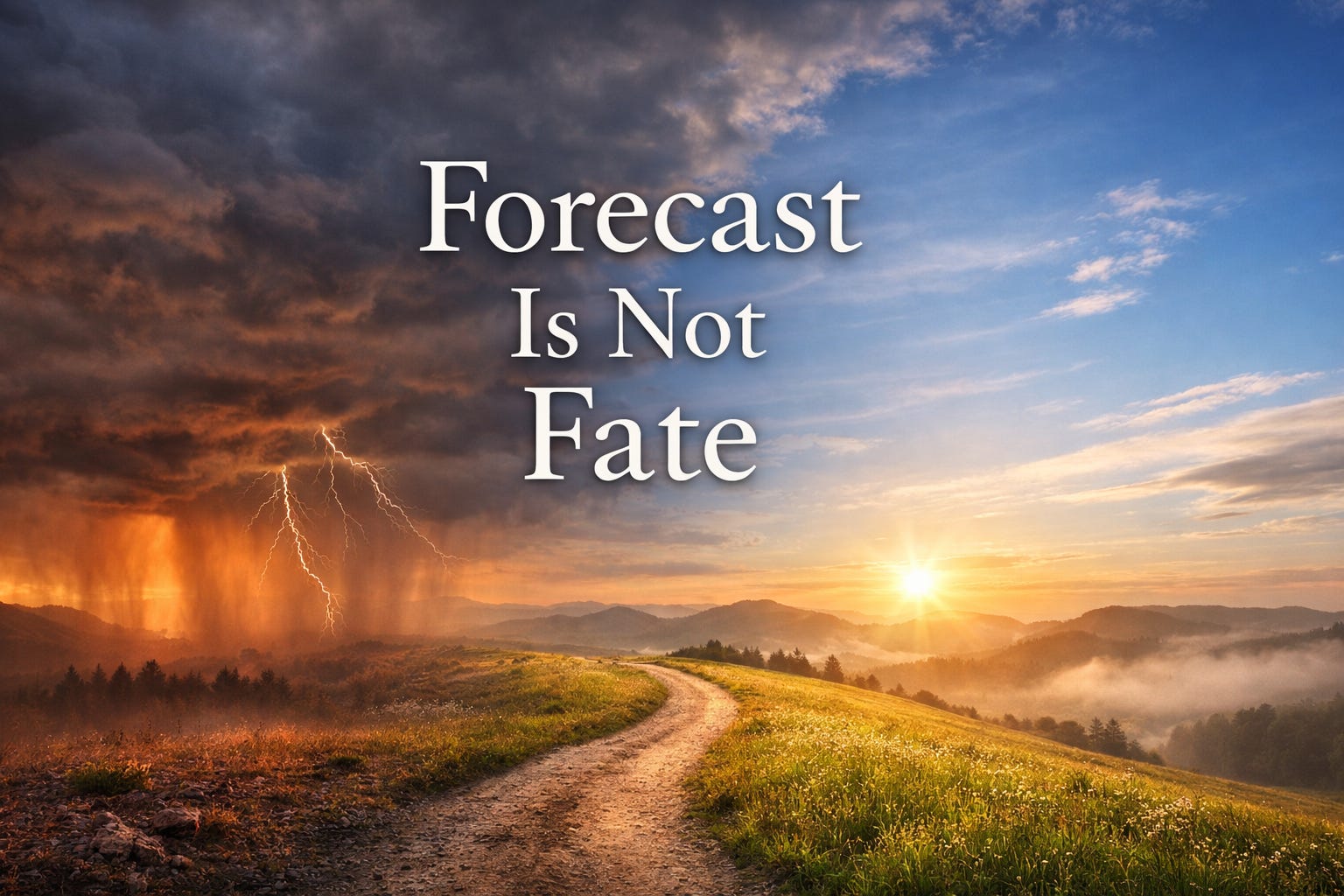
A weather forecast may suggest storms, but we do not usually lie down on the floor in despair because clouds may appear tomorrow. We understand the difference between information and events. Yet our Inner Child rarely grants us that same maturity in emotional life. It treats every projection as a near certainty, and every near certainty as an emotional emergency. Then it pressures us to obey what it has invented.
This is why we need a spiritual correction. In a previous teaching, we said: “The truth does not need to be proven. It only needs to be lived.” That sentence matters here because emotional rehearsal is often a desperate attempt to prove a fearful belief before reality intervenes. We start gathering imagined evidence. We brace. We interpret. We prepare for our collapse. But Shen does not do this. Shen lives by truth rather than emotions like fear.
The Tao Te Ching also points us back toward this quieter way. In the teaching on emptiness and space, we are reminded that when the mind is cluttered with projections, negative thoughts, and fearful self-talk, we leave no room for new possibilities to enter. Space is not emptiness in a bleak sense. It is openness, usefulness, and capacity. The cup serves because it is not already full. The wheel works because of its open centre. Likewise, our inner life becomes wiser when it is not stuffed with worst-case scenarios and rehearsed suffering.
So, perhaps the problem is not only that our Inner Child forecasts pain. Perhaps the deeper issue is that it leaves no inner space for grace, surprise, adaptability, or Shen. It fills tomorrow with panic before tomorrow has even had a chance to speak.
Returning to Real Time
This is where wu wei becomes practical rather than poetic. Wu wei does not ask us to deny emotion or pretend uncertainty is easy. It asks us to stop forcing life through projection and to return to what is actually here. That is the real movement of alignment. We do not argue endlessly with the future. We do not chase certainty through imagination. We do not hand our authority to forecasts. We come back to real time and real life.
And in real time and life, the questions become much simpler and much kinder. “What outcome are we rehearsing? What belief says we cannot cope? Is this Shen guidance, or Inner Child memory?” These questions help us stop living in advance. They guide us back beneath the emotional noise to the belief structure that created it. They restore proportion. Because the truth is, much of what our Inner Child predicts is not fate at all. It is memory trying to control possibility. It is an old script being pushed onto a new stage. It is a childlike demand that the future behave in a way that never triggers old uncertainty and patterns again. That demand is understandable, but it is not wisdom.
Real wisdom is quieter. It says, “We do not know yet.” Real wisdom says, “When the moment comes, we will meet it.” Real wisdom says, “We do not need to know the whole staircase to trust the next stair.” This is the living heart of Taoism. Not passivity, not carelessness, but alignment with what is true now.
I Ching Hexagram 52 offers a beautiful companion to this way of living: “Stillness within movement is clarity. Through inner calm, one sees the truth without confusion.” We do not need the world to stop moving before clarity is possible. We need stillness within. We need the courage to stop rehearsing and start relating to what is actually present. And what is usually present? One moment. One breath. One belief. One next step. A conversation to prepare for, honestly, not catastrophically. A fear to trace back, not obey. A boundary to hold. A task to begin. A pause to honour. A truth to admit. This is how we step off the ‘Carousel of Despair’, not through force, but through reduction. We stop trying to solve tomorrow emotionally and return to the smallest, true action we can take today.
So, let us draw this together with warmth and clarity. Our Inner Child may forecast many things. It may predict embarrassment, rejection, overwhelm, abandonment, or collapse. It may create an emotional reaction before the event, then point to that reaction as proof that danger is near. But ‘Forecast Is Not Fate’ reminds us that projection is not prophecy. A bodily sensation is not a final verdict. Emotional logic is not Shen. We are not called to obey every internal rehearsal. We are called to understand it.
Let us remember that we create our own emotions through our beliefs and interpretations. Others cannot place rejection, validation, or love inside us, nor can they take those things away. What we experience emotionally is always shaped by the meaning we create. Once we understand that, the future loses some of its false authority. It becomes open again. Spacious again. Honest again. And we return to the quiet truth that has been waiting for us all along, that awareness is powerful, Shen is our guide, and real life is always lived one authentic step at a time.
Affirm: “I do not mistake projection for truth. I question the forecast, return to Shen, and meet life in real time. I take small, consistent, manageable steps without CCJ, trusting authenticity, alignment, and the effortless effort of wu wei.”
As we close ‘Forecast Is Not Fate,’ let this be our invitation for the week ahead. When our Inner Child pesters us with imagined outcomes, let us not criticise it or collapse into it. Let us educate it. Let us remind ourselves that a forecast is only a thought about a future possibility, not a sentence written in stone. Let us return to wu wei by taking small, consistent, manageable steps without expectations or CCJ. Let us never doubt ourselves. Let us trust that Shen already knows how to meet life in real time. And let us keep walking, softly but surely, in the ‘Power of Three’: truth, honesty, integrity, and flow.
Have you ever reached that sharp inner edge where one more task, one more misunderstanding, one more flare of pressure seems to confirm a frightening thought, “This is the moment I cannot cope”? Have you ever watched your mind turn one difficult moment into a lifetime sentence, as if the whole future has just collapsed into a single breath? And have you then believed that the sheer intensity of your emotions must prove something terrible is true about you?
In ‘Borrowed Alarm’, we are going to look at a very important misunderstanding, one that sits quietly beneath so many red-light emotions and survival reactions. We will explore why pressure is not always proof, why our Inner Child often mistakes cumulative strain for present-day truth, and why emotional logic turns exhaustion into identity. We will also look at the deeper Taoist correction: that coping is not future-proofing every possible outcome, but simply returning to the next smallest true step in authenticity, guided by Shen and the effortless effort of wu wei.
This matters because many of us have been taught, directly or indirectly, that if we are distressed enough, then our distress must be telling the truth. Yet Taoist wisdom invites us to pause and look more carefully. Our emotions are real, but they are not always reliable narrators. Some arise from Shen and bring peace, contentment, clarity, and quiet confidence. Others are created by our Inner Child’s beliefs and act as signals of disharmony, unresolved issues, or resistance to truth. When we do not understand this difference, we can become loyal to emotional intensity rather than to wisdom. Then the ‘Carousel of Despair’ begins to spin again.
When Pressure Pretends to Be Truth
One of the most important shifts we can make is this: emotional pressure is not the same as truth. Pressure is often accumulated through interpretation. It is the emotional cost of how our Inner Child has been reading life. A moment happens. Something goes wrong, or seems uncertain, or does not go as planned. Then our Inner Child begins its familiar work. It nags, “No one is on our side.” It criticises, “We should have handled this better by now.” It warns, “If we do not get control immediately, everything will get worse.” It pressures, “This never stops, this is too much, this is the one that will break us.” Very quickly, the event itself is no longer the only issue. The event has been wrapped in old beliefs, old conclusions, and old emotional habits.
This is why two people can face the same practical challenge and create very different emotional worlds around it. One sees a difficulty. The other sees an opportunity. One sees a step to take. The other sees proof of abandonment, proof of incapacity, proof that life is unsafe. The difference is not in the event itself, but in the belief system brought to it. Our Inner Child often confuses familiarity with accuracy. If we have repeated a belief for years, such as “I must hold everything together,” or “If no one helps me, I am alone,” or “If I do not know how this ends, I am not safe,” then the emotional reaction those beliefs create can seem deeply convincing. Emotional logic says, “Look how scared I am, so it must be true.” Shen’s logic says something much wiser: “Look how intense this is, so there is likely a belief here worth examining.”
That one shift changes everything.
The Tao Te Ching gives us a beautiful reminder in Verse 23: “Tornadoes and hurricanes do not last forever; Even the most significant floods slowly disappear.” This is not merely a poetic line about nature. It is also a direct correction to the frightened mind. Extremes pass. Surges pass. Inner emotional weather passes. Our Inner Child treats an emotional spike as a permanent state, but the Tao teaches us to recognise movement, rhythm, ebb, and return. So, when pressure rises, we do not need to conclude that we are failing. We may simply be witnessing a backlog of unchallenged beliefs reaching a peak.
The Hidden Cost of Future Proofing
A fresh perception on this teaching is that overwhelm is often less about what is happening and more about the hidden cost of trying to make life emotionally safe through control. Our Inner Child does not usually want truth first; it wants protection first. It wants guarantees, rehearsals, certainty, escape routes, and the impossible promise that if we worry hard enough, nothing painful will happen. But this strategy has a price.
When we spend our days trying to future-proof life, every challenge becomes heavier than it needs to be. We are no longer just doing the task at hand. We are carrying the future, rehearsing outcomes, resisting uncertainty, and arguing with reality before reality has even unfolded. That is exhausting. Over time, it seems as though life is too much, when in fact the method has become like walking through quicksand.
This is why the thought “I can’t cope” can be so misleading. It often does not mean we cannot cope with reality. It means we cannot keep coping with the old strategy. We cannot keep carrying ten imaginary worst-case scenarios while trying to live one actual day. We cannot keep using emotional logic and expect peace. We cannot keep asking our Inner Child to run round and around the system and then wonder why we are so tired.
In our previous teaching, we said, “We do not need to be perfect to be safe. Our worth is not a loan. It cannot be taken, and it does not need to be proved.” That insight takes us even deeper here. If our worth is not on trial, then neither is every difficult moment. Not every challenge is a test of our values. Not every emotional flare is proof that we are on the verge of collapse. Sometimes it is simply the result of carrying our past life in a way the Tao never asked of us.
A helpful counterargument may appear here. Our Inner Child may protest, “But worry helps us prepare. Pressure keeps us alert. If we relax, we will miss something important.” This seems sensible until we look closely. Calm prepares more authentically than panic. Clarity sees more than fear. Shen does not become careless because it is peaceful. In fact, peace is often what allows us to respond with truth, honesty and integrity.
As one of our previous teachings explains, being alert is not the same as being anxious, and caring is not the same as rehearsing distress. Wu wei does not mean doing nothing. It means doing what is aligned, without adding strain, fantasy, and drama. It means meeting the real moment, not the invented catastrophe.
The Last Straw Was Never the Whole Story
Many of us have described our breaking point as “the last straw.” Yet the last straw is rarely the whole story. The final moment only appears decisive because it lands on top of a pile. Imagine we have been silently carrying old beliefs for years. “I must not be too much. I must be strong at all times. If others do not understand me, I am alone. If I do not solve this quickly, I am in danger.” These beliefs may operate quietly in the background, but they are expensive. They demand energy. They create red-light emotions. They keep our emotional system in a low-level state of defence. Then one more challenge arrives, perhaps quite ordinary on its own, and our Inner Child declares, “See, this proves it. This is the moment we cannot cope.” But it does not prove that. It proves we have collected a pile of old, familiar, misaligned beliefs.
This is why the ‘Golden Thread Process’ matters so deeply. It helps us stop treating the emotional conclusion as fact, and instead trace the thread back to the belief that created it. We ask, “What do we believe, and why do we believe it?” We do not ask this to criticise ourselves. We ask it to become truthful.
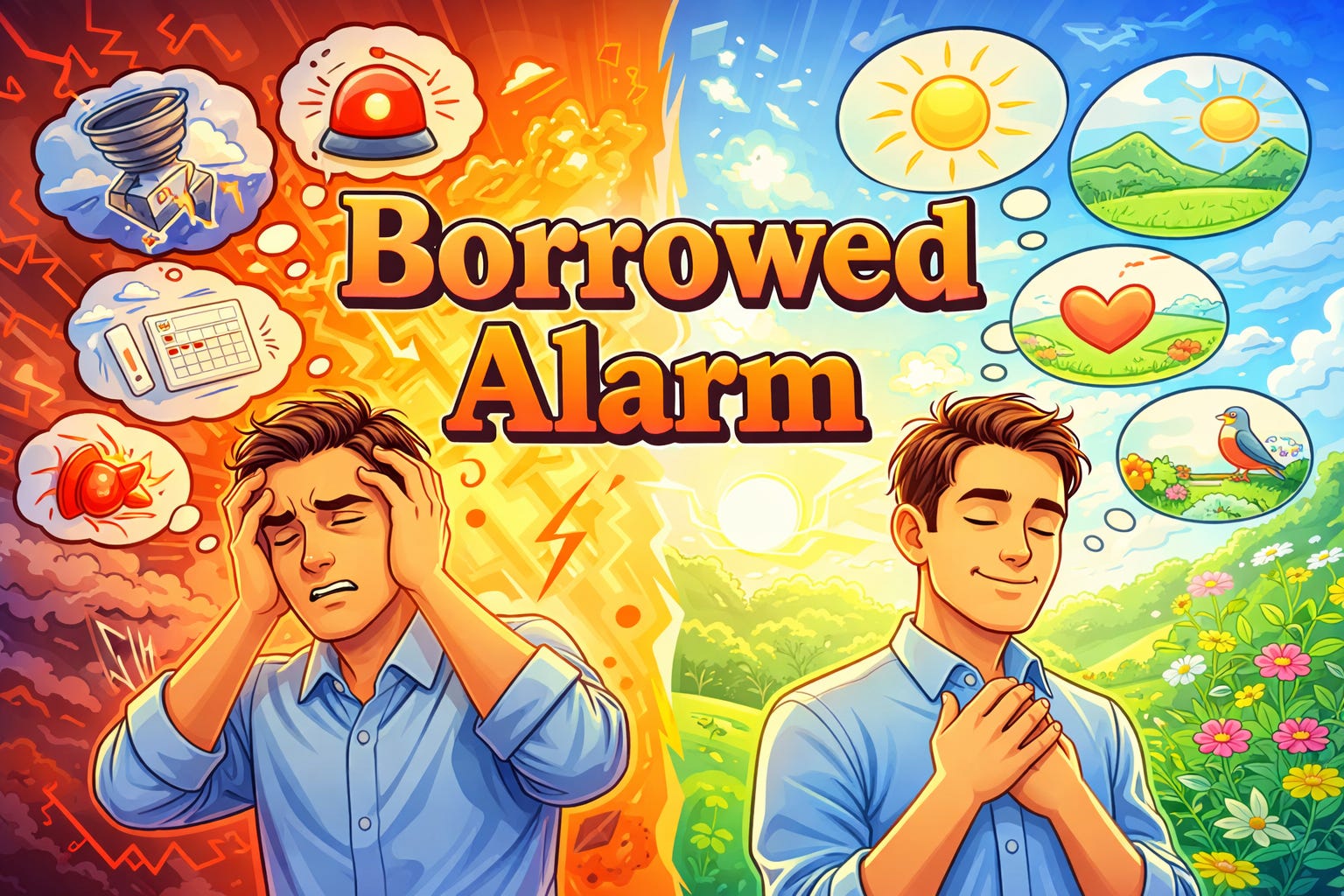
When we follow the thread, we often find that the current pressure is touching something older. The current event may be real, but the meaning we are creating around it is borrowed from the past. The alarm is sounding now, but its script may not belong to now. That is why ‘Borrowed Alarm’ matters as a teaching. Our Inner Child borrows old meanings, old fears, old expectations, and places them onto fresh moments as though nothing has changed. Yet much has changed.
We are no longer as small as the belief suggests. We are no longer without resources. We are no longer trapped in the original misunderstanding. Shen knows this, even when our Inner Child does not. Shen is not impressed by emotional theatre. Shen quietly returns us to truth, honesty, integrity, and the next authentic action. The I Ching’s teaching on ‘Modesty’ offers a powerful correction here. It reminds us that we do not need to make dramatic leaps, and that the ingredients for meeting the moment are often already present. This is such a beautiful answer to emotional logic. Our Inner Child wants to solve the whole staircase. Shen only needs the next true step.
That is why a better question in the middle of a flare is not, “Can I cope with all of this?” That question is too large, too frightening, and too distorted. A wiser question is, “What is the next smallest true step?” That question belongs to the Tao.
Returning to the Next True Step
The opposite of overwhelm is not heroic force. It is a reduction. It is humility. It is coming back into proportion. When our Inner Child is in charge, it turns one moment into everything. It says, “It never stops.” But Shen says, “This is one moment.” It says, “No one is on our side.” Shen says, “That is an old belief, not a current fact.” It says, “We have no options left.” Shen says, “That is how exhaustion interprets life.” It says, “We cannot cope.” Shen says, “We cannot cope like this, through pressure, control, and emotional logic. But we can return to alignment.” That is such a different message.
It is not shaming. It is not harsh. It is deeply compassionate, yet truthful. It does not indulge the frightened conclusion. It educates it. We stop trying to force inner peace through mental struggle, and instead align with what is simple and real. We drink the water. We sit down. We breathe. We name the belief. We separate what is happening from what we are predicting. We cancel what is unnecessary. We ask for help clearly. We take one honest step without expectations, without CCJ (Criticism, Comparison, and being Judgmental). That is how foundations are built, not by preventing storms, but by learning not to turn every storm into a tornado. In our previous teaching, we were reminded that our journey is not about grand leaps, but about small, consistent, manageable steps without CCJ. This is not a lesser path. This is the way of real strength. Grand declarations excite our Inner Child, but steady steps re-educate it.
And perhaps that is the most important perception of all. Our Inner Child is not actually asking for us to solve life. It is asking to be repeatedly shown that reality can be met without panic. That uncertainty can be walked through. Those red-light emotions do not have to become commands. We can create different emotions by holding different beliefs about whether authenticity is safer than emotions. That truth is kinder than drama.
Let us close ‘Borrowed Alarm’ by returning to what matters most. We are not broken because pressure rises. We are not failing because an old belief flares. We are not weak because our Inner Child still creates intense reactions. We are learning to distinguish between emotional logic and Shen logic, between alarm and truth, between cumulative pressure and present reality.
The Tao is not asking us to become invulnerable. It is asking us to become aligned. It is asking us to stop treating every red-light emotion as a final answer and to trace it back to the belief beneath it. It is asking us to guide our Inner Child with truth, honesty, integrity, and patience. It is asking us to stop future-proofing life and begin trusting our next true step.
Affirm: “I do not mistake pressure for truth. I guide my Inner Child with honesty, and I return to Shen through the next smallest true step. In alignment with the Tao, I walk forward without CCJ, trusting effortless effort and my innate worth.”
So, this week, whenever pressure peaks, let us remember ‘Borrowed Alarm’. Let us ask, “Is this the truth of the moment, or the weight of an old belief?” Let us refuse to let intensity become authority. Let us come back to the calm intelligence of Shen. Let us take small, consistent, manageable steps without expectations and without CCJ. And above all, let us never doubt ourselves. We have always had more resilience than our frightened thoughts admit. We do not need to prove it through struggle. We only need to live it through alignment, one authentic step at a time.
Moments of Inspiration…
Truth Before Turmoil
Have we ever spoken from pain, only to realise later that we had abandoned our deeper knowing just to quiet the storm within? This is one of the great life lessons on the Taoist path: intense emotion can seem convincing, but it is not always truthful. As we have taught before, ‘Emotions are messengers, not masters. They are signs, not destinations’
When fear rises, when anger burns, when sadness presses hard against the heart, our Inner Child may insist, “Act now, protect now, prove now.” Yet Shen speaks differently. Shen does not shout. It waits in stillness, asking us to pause, breathe, and return to truth. Emotional intensity is not the same as inner wisdom. In fact, many of our strongest reactions are created by old stories and beliefs that no longer deserve authority over our lives
Wu wei invites us into another way. We do not suppress emotion, nor do we surrender our truth to it. We listen with compassion, then respond with truth, honesty, integrity, and calm clarity. The Tao reminds us that what is true does not need to panic. It remains. When we stop treating emotion as proof, we step off the ‘Carousel of Despair’ and come home to ourselves
So this week, let us not betray our truth to satisfy a passing emotional storm. Let us stand gently, clearly, and faithfully in what we know.
Affirm: “I honour my emotions with compassion, but I choose truth, clarity, and alignment to guide me.”
Let this be the week we pause before reacting, trust our Shen, and walk forward in the quiet strength of what is real.
In the Next ‘Inner Circle’ (Paid) Journal…
Unpriced Spirit
Beyond the Trial
More Than Happened
Moments of Inspiration
In the Next Free Journal…
Relief Before Truth
Borrowed Burdens
Rooted Enough
Moments of Inspiration
Journal #F074 30/04/2026
Contact: info@wuweiwisdom.com
Website: www.wuweiwisdom.com
YouTube: www.youtube.com/user/WuWeiWisdom
Facebook Community: www.facebook.com/groups/wuweiwisdomcommunity/