
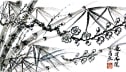
Radiant Stillness
This week trusting your 'inner rhythm' remebering who you are beneath the emotional noise and finding the path home that leads to peace. Finally looking at the 'Monkey Mind'

Slow down and trust the Tao. Like flowers, I do not chase the bees; I bloom, and in wu wei, my worth, clarity, and peace arrive naturally when I align and radiate.

Have you ever wondered why so many of us are always chasing something, recognition, love, clarity, or success, only to find that the faster we run, the further away those things seem to drift? Have you noticed that even when we achieve what we set out to pursue, the satisfaction rarely lingers? Instead, we often find ourselves caught in another cycle of reaching, grasping, and striving again. Beneath all this activity lies a belief we rarely question: the belief that we must ‘chase’ what matters. But what if the Tao teaches us something entirely different?
There is a Taoist truth so subtle and yet so radical that it can transform how we relate to ourselves, our emotions, and the very rhythm of our lives. It begins with a metaphor so gentle it can be missed if we rush past it. But if we pause, if we truly listen, it speaks to something ancient and essential within us: “Flowers do not chase the bees. They bloom, vivid, still, unapologetically radiant. The bees arrive, drawn not by demand, but by quiet power.”
This image is not a poetic indulgence. It is a teaching. It carries the heartbeat of the Tao. The flower does not wait passively. It is not idle. But neither does it chase. It naturally aligns. It grows. It roots. It opens. And by doing so, it becomes magnetic.
In the same way, when we return to alignment with our Shen, our true spiritual essence, we also become magnetic, not through performance or persuasion, but through authenticity. Our Shen does not seek validation. It does not plead or grasp. It radiates.
The modern world, however, teaches the opposite. Especially when our Inner Child is in control, the strategy is misguided but straightforward: chase approval. Prove your worth. Do more. Be better. Be perfect. Be more. Be louder. Our Inner Child mindset, shaped by misunderstood childhood experiences, holds that value must be earned. That being still means being forgotten. That worth is conditional on performance.
But the Tao whispers something different. And if we are still enough, we can hear it. The Tao Te Ching in Verse 1 reminds us, “So, trusting in nothingness means embracing abundance.” This paradox is not meant to confuse; it is intended to realign. When we empty ourselves of the desperate need to chase, when we let go of attachment to desired outcomes, we become full, not with grasping, but with peace, clarity, and presence. And from this alignment, what is truly meant for us begins to flow toward us.
This is not mystical wishful thinking. It is not the diluted version of ‘manifestation’ so often popularised. It is the law of energetic alignment. It is the Taoist ‘Law of Attraction’, not through control, but through authenticity.
When we are in our Shen, we do not need to ask: “How do I make this happen?” or “How do I get them to choose me?” Instead, we ask: “What part of me believes I must become someone else to be chosen at all?”
This questioning opens the ‘Golden Thread Process’ that leads us to our Inner Child thinking and emotional logic. The part of our psyche that badgers us with beliefs like, “If I’m not needed or useful, I’ll be abandoned,” or “I must be perfect to be loved.” These beliefs create powerful emotional storms, feelings of anxiety, urgency, and unworthiness. But these are not truths. They are echoes. They are remnants of immature emotional logic.
Let us remember: our emotions are self-created. They do not arise from nowhere. They are generated by what we believe, think, or choose. If I believe I must chase approval to be safe, then I create feelings of desperation when I am not validated. If I believe I must work harder to be worthy, then stillness will ‘feel’ dangerous. But what if that belief is wrong?
The I Ching speaks of this beautifully in Hexagram 1, Ch’ien, the Creative: “We are the architects of our journey, sculpting it with intention (Yi) and painting it with the vivid colours of our spirit.” When we sculpt our journey from desperation, we distort its shape. But when we sculpt it from alignment and being in our flow, we create with clarity.
So, how do we return to this alignment? Not by doing more, but by unlearning. Not by pushing, but by softening. Not by shouting louder, but by listening inward. Consider this: bees are not commanded. They are drawn. Likewise, peace, love, creativity, and fulfilment are not coerced; they are attracted. When we are truly rooted in our Shen, when we bloom as we are meant to, quietly, vividly, unapologetically, we become radiant. This is ‘Radiant Stillness’. This is the Taoist ‘Law of Attraction’ in its most honest form.
There is a Taoist teaching often overlooked in modern interpretations: ‘you do not attract what you want; you attract what you are aligned with’. The energy you emit, your beliefs, intentions, and truth, is what ripples outward. If you are aligned with lack, you attract confusion. If you align with fear, you attract resistance. But when you are aligned with truth and authenticity, you begin to attract opportunity, connection, and peace, because you are no longer vibrating from your Inner Child’s desperation and wanting control, but from Shen’s knowing and spiritual flow of abundance.
It’s worth pausing here to say: “alignment is not perfection. ‘Radiant Stillness’ is not a rigid pose of serenity. It is flow, honesty, present, and evolving.” Even the flower has moments of bending in the wind, of shedding petals, of waiting through seasons. And still, it does not chase. It blooms.
One of our previous journal posts, ‘Awakening to Your Inner Greatness’, reminds us: “Greatness is not the need to prove or strive, but simply the courage to be authentic, the strength to be kind, and the wisdom to trust your journey.” This greatness is not something to chase. It is something to remember.
Our Inner Child may resist this. It may complain, “But what if they forget me?” or “What if nothing happens if I stop trying?” That’s when we pause, place a hand over our heart, and say: “We are not forgotten. We are safe. We are not empty. We are full of love. We are a spiritual being aligned with the Tao.”
The Tao is not indifferent to us. It is not testing us. It simply waits for us to return to flow. And the flow is not frantic. It is not critical. It does not operate with CCJ—Criticising, Comparing, or being Judgmental. It moves with quiet certainty. It carries what belongs to you when you stop blocking the current of your life with misguided beliefs and emotional noise.
This is the essence of wu wei, effortless effort. Not laziness, but natural alignment and flow. Not passivity, but wise restraint. As we learned in the Journal post, ‘Unfolding the Tao Within’, “Wu wei teaches us to recognise the dance of life’s rhythms, moving gracefully with each moment’s unfolding and relinquishing the need for control.” To move with wu wei is to act only from truth, not fear. To speak only from clarity, not panic. To love without demand. To live without grasping. And when we do? Life does not become perfect. But it becomes ours. And that, more than anything else, is the mark of alignment, and our unique journey of blooming begins to unfold in its natural and authentic timing.
Let us now turn to a very practical application. Suppose you find yourself thinking, “I must reach out again, or they’ll forget me.” Stop. Ask: “What belief says I must chase to be valuable?” That is the ‘Golden Thread Process’. Follow it. Discover its root. Parent it. And then return to your Shen. Affirm gently: “I am the co-creator of my energy. I radiate calm clarity. I attract what is aligned. I bloom.”
This is not a one-time insight. This is a practice. A daily devotion. A repeated return. When the emotions rise again, and they will, we do not panic. We do not chase. We return to ‘Radiant Stillness’.
We allow stillness. We embrace radiant trust. We accept that what is truly meant for us will always find us, not because we chased it, but because we became a match for it. And so we conclude, as we began, with a truth so simple and yet so vast:
‘Flowers do not chase the bees. They bloom.’
They trust the rhythm. They open to their fullest potential. They radiate natural authenticity. And the bees come. Let this be your reminder: “You are not here to chase. You are here to bloom into your authenticity.” Trust in your ‘Radiant Stillness’. Release the CCJ. Take small, honest, aligned steps. Parent your Inner Child with patience, not pressure. And never, ever doubt your worth.
Because what is yours, aligned, honest, and trustworthy, will always arrive on time.
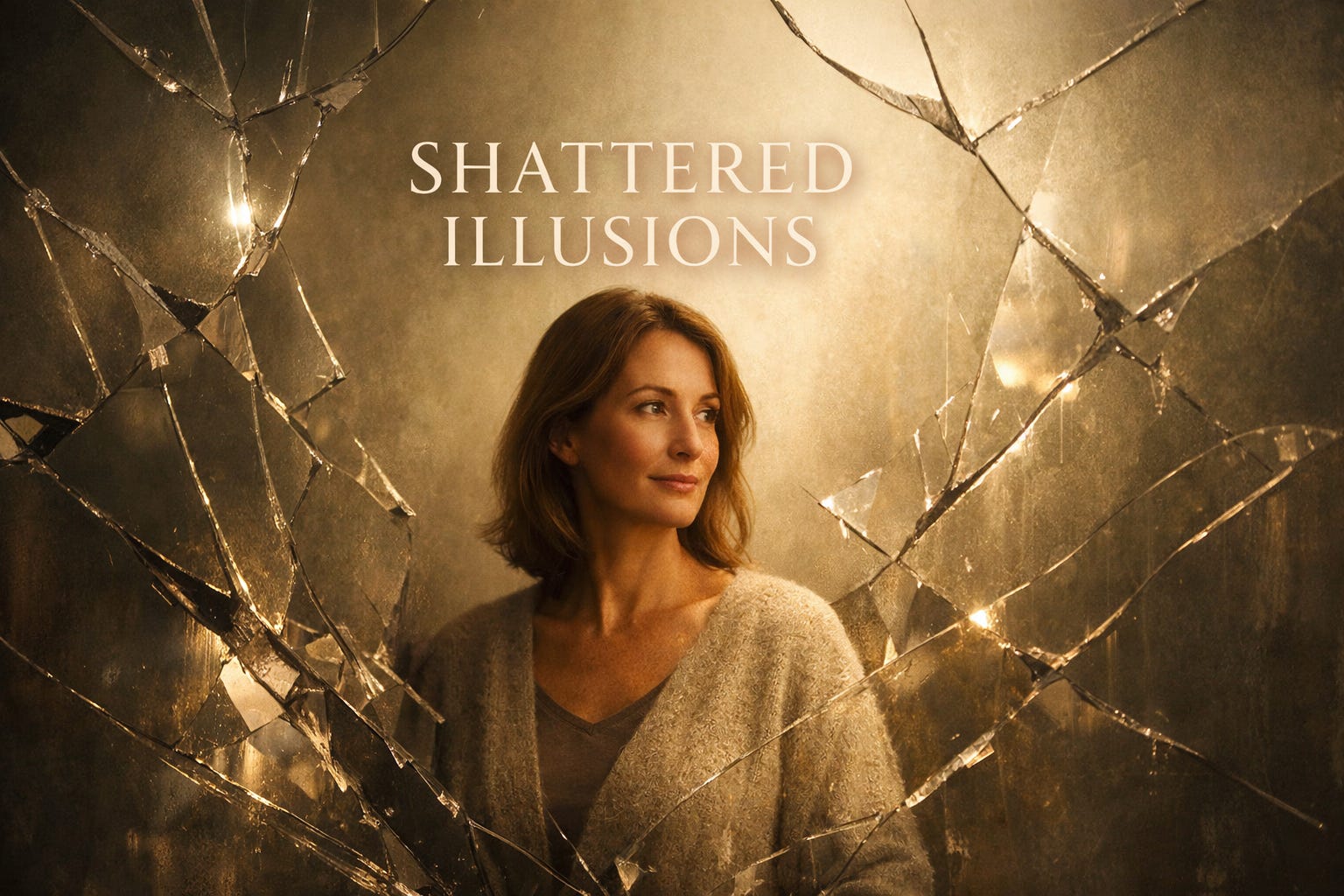
There comes a moment in every life when the pursuit of perfection begins to weigh heavily on the Spirit. Something that once seemed inspiring becomes a quiet source of tension; an ever-moving target that always seems just out of reach. The illusion of perfection persuades us that somewhere out there is a flawless way to live, a flawless version of ourselves, a flawless answer to every question. Yet this illusion clouds clarity, distorts authentic understanding, and intensifies the emotional stories our Inner Child creates.
In this journal post, we will examine why perfection is one of the most persistent illusions of the mind, how it becomes entangled with unresolved issues, and why our Inner Child employs emotional logic to defend this illusion. We will examine Taoist and wu wei teachings to uncover how the belief in perfection disrupts alignment, generates red-light emotional signals, and closes our eyes to our inherent worth. We will examine counterarguments and broader perspectives, including why some insist that perfection motivates success and how Taoism reframes this belief. Along the way, we will draw upon lesser-known verses from the Tao Te Ching and the I Ching to deepen the exploration.
Ultimately, this post aims to help you release the burden of perfection and replace it with something far more expansive: clarity, sincerity, self-honesty, and alignment with your Shen. If perfection has ever pressured, bothered, or badgered your mind, this is an essential teaching for recognising emotional traps, returning to authenticity, and stepping off the ‘Carousel of Despair’.
The Mirage of Perfection
The idea of perfection is one of life’s most convincing illusions. It shimmers like a horizon on a hot day, appearing smooth and completed from a distance, yet dissolving when approached. The perception of perfection does not arise from the world; it is shaped by beliefs, expectations, and the unspoken narratives we attach to ourselves.
The Tao Te Ching reminds us in Verse 1 that “the mystifying and the miraculous enter through the same doorway. Perfection and authenticity also walk through the same doorway of perception. One leads to comparison, pressure, and self-criticism. The other leads to truth, sincerity, and inner strength.
When our Inner Child believes that perfection brings safety, its emotional logic creates fear of falling short, anxiety about being judged, and the draining sensation of never being enough. These emotions do not come from others. No one can put fear or inadequacy into our bodies. We create these emotions through the beliefs we hold. And the belief in perfection is one of the most persistent sources of emotional disharmony.
Nature itself contradicts the very idea of perfection. The I Ching’s Hexagram 1, The Creative, describes life as “constant motion and boundless potential.’ Nothing in nature is completely finished; everything is in continuous transformation. The sky, the river, the mountain, and the leaf all express beauty precisely because they evolve and shift.
Compared with this natural movement, perfection becomes impossible. And yet, how often do we criticise ourselves for not reaching a standard that nature itself does not attempt?
The illusion is powerful because it appeals to our Inner Child’s desire to control uncertainty and avoid rejection. If only we could be perfect, our Inner Child imagines, we would never be criticised, never be judged, never be left abandoned. But this belief is emotional logic, not true Shen logic.
Shen already knows that worth is not earned through flawlessness; it exists inherently. Shen expresses authenticity rather than performance. Shen is stable, transparent, and quietly aligned with the Tao. Perfection, on the other hand, is a mirage that leads us away from alignment, not toward it.
The Emotional Logic of our Inner Child
When we pursue perfection, what are we truly chasing? Not excellence, not authenticity, but emotional safety. Our Inner Child uses emotional logic to convince us that unless we meet impossibly high standards, we are at risk.
Our Inner Child may nag, criticise, complain, or pressure us with thoughts such as:
“You must get everything right.”
“You should already know how to do this.”
“You must not make mistakes.”
“You must impress them.”
These are not truths; they are emotional attempts to avoid discomfort. They seem honest because they elicit intense red-light emotional signals, but emotional intensity is not a measure of accuracy. Our Inner Child is not interpreting life through Shen logic, but through outdated beliefs shaped by moments of fear, confusion, or misunderstanding.
When perfection becomes the goal, even minor missteps seem catastrophic. Our Inner Child pesters us to improve, chastises us for errors, badgers us for reassurance, or complains when outcomes do not match expectations. The belief beneath these reactions is simple but deeply inaccurate: “If I am perfect, I will finally be safe.”
Taoist teachings show us that the search for perfection is a misalignment, not a path to inner strength. Verse 59 of the Tao Te Ching explains that “when rooted deeply, the foundation is firm; when aligned with the Tao, nothing is lost.” This verse does not speak of perfection, but of rootedness and clarity. Perfection does not create spiritual roots; alignment does.
When we act from Shen rather than emotional logic, our choices are steady, sincere, and grounded. When we act out of our Inner Child’s perfectionist demands, our actions become reactive, strained, and fear-driven.
Why We Mistake Perfection for Truth
Perfection seems appealing because it promises certainty. But Taoism teaches that certainty is not a requirement for alignment and flow. Certainty is an emotional expectation created by our Inner Child; alignment is a spiritual truth that is independent of external conditions.
One counterargument often raised is that striving for perfection motivates improvement. Many say that high standards push them to excel. However, Taoism does not endorse low standards; it endorses authentic standards. Excellence arises from alignment, intention, and sincerity, not from emotional pressure or fear.
A Taoist view of mastery is not about perfection; it is about practice, awareness, and responsiveness. A person aligned with the Tao improves through curiosity and openness, not through self-critique or CCJ. Growth becomes a natural movement rather than a forced struggle.
This is echoed in a previous teaching where we explored how “every challenge is a hidden door, an opportunity waiting to be embraced.” The pursuit of perfection closes this door; it narrows experience into a single acceptable path. Perfection shrinks life. Alignment expands it.
The perception of perfection also prevents us from seeing our inherent value. When we believe value must be earned through flawless execution, we become trapped in endless self-measurement. Our Inner Child turns life into a scoreboard, tallying mistakes, omissions, and comparisons.
But as our Shen knows, worth is not conditional. One of the most profound statements from our teachings is: “I am the embodiment of infinite possibility.” This is not a poetic exaggeration; it is a reminder that Spirit is limitless and does not need perfection to be complete. Perfection limits. Spirit expands.
When Perfection Creates Emotional Disharmony
Whenever perfection becomes the lens through which we judge ourselves, emotional disharmony follows. Red-light emotions such as anxiety, shame, or fear are not signs that we are flawed; they are signs that we are out of alignment with truth.
Our Inner Child elicits these emotions to gain attention or to avoid confronting deeper beliefs. If the belief is “I must be perfect,” then any slight deviation becomes proof, emotionally speaking, that we are unsafe. Our Inner Child may harangue us for missing a detail or reproach us for not impressing someone. Yet none of these reactions reflect reality. They reflect a belief that was never true.
Taoism teaches that emotions are natural, but their origin must be understood. Some emotions stem from Shen and express clarity, purpose, and alignment. Our Inner Child creates others and signals beliefs that warrant examination.
A passage from one of our earlier teachings reflects this: “Emotions are signposts, not settlements” This wisdom is essential. Red-light emotions do not tell us who we are; they tell us where we need to look.
Behind every painful emotional reaction lies a belief. And often, the belief is tied to perfection:
“If I am not perfect, I am inadequate.”
“If I am not perfect, others will reject me.”
“If I am not perfect, I will lose control.”
However, none of these beliefs withstands Shen’s logic. They are narratives created by emotional logic, rooted in old unresolved issues rather than clear truth. The Tao does not demand perfection. It invites alignment. Alignment does not rely on flawlessness; it depends on truthfulness.
Releasing the Illusion of Perfection
So, how do we step away from the illusion of perfection and return to alignment? The first step is recognising that perfection is a belief, not a reality. If a belief can be created, it can be replaced.
The Tao Te Ching, in one of its lesser-quoted insights, reminds us that “The Tao opens and closes, receiving and letting go, never holding on.” Perfection is the opposite of this natural rhythm. It clings, grasps, and demands: alignment releases, trusts, and flows.
We return to alignment when we stop demanding certainty and start honouring authenticity. We return to alignment when we question the belief underlying our emotions rather than reacting to the emotion itself. We return to alignment by acknowledging that our worth is inherent rather than conditional.
Above all, we return to alignment when we adopt the affirmation: “I honour the beauty of my becoming, for I am already enough.” This affirmation dissolves the illusion of perfection by reminding us that becoming is more authentic than being perfect. Becoming allows expansion. Perfection restricts it.
A Compassionate Path Forward
The journey away from perfection does not require sudden leaps or dramatic changes. Taoism tells us that simplicity, sincerity, and steadiness cultivate genuine transformation. Small, consistent steps have the greatest impact. The key is consistency, not intensity. Gentle curiosity, not harsh evaluation. Alignment, not performance.
This is where wu wei becomes essential. Wu wei is not passivity; it is living without forcing or manipulating. It is reasonable to trust that authenticity is more potent than performance. It is choosing clarity over emotional drama. When you live with wu wei, the illusion of perfection loses its grip. You are no longer chasing something imaginary. You are engaging with life as it truly is.
Perfection is one of the most persistent illusions we create, yet it is also one of the easiest to release once we recognise that it has no foundation in truth. The Tao teaches that reality is fluid, creative, and unfolding. Nothing is meant to be flawless; everything is meant to evolve.
As ‘Shattered Illusions’ reminds us, the true path to inner peace is not perfection but authenticity. It is alignment with Shen rather than compliance with emotional logic. It is a commitment to clarity rather than CCJ - Criticism, Comparison and being judgmental, or holding unrealistic expectations. You are already enough. You always have been. The work now is to walk gently toward the truth already waiting within you.
Take small, consistent, manageable steps. Release the expectation of perfection. Allow authenticity to guide your choices. Trust the quiet wisdom of your Shen. And above all, never doubt your ability to return to alignment and flow, regardless of how many times our Inner Child tries to drag you back into old emotional patterns.
You do not need to be perfect. You only need to be aligned. And with every step you take, ‘Shattered Illusions’ becomes more than a title; it becomes a lived experience, a gentle unveiling of the truth that was always yours to claim.

Have you ever realised you were following someone else’s belief path, thinking it led toward your happiness, only to discover their map was misdirecting you? Have you ever expressed deep, complex needs using the same emotional language you had as a child, thinking that outpouring of emotion would make others see you, hear you, recognise you, only to receive silence, confusion, or emptiness instead? Perhaps your Inner Child nags, reproaches, pressures you with feelings of longing, abandonment, anger, guilt, and yearning for validation. Yet, these arise from those old beliefs, not from the calm clarity of your spirit. In this journal post, we explore a subtle but profound shift: how to stop wandering and following others’ maps, to turn around, and to walk by your Shen map. We’ll trace the journey from unconscious following to conscious returning home, from emotional chaos to inner alignment, and offer guidance to reclaim your direction with gentle wisdom, clarity, and dignity.
The Childhood Compass
When we were children, our needs were simple: safety, love, belonging. Our requests were not carefully worded; they were raw, impulsive demands. Our Inner Child expressed hunger, sadness, fear, and longing in only one way it knows: through emotional outbursts, tears, seeking approval, tantrums, clinging, or withdrawal. Those emotions were signals, not facts; they were expressions of unmet needs and unanswered longing. At that time, the most natural thing was to follow our caregiver: parent, guardian, culture, authority, anyone who seemed to know the way. That caregiver became our compass.
But what happens when that compass is flawed? What if the map they follow is faded, torn, or outdated? If our guide is also lost or misinformed, following them unthinkingly can mean walking in circles or even deeper into confusion. Yet as children, we rarely question the direction; survival and belonging depend on trust, not inquiry. So, our emotional logic, guided by our Inner Child, binds us to paths that serve someone else’s beliefs, patterns, or unresolved inner issues in a search for validation and worth, rather than our own truth.
As we grow into adulthood, the complexity of our needs increases. We hope that emotional language, expressed strongly enough, will translate to recognition or fulfilment. We might say: “If you truly loved me, you would see how much I need this.” But this logic assumes others have the same inner map as we do; that they can decode the raw emotional language as truth. That assumption often leads to misunderstanding. Anger becomes guilt, we justify despair as longing, we dramatise sadness as proof of our needs. All the while, our Inner Child is still steering, using emotion as currency and demanding attention and reassurance.
This is the first subtle trap: believing that emotion is truth. Believing that expressing emotional intensity leads to resolution. But emotional intensity only signals inner unrest, not clarity. When we mistake the map our Inner Child holds for the map of our Shen spirit, we drift farther from our own alignment.
Yet many of us grow accustomed to this drift. We assume it is normal to feel unsettled, to feel needy, to hide behind emotional storms and hope someone understands. We accept emotional turbulence as a constant. But this turbulence is not the way of our spirit. It is the residue of following a faulty compass.
Lost Maps, Wrong Directions
At some point in life, many of us awaken, in subtle ways or dramatic moments, to the sense that “something is off.” The patterns of longing and dissatisfaction repeat. Relationships, achievements, solutions, they come and go, but the emptiness remains. We might realise that those who guided us, parents, culture, society, lacked clarity themselves. Their beliefs, expectations, and fears became the maps they offered us. And we followed them unquestioningly, hoping they would lead to a destination called happiness, only to discover their map had missing pages, faded lines, perhaps even dead ends.
This realisation can stir discomfort, confusion, and guilt. Our Inner Child protests: “But we trusted them! How can we question what they believed?” Our Inner Child can chastise us for doubting loyalty, unity, and belonging. It nags: “You will be abandoned if you leave their path.” Powerful pressure!
Here, a deeper understanding of the teachings of the Tao helps us see clearly. The path of the spirit is not the path of inherited belief; it is the path of authenticity. As the Tao Te Ching teaches: “Return to the root is stillness, stillness is the way of nature.” The return is not regression, not turning back in shame, but returning to the source of our spirit, to clarity, to quiet wisdom, to what is real. When we follow a map created by someone else’s fears and projections, we are disconnected from that root. Our direction may seem logical and socially promising, but it lacks spiritual resonance.
The struggle to live up to someone else’s map often leads to relentless striving, ambition, a need to prove worth, seek validation, and secure acceptance. And yet even when we succeed externally, the inner emptiness persists. Why? Because success built on a borrowed map can never satisfy the spirit’s longing. The world may applaud, others may affirm, but these are echoes, fleeting and external. Only guidance from Shen, our guiding spirit, aligns with our true purpose.
It takes courage to see this truth. It takes quiet honesty to admit that the directions we followed for so long were never ours. To face that can feel like betrayal. But in fact, it is the first act of reclaiming authenticity.
The Sacred Pivot
Once we recognise that the map we followed was flawed, a choice arises: continue as before, or pivot. The pivot is not a dramatic rebellion, though it sometimes appears that way. The pivot is a quiet inner act: to stop following; to pause; to consider: Where am I going? Who am I following? Why? Do those directions lead toward my peace, my spirit’s alignment, my truth?
This moment of turning around is sacred. It is as if we pause in the forest, check our bearings, notice the sky, the stars, the wind, and decide not to trust the broken trail underfoot. We choose to trust the innate compass of Shen residing within. This is not a rejection of the past, nor a condemnation of those who guided us. It is acceptance of truth: that their maps came from their Inner Child’s beliefs and fears, just as ours once did. The pivot may strain relationships. Old patterns may shiver. Our Inner Child protests, pleads, insists: “But we still belong there! They are safe! Don’t abandon them.”
Yet inside there lies a subtler whisper of spirit, not loud, not demanding, not dramatic, but calm, wise, steady. This whisper guides without forcing. The pivot is not a dramatic act; it is alignment, not striving. It is a movement that flows because resistance has eased. This is the essence of wu wei: not passive retreat, not aggressive stride, but effortless alignment and graceful flow.
In this moment, we honour both who we were as a child, and who we are becoming. We forgive the misdirection, without blame or shame, without guilt. We release the expectation that fulfilment comes from external approval, emotional validation, or borrowed beliefs. We embrace that authenticity grows from within, not from echoes.
This shift requires inner courage. It may stir confusion, longing, grief. But within that shadow lies healing of the spirit, not by fixing the past, but by aligning the present.
Walking by Shen
Once we pivot, once we decide to trust our own spiritual inner compass, the process of walking by Shen begins. At first, our steps may be slow, cautious, unsure. But this is not a weakness; this is respect. It is the wisdom of walking gently on a new path, allowing roots to settle, allowing clarity to emerge.
We begin to notice subtle differences: the emotions that once battered us, panic, jealousy, longing, despair, start to quieten. Not because we force them away, but because we no longer feed them with misguided beliefs. We stop saying to ourselves, “If they loved me, I would not feel this longing.” Instead, we ask: “What belief underlies this longing? What unmet need within my Inner Child demands attention?” We learn to articulate not emotion first, but belief first. Then we examine: “Is this belief true? Is it mine? Does it serve my Shen?”
Slowly, the spirit’s emotions emerge: clarity, calm, gentle joy, compassion, quiet strength. These do not demand attention. They do not attract sympathy. They resonate. They are stabilising, not dramatic.
Our relationships transform. We stop expecting from others what only we can give ourselves. We stop demanding loud emotional proof. Instead, we communicate with clarity. We set boundaries, not out of fear, but out of respect for our truth. We let go of the compulsion to validate our Inner Child. We no longer allow emotional blackmail, desperation, or the hope for another’s rescue. We accept: others can’t make us feel validated, beloved, whole. Our emotions are ours; they arise from our own interpretations, beliefs, and choices.
That doesn’t mean we become indifferent or closed. Quite the opposite: from alignment with Shen, we find authentic compassion. We can approach others with presence and clarity, but without emotional neediness or drama. We can show up as grounded beings, not emotional storms. Our peace becomes contagious. Our authenticity draws others not through manipulation but through resonance.
In this path, failures are no longer catastrophes. They are signposts. Redirects. Opportunities to examine hidden beliefs, to sift awareness, to erase what does not serve and hold what aligns. We walk on, not powered by expectation or craving, but by calm trust—trust in the flow of Tao, trust in Shen’s quiet guidance.
Embracing the Return: An Invitation to Align
The path of return is simple, yet profound. It asks little, but transforms much. It asks for honesty with ourselves, a willingness to question what we’ve carried unconsciously, courage to walk away from emotional patterns that no longer serve, and faith in the subtle voice of our Shen spirit.
We begin by paying attention. When emotional storms arise, we do not react automatically. We pause and ask: “What belief am I choosing in this moment? Is this belief rooted in fear, lack, or longing? Or is it rooted in honesty, authenticity, and growth?” We retrain ourselves to distinguish between the noisy demands of our Inner Child and the calm clarity of our Shen.
We begin by speaking our truth clearly: “I choose to walk in alignment. I choose to respect myself, my spirit, my path.” We may speak this quietly; it does not require loud drama or validation. We honour our Inner Child with care, acknowledging its pain, but refusing to let it steer our lives.
We begin by stepping softly: small decisions, small boundaries, small acts of self-honour. Not because we expect immediate results, but because consistency builds alignment. In small choices, we affirm our commitment to authenticity rather than expectations.
We begin by listening: quieting the emotional storms, creating space for Shen’s quiet guidance. We allow the slow shifting of direction, not dramatic leaps, but gentle realignment. This is our return home. This is our ‘Homeward Turn’.
In this journey we have walked together, we have discovered that many of us have carried maps drawn by others, maps filled with beliefs, fears, and hopes projected onto us by parents, society, and culture. We have tried to ride emotional tides, seeking validation, love, and meaning through expressions born of our Inner Child’s unmet needs. Yet those expressions, even when raw and passionate, seldom lead to true clarity or alignment.
I invite you to begin the new journey now. Take one small step toward clarity. Choose one belief to examine. Ask: “Is this belief mine? Does it serve my peace, my authenticity, my alignment?” If not, acknowledge its origin, thank it for what it once did, and gently lay it aside. Then listen. Breathe. Let Shen guide.
That is the ‘Homeward Turn’.
Moments of Inspiration…
Have you ever found yourself caught in a whirlwind of thoughts that never seem to rest? Has your mind ever jumped from one worry to the next, never pausing long enough to offer peace? Do your thoughts sometimes seem louder than your wisdom, dragging you into confusion, anxiety, and overthinking?
This is the ‘Monkey Mind’, unsettled, restless, forever swinging between past regrets and future fears. It whispers urgency when stillness is needed and demands control when alignment would bring ease. Imagine your thoughts like a tree full of monkeys, each one chattering about what might happen, what did happen, what could go wrong. And yet, beneath the noise is the stillness of the forest. That is our Shen spirit: silent, steady, wise.
Wu wei teaches us not to fight the noise but to stop feeding it. We don’t chase the monkeys or try to silence them forcefully. Instead, we shift our attention to what is already still. The ‘Monkey Mind’ thrives on urgency; it quiets in the presence of patience. This is why we practise not distraction, but alignment, connecting to the rhythm of the Tao, returning to truth, honesty, and our Shen.
Inspiration lives in the space between thoughts, in the pauses we so often try to fill. That breath before you react. That moment before you decide. That gentle nudge from your Shen, saying: “You already know.” When we quiet the ‘Monkey Mind’, we begin to hear these whispers of Shen again.
So how do we meet the ‘Monkey Mind’? With compassion. With curiosity. Not with discipline or punishment, but with understanding. We say, “I see you jumping. I understand you want to protect me. But we’re safe now.” And with each breath, we return to the present, where inspiration patiently waits.
In this week’s practice, let’s choose not to fight the ‘Monkey Mind,’ but to reframe it. It is not a fault; it is a sign. A signal that we’ve left the present moment. And just like a bell that calls us back to stillness, we can choose to return. Each time we notice our mind racing, we pause. We breathe. We ask: “What belief created this chaos?” And then, we gently return to balance. Remember, inspiration is not something we find; it is something we uncover when the noise fades. It’s already within us, quietly waiting behind the chatter.
Affirm: “I do not chase stillness, I return to it. Beneath the noise, I hear the quiet truth of who I am.”
Let this be our shared invitation. This week, may we find moments of inspiration not in doing more, but in trusting more, not in fixing ourselves, but in allowing ourselves. Allow space. Allow quiet. Allow the Shen to speak without interruption.
And if you catch the ‘Monkey Mind’ swinging again, don’t panic. Simply smile. You’re human. You’re learning. And most importantly, you are returning. Let us walk forward together, in clarity, trust, and quiet inspiration. The stillness is not somewhere else. It is you. It has always been you.
In the Next ‘Inner Circle’ (Paid) Journal…
Truth Over Emotion
Returning Light
The Hidden Gift
Moments of Inspiration
In the Next free Journal…
Echoes of Enoughness
The Sacred Contract Within
Unborrowed Worth
Moments of Inspiration
Journal #F061 29/12/2025
Contact: info@wuweiwisdom.com
Website: www.wuweiwisdom.com
YouTube: www.youtube.com/user/WuWeiWisdom
Facebook Community: www.facebook.com/groups/wuweiwisdomcommunity/