
Resilient Silence
This week, the unshakable silence of Shen, finding the quiet power of your truth and trusting your innate ability. Finally, when it seems 'wrong' pause and look deeper!

“In the silence beneath the storm, I remember, my strength has never left me. Each breath I take is a quiet act of resilience, and with every small step, I return to the truth of who I’ve always been.”

Have you ever heard that small, trembling voice whisper inside your mind, “I can’t do this…”? Perhaps it came in the middle of a storm of responsibility, when everything seemed to fall apart at once. Or maybe it arrived in the quiet, when no one was watching, and you doubted your own capacity to carry on.
These moments can ‘feel’ like a collapse. The mind races. The breath shortens. Our Inner Child, desperate for certainty and safety, withdraws. In that retreat, a single phrase takes hold: “I can’t cope.”
This phrase may seem like a passing thought, but it is one of the most destructive illusions we face. It is not a description of reality, but a conclusion our Inner Child draws when overwhelmed, afraid, or uncertain. And the more we repeat it, the more it becomes a self-fulfilling prophecy. We begin to expect collapse. We brace for it. And in doing so, we slowly teach ourselves to abandon the quiet strength we’ve always carried.
But what if this wasn’t the truth? What if it was simply a well-worn defence strategy, a lie learned long ago? In this journal post, we’ll unravel the roots of this belief. We’ll explore why our Inner Child clings to “I can’t cope,” how to hear its logic without following it, and how Taoist wisdom gently guides us back to the silent, unshakable resilience that lives in our Shen. Together, we’ll learn to replace “I can’t cope” with something far more powerful: “I am learning to trust myself.”
The Echo of a Lie
The belief “I can’t cope” is not born of truth; it is born of emotional logic, like fear. It often originates in childhood, when life’s challenges seemed too big for our young minds to understand or control. Perhaps a moment of emotional overwhelm went unsupported. Or a painful experience was left unspoken. In those early years, our Inner Child didn’t have the tools to decode life’s complexity, so it made sense of life the only way it knew how: “I must not be able to handle this.”
But there’s more to this belief than mere overwhelm. There is often an unspoken hope hidden within the struggle: a silent yearning that someone else will see our helplessness and step in to make everything better. This is one of the most tender and difficult teachings to explain because it stems from emotional innocence. It’s like a small child crying out in the night, not just in distress, but in hope that someone loving will come, scoop them up, and sort it all out. And so, the belief “I can’t cope” becomes more than just a statement of perceived inadequacy; it becomes a strategy. A way of saying, “If I appear broken enough, perhaps someone will come and fix me.”
Our Inner Child is not foolish for this. It is not manipulative or weak. It is simply doing what it learned worked, at least sometimes, in the past. It may have discovered that looking lost or small attracted attention, or at the very least, delayed further demands. And so, as adults, we might unconsciously carry this same pattern, hoping that our display of emotional chaos will provoke rescue, support, or even relinquishment from responsibility. This is why many of us cycle between chaos and collapse: we are repeating an old emotional story in which the only resolution we’ve been taught is external salvation.
But this belief, although understandable, keeps us trapped in emotional dependency. It places our peace and empowerment in someone else’s hands. It’s as if we are standing in a storm, waiting for someone to pull us inside, instead of remembering that we already hold the key to the shelter. Imagine you are drowning in a shallow pool, flailing your arms, certain you will not survive. And yet, if you paused, you would realise you could stand up at any moment. But our Inner Child does not know this. It believes the water is deeper than it really is and cries out, “Save me!” What it truly needs is not rescue but reassurance, refocusing and reparenting. It needs us to kneel beside it, gently take its hand, and say, “You are not drowning; I will show you how to stand.”
This is not a call for harshness or dismissal. We are not denying the real emotions our Inner Child creates. We are guiding them, lovingly but firmly, back to the truth. Counter to this old belief, the Tao offers us something radical: a quiet inner knowing that we have always been capable. As the Tao Te Ching teaches us: “Knowing others is intelligence; knowing yourself is true wisdom. Mastering others is strength; mastering yourself is true power.” (Chapter 33) This is not blind strength or stoic denial; it is wu wei. It is the gentle power of knowing we can move with life rather than collapse beneath it. It is not about controlling everything, but mastering our response to the story we’re telling ourselves. And in that mastery, we rediscover that there was never anything missing, only something waiting to be reclaimed.
And so, when the voice inside says, “I can’t cope,” we do not argue. We do not resist. We listen. Then we ask: “Who is speaking right now?” If we trace the belief back, we will often find our Inner Child, wide-eyed and overwhelmed, whispering the only strategy it knows. It is not broken. It is waiting to be shown a new way. Let us teach it: “We can cope.” Not perfectly, not without wobble or doubt, but honestly, quietly, and with dignity. We are not abandoned. We are not powerless. We are simply unpractised in trusting ourselves. This is where the Tao meets the trembling hand of our Inner Child. Not with judgment or rescue, but with calm companionship. We say: “You don’t need someone to take over, you need someone to walk with you. I am here now. And we can do this together.”
These old childhood beliefs have quietly become embedded in the background of the mind, waiting for moments of stress to emerge. And as adults, when we face uncertainty or overwhelm, the exact old phrase resurfaces, not because it’s true, but because it’s familiar. But here’s the Taoist truth: our Shen, the eternal, spiritual aspect of our nature, has always known how to cope. It has always flowed with life, adapting without drama, adjusting without panic. The problem isn’t our capacity to cope. We believe that coping must look a certain way, perfect, immediate, without mistakes or emotion.
The I Ching offers quiet wisdom on this in Hexagram 29: “There is danger in the abyss, yet the wise do not resist the flow. They prepare, they stay centred, they move with caution, but they do not stop. Within danger lies the opportunity for depth and discovery.” Our Inner Child sees the abyss and panics. The Shen sees it and breathes.
Our Inner Child’s Illusion of Collapse
When our Inner Child says, “I can’t cope,” it’s not actually announcing defeat. It’s pleading for safety. It is trying to avoid embarrassment, failure, or emotional exposure. This belief becomes a protective blanket, a way of saying: “Don’t make me face this again. It was too painful last time.” This is emotional logic, reactive, impulsive, and rooted in past experiences rather than present truth. It is built on the memory of overwhelm, not the reality of now.
And like all emotional logic, it is deeply flawed. It equates effort with failure. It confuses discomfort with danger. It believes that if something is hard, it must be impossible. And perhaps most damaging of all, it convinces us that if we stumble once, we will always fall. We see this in the way our Inner Child responds to even small challenges. It catastrophises: “If I try and fail, I’ll prove I’m not good enough.” It chastises: “Everyone else can cope, why can’t I?” It badgers: “This will never get better, so why try?”
But Taoist wisdom reminds us that strength does not always appear as force or confidence. Sometimes, it is found in stillness, in choosing not to panic, in taking one step, one breath, without demanding that everything make sense. The Tao Te Ching says in Verse 64: “A journey of a thousand miles begins beneath your feet. Great tasks are always made of small steps. The softest thing can overcome the hardest. The wise stay grounded, even at the start.” It is not the loud declaration of “I can cope” that brings change. It is the quiet action of taking the next small step.
The Stillness Beneath the Storm
No matter how intense the emotion, how loud our Inner Child’s protest, our Shen remains untouched. It watches. It waits. It knows that we will return. And so, the actual act of coping is not to stop the storm, but to remember the stillness beneath it. We do this by choosing a different language. Instead of repeating, “I can’t cope,” we say:
“I feel overwhelmed, but that is an emotional feeling; the truth is, I am still here.”
“I am unsure, but I can choose the next small action.”
“This is hard, but I don’t need to do it all at once.”
Language reshapes perception. And perception reshapes belief. By gently changing the words, we reclaim our power, brick by brick, we rebuild the house we live in. One of our earlier journal teachings captured this beautifully: “We do not fall apart because of the challenge itself. We fall apart when we believe the challenge defines us.” The storm is not who we are. The spiritual Shen stillness is!
Evidence of Strength Hidden in Plain Sight
Here is a quiet truth: ‘you have always coped’. Every single time you thought you couldn’t go on, but did, even shakily, you coped. Every tear cried behind closed doors, followed by a decision to keep going, that was coping. Every time you paused, doubted, adjusted, and still moved forward, you proved your resilience. But our Inner Child rarely remembers this. It holds tightly to the emotional moments of fear and forgets the moments of strength. It needs help reconnecting with those spiritual memories as well.
So, we ask: “Can you think of a time when you faced something difficult and made it through?” “What belief helped you in that moment?” “What one small thing did you do that made a difference?” These are not minor memories. They are spiritual proof. And proof breaks prophecy. Because the belief “I can’t cope” is only powerful when it goes unchallenged. When we bring evidence to the surface of past courage, of small victories, of moments we didn’t collapse, it begins to fade. And in its place grows something new: ‘quiet faith and trust in ourselves and our spiritual connection to Shen.’
From Panic to Progress
Restoring resilience is not about becoming fearless. It is about learning to move with fear instead of waiting for it to disappear. When we teach our Inner Child to replace “I can’t cope” with “I’m learning how to respond better,” we open a door to new possibilities. This is what wu wei teaches us: effortless effort, aligned action, stepping free from emotional overwhelm.
And with each step, the Inner Child sees something it had forgotten: “I am stronger than I thought.” A passage from a lesser-quoted Taoist teaching says it clearly: “The mountain does not strain to hold its shape. The river does not force its course. In quiet persistence, they endure. You are the same.”
We end this reflection with one final, gentle invitation: Stop asking yourself if you can cope. You already have, many times over. Start asking yourself, “What is the next true thing I can do?” and then do it, not to prove anything, but to honour who you already are. Let us affirm this truth: “I am capable of growth, even in uncertainty. Every effort I make is a testament to my courage, and every small step is a victory.”
So, let us walk forward together, not with grand declarations, but with steady, quiet strength. Let us honour our resilience not by shouting, but by showing. Let us return to that ‘Resilient Silence’, where all panic dissolves, and the truth of our Shen endures. We are not broken. We are not helpless. We are learning, growing, and already coping far more than we ever believed we would.
Let that be the truth we carry forward.
Have you ever noticed how the more we try to control others, the more out of control we become? Or how placing our fate in someone else’s hands, whether through blame, praise, or emotional dependence, doesn’t bring the certainty we crave but instead leaves us stranded, powerless, and unsure of who we are?
These moments of contradiction are not faults in our lives; they are the map. And the truth they reveal is simple: control and power are not the same. In fact, our obsession with control often exposes how far we’ve wandered from true power, which is always internal, never borrowed, and rooted in personal accountability.
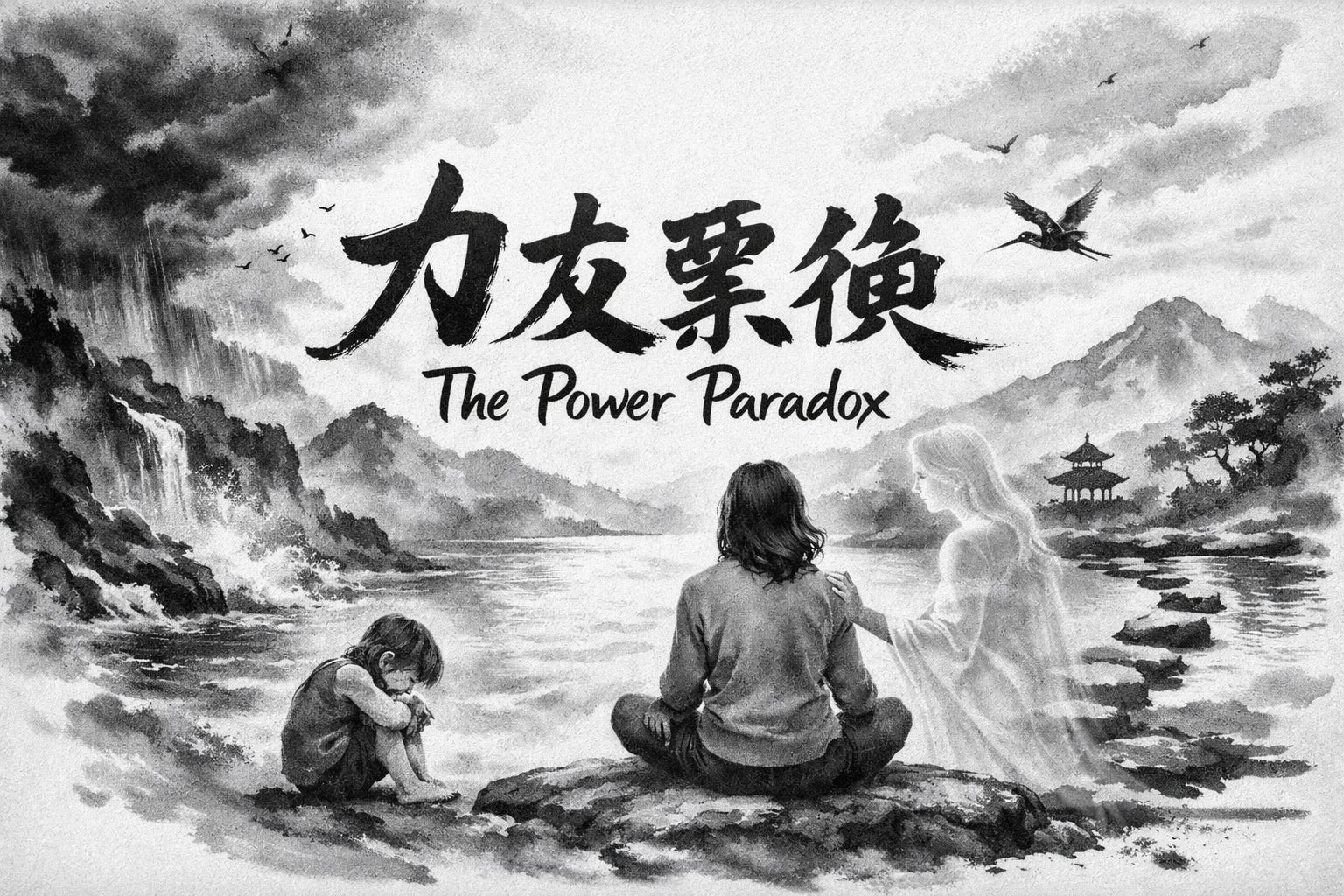
In this journal post, ‘The Power Paradox,’ we will explore this hidden dynamic: how the illusion of control creates dependency and how dependency fosters disempowerment. We’ll uncover why this pattern is especially appealing to our Inner Child, who sees certainty as emotional safety, and why trusting ourselves, by walking the middle path of Truth, Honesty, and Integrity, is the only sustainable form of inner peace and flow.
Together, we’ll challenge familiar beliefs such as “I can’t change unless others do,” or “they made me feel this way,” and replace them with clearer, more empowering perspectives. This is the path of wu wei, the effortless effort of living from your Shen, where you no longer seek control but alignment, not submission but sovereignty. Let’s begin by exposing how power is often misidentified, then journey into how we can reclaim it.
The Illusion of Power
At the heart of this paradox lies a misunderstanding that began in childhood. When circumstances felt overwhelming, our Inner Child developed a primitive logic to explain the chaos. If we could gain control over a parent’s mood, a teacher’s approval, a friend’s opinion, perhaps we could feel safe and loved.
That belief has echoed throughout our adult relationships: we hand over power to others to feel loved, wanted, and seen. We try to take control of others, offering advice they didn’t ask for and rescuing them from their own life lessons, not out of arrogance, but out of our own fear. We believe: “If I’m responsible for them, they won’t leave me. If they’re responsible for me, I won’t have to face this alone.”
But power gained through control is never stable. It requires constant maintenance. That’s why, as we consider this, we may insightfully reflect, “When we grant control to someone else, we’re below them. When we’re in control of their life, we’re above them. That’s how we can try to be on both extremes at the same time.” Here lies the paradox.
It is our Inner Child who clings to this illusion. It nags us to hold others responsible so we can avoid blame. It criticises us for not doing enough when we try to help. It badgers us to fix everyone else so we can feel okay again. And it reproaches us when they don’t change, confirming its flawed belief: “I’m not enough.” This is the ‘Carousel of Despair, ’ a loop of misplaced power, misused effort, and misunderstood responsibility.
Emotional Inheritance and the “Drug” Analogy
One of the most profound metaphors a client once shared with me was the comparison of emotional inheritance to a drug. Their words: “If the drug’s causing more damage than good, it’s my responsibility to stop taking it since no one else knows the drug’s effect on me.” This analogy is more than clever; it’s Taoist wisdom in modern language.
Every family, every relationship, offers us a kind of “medicine,” coping patterns, beliefs, behaviours, intended to soothe or protect. But over time, what once numbed becomes toxic. What once brought relief now creates dependency. These coping patterns quietly solidify into belief models, and these belief models become the lens through which we view the world. If that lens is clear, reality is seen as it truly is, fluid, full of possibility. But if the lens is tinted by fear, shame, or old emotional logic, then even truth appears distorted. It’s like wearing yellow-tinted glasses: no matter how blue the sky may be, it will always seem tinged with gold. The sky hasn’t changed; our perception has.
Unless we examine the lens, we will keep mistaking the tint for reality. This is why clarity must come before transformation; we cannot shift what we do not first see clearly. The Tao Te Ching reminds us in Verse 40: “Returning is the movement of the Tao. Yielding is the way of the Tao.” In Taoism, returning means pausing to examine the original flow. Yielding means releasing what no longer aligns with you. So, when we say, “My parents’ way of coping doesn’t agree with me,” we are not being disloyal; we are reclaiming flow. We are choosing to realign with our Shen, not our or their emotional habits.
Yet our Inner Child will protest: “But what if I need this? What if I’m alone without it?” And that’s where the paradox intensifies. Because staying in dependency to avoid pain only deepens the pain. This is why self-accountability is not punishment; it is liberation. In our journal post ‘Anchored in Truth’, we explored this dynamic: “Emotions are messengers, not masters. They are signs, not destinations. To build our lives on them is to place trust in shifting sands.”
When we break the dependency, when we choose to take responsibility for how we interpret and respond to life, we begin to rise. Not above others—but into alignment with ourselves.
The Middle Path and the Power of Three
So where do we go when we’ve abandoned the extremes of control and helplessness? We walk the middle path. The wu wei middle path is not indecision or compromise; it is the alignment of three unwavering pillars: Truth, Honesty, and Integrity.
Truth means we recognise that no one is more or less worthy than anyone else. Not our parents. Not our partners. Not even our past self.
Honesty means we stop pretending we’re victims when we’re actually making choices, and we stop pretending we’re heroes when we’re just seeking praise.
Integrity means we act out of equality, not out of emotional manipulation.
This is where real power lives. Not in hierarchy, not in being “above or below,” but in standing beside, shoulder to shoulder, breath to breath, with every living being, ourselves included. As the I Ching reveals in Hexagram 34: “True power lies not in exertion but in clarity of direction. When the spirit aligns with ‘The Way,’ strength is a quiet certainty.”
When we trust our Shen and take responsibility for our own beliefs and emotional reactions, we no longer need others to change for us to feel safe. We stop blaming others for our lack of direction. We stop trying to be perfect so that we won’t be abandoned. We begin to live from a steady internal compass that never needs external validation.
The Inner Child’s Obsession with Certainty
But the path to this clarity isn’t easy, because our Inner Child is obsessed with certainty. One client insightfully explained: “My childhood life was unpredictable, so I created the feeling of certainty. Certainty became familiar.” That predictability became a stand-in for love. It wasn’t emotional truth; it was emotional habit. Our Inner Child still sees certainty as protection: “If I know what will happen, I won’t be hurt. If I control what others think, I won’t be rejected.”
But what it calls “safety” is often a prison. A familiar discomfort. A “known pain” that at least feels predictable. This is why our Inner Child will choose an unhappy relationship over no relationship, or an unrewarding job over the unknown challenge. The Tao offers a gentler way. Verse 53 teaches: “A clear path does not mean it is aligned. A straight road can still lead you astray. Simplicity is not in the route but in the heart.”
Choosing uncertainty is not recklessness. It is alignment. Because in the mystery of the moment, we meet our Shen. And when our Shen leads, our Inner Child learns that certainty is no longer necessary, only truth is.
Accountability Is Empowerment
The most revolutionary act you can make in your spiritual journey is not meditation or compassion, but accountability. Because accountability declares: “I am enough to guide my life.” It ends the game of blame and avoidance. It removes the pedestal from others and the chains from ourselves. And most importantly, it invites our Inner Child into a new contract, not one of control, but of trust. Accountability asks: “What belief did I accept that created this emotion? What choice am I making that feels disempowering? What inherited habit am I ready to release?” It is not a harsh interrogation, but a compassionate inquiry. Not judgment, but realignment.
In ‘Becoming the Guide’ journal post, we reminded ourselves: “You no longer need someone to permit you to live truthfully. You are that guide now.” So let us stop waiting for the world to behave. Let us stop adjusting ourselves to match others’ opinions. Let us stop playing smaller to avoid responsibility or bigger to feel in control. Let us walk the middle path of wu wei. Let us live ‘The Power Paradox’ with grace and awareness.
A Return to Flow
As we reach the end of this reflection, what have we truly uncovered?
That power, as defined by our Inner Child, is often a mask for fear. That control and submission are just two faces of the same disempowering cycle. That absolute authority comes not from force or obedience but from the quiet, consistent integrity of Truth, Honesty, and Alignment.
This is what Taoism has always offered us: a way to live without distortion. To stop playing roles and start embodying our innate spiritual essence. To stop protecting ourselves from life and start living it with open-hearted awareness. It invites us to strip away the masks of conditioning and walk honestly in our Shen, our spiritual truth, without the armour of performance or pretence.
But clarity requires courage. Because when we first begin to question what we believe, we may stumble into a paradox. Things may seem confusing or contradictory: “Why do I want peace but keep creating drama?” “Why do I long for love yet push it away?” These paradoxes are not flaws; they are signposts. Whenever something seems illogical or tangled, it is not the Tao that is unclear; it is our lens that is clouded. The paradox is only a reflection of a deeper misalignment. And so, we do not stop at the contradiction; we investigate it deeply.
This is the moment to return to one of our most powerful tools of enquiry: “What do I believe… and why do I believe it?” Ask it gently. Ask it often. This question is not a weapon; it is a lantern. It lights the path through the emotional fog created by childhood coping strategies and inherited belief models. If the belief you’re holding seems to hurt, confuse, or paralyse you, it is very likely not yours at all, but something you were taught to accept without question.
This is the sacred work: not to fix the world outside, but to untangle our knots within. Not to escape contradiction, but to understand it. In Taoism, we do not fear the unknown or the complex. We lean in. We listen. We look deeper, not harder. And when the confusion lifts, what remains is the quiet wisdom of the Tao, always whispering the same invitation: “Return to your spiritual essence. The truth was never far away.”
So, here is your invitation: Take one small step today, not from fear, not from obligation, but from your spiritual alignment. Say what is true for you. Honour your emotions by tracing them back to their source. Trust that when you live in harmony with your Shen, the Tao flows through you without effort. Affirm gently to yourself: “I do not need control to be safe. I do not need blame to be strong. I already have what I seek: the power to live truthfully.”
And as you walk forward, remember this: ‘The Power Paradox’ is not a flaw in your journey; it is the map itself. Use it well. Walk neither above nor below, but beside all things. That is where the Tao waits. And it is already waiting within you.
Have you ever been caught in a moment when everything around you seemed uncertain, and all you wanted was to feel something stable beneath your feet? Have you ever said, “I just want to feel safe,” only to realise you didn’t know what “safe” really meant?
Safety. A word so simple, yet so misunderstood. It’s not just what my clients speak about; it’s what they ache for. However, when we gently ask them to reflect on what they consider safe, they often remain silent. Because what we call “safety” isn’t about locks or alarms or getting things right; it’s about the longing to be accepted as we are, even when everything seems uncertain.
But there’s another layer we must uncover. For many of us, safety also means knowing what lies ahead. It is our Inner Child’s quiet, trembling plea: “Tell me what’s going to happen so I can relax.” Safety becomes the promise of no surprises, no change, no challenge we can’t predict. It becomes the illusion that if we can control what’s next, we won’t be hurt again. And so, we don’t just seek peace, we seek certainty. Not just shelter from the storm, but a detailed weather report for the next ten years.
But here lies another quiet paradox. Life does not give forecasts. The Tao does not promise a known path, only a true one. And the more we try to control life in search of safety, the less safe we actually seem. Because proper safety does not live in the known, it lives in our ability to meet the unknown with calm presence. It’s not about making the world predictable, but making ourselves trustworthy.
Trying to eliminate uncertainty is like trying to freeze a river. The very act of resistance creates brittleness. It’s not the unknown that breaks us; it’s our refusal to flow with it. The Tao flows not because it knows every twist in the stream, but because it trusts the movement itself.
So, we ask our Inner Child not to predict every moment, but to trust that we will respond wisely when the moment comes. That is absolute safety: not control, but confidence. Not perfection, but presence. It’s the quiet reassurance that even if we don’t know what’s next, we will meet it with Shen, our spiritual alignment, our unshakable centre. And that is something no fear, no future, no unknown can ever take away.
In this journal post, we’ll explore what true safety means from a Taoist and wu wei perspective, how our Inner Child misinterprets it through emotional logic, and why the world can never provide the security we seek. We will walk hand in hand with the belief underlying the emotion, and not just speak of safety but show how it can be lived from the inside out.
The Illusion of Certainty
For many of us, the search for safety begins in childhood. Our Inner Child learns to associate safety with approval, attention, and predictability. It creates a belief that says, “If I can just get everything right, nothing bad will happen.” But the world rarely cooperates with that belief. People change. Emotions shift. Situations unfold in ways we never imagined.
So, our Inner Child begins to panic. It confuses uncertainty with danger. It doesn’t understand the difference between being ‘unsafe’ and simply ‘not knowing’. And it uses emotional logic to explain what it cannot understand logically: “If they ignored me, I must not be valuable.” “If something went wrong, it’s my fault.” “If I feel anxious, I must be in danger.” “If I couldn’t handle it then, I can’t handle it now” These emotional conclusions seem genuine, but they are not. They are constructed, not by reality, but by a scared part of the mind that doesn’t yet trust the strength of Shen.
The Tao does not promise certainty. It teaches flow. The Tao says, “Do not chase the river’s shape, become the river’s rhythm.” When we attempt to grasp certainty as a condition for safety, we place ourselves in a lifelong tug-of-war with life itself. Safety does not come from controlling what happens next. It comes from trusting who we are when it happens.
Emotional Logic vs Shen Logic
This is one of the most profound misunderstandings of safety: our Inner Child believes safety is something we earn, negotiate, or control. But Shen knows: safety is not granted, it is embodied. Emotional logic says, “If I’m scared, something must be wrong.” Shen logic says, “I created this emotion from a belief, what is that belief, and is it still true?” Emotional logic says, “If they didn’t respond, I’m being rejected.” Shen’s logic says, “Their actions are not responsible for my emotional state.”
As we shared in a previous teaching, “We cannot place our emotions in another’s body. Others cannot make us feel love, validated, or rejected, and they cannot give or take those emotions away.” What this means is simple but revolutionary: ‘emotional safety can only be created from within.’
Our Inner Child, left unparented, will continue to react as though the world owes it safety. It will protest, panic, and plead. It will say: “You’re not doing enough to protect me!” “This feels awful, so it must be dangerous!” “If you don’t fix this now, I’ll never be okay!” But these aren’t the truth. They are echoes of misaligned beliefs. We must respond as spiritual parents, not with panic, but with patience.
The Hand That Holds
What does it actually mean to be ‘safe with yourself?’ It means being the calm in your own storm. It means that when a wave of emotion arises, you no longer abandon yourself. You no longer reach for someone else to fix it, explain it, or change it. You stop, you listen, and you speak from alignment: “I see that you’re scared. But I am not going to punish you for that. I am here.” This is what our Inner Child truly longs for. Not perfection. Not a plan. Not even peace. But ‘companionship within discomfort.’
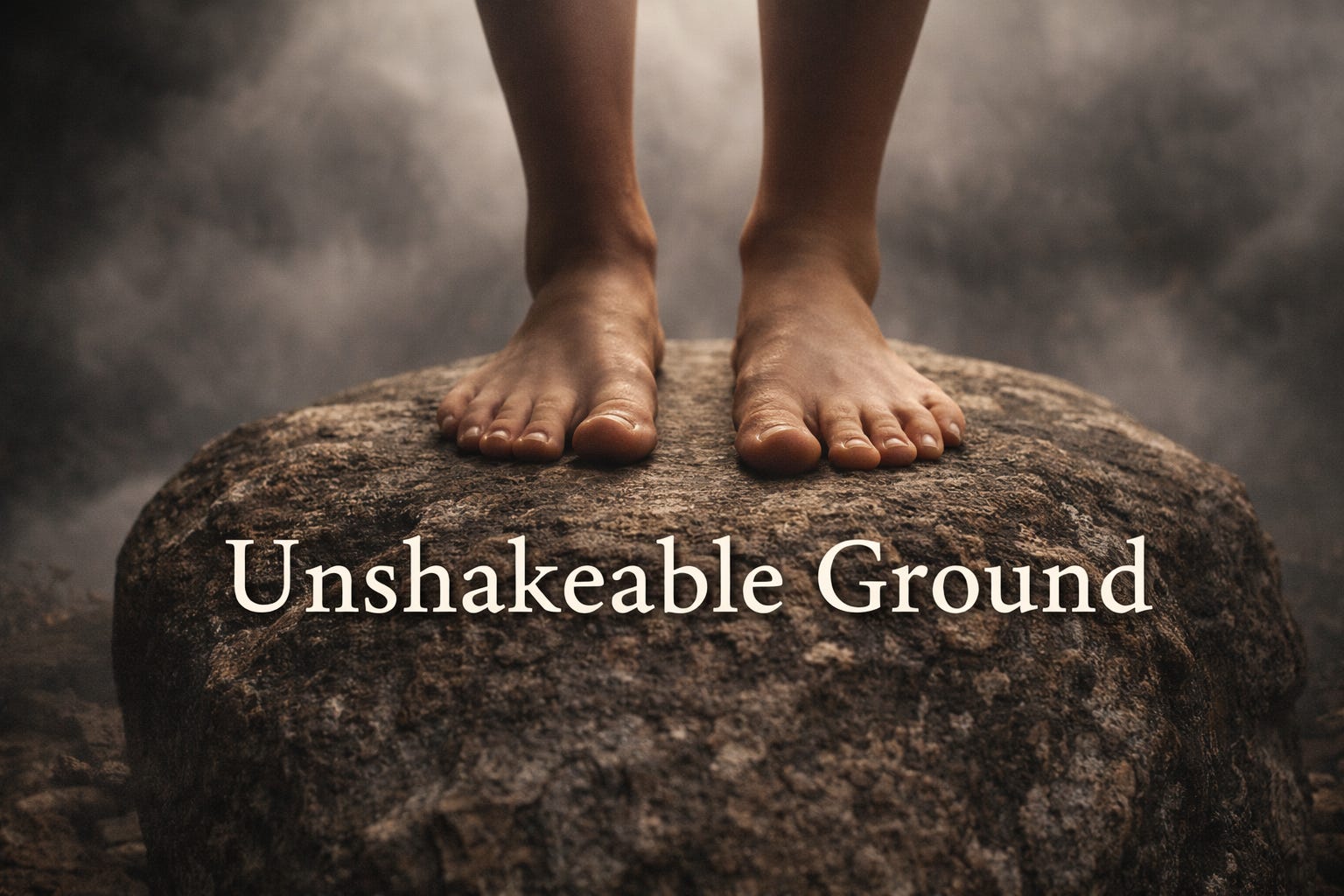
Our Inner Child does not need to be told everything will be fine. It needs to be shown that we can hold steady, even when things aren’t. This is the ‘Unshakeable Ground,’ the experience of trusting ourselves in chaos. It is not the promise that life will go smoothly. It is the choice to live in integrity when it does not. As we find in Tao Te Ching, Verse 69: “A wise warrior steps back before striking. Their strength lies not in the attack, but in knowing when to yield. This is alignment with the Tao: Victory without force, movement without fear.” Safety is not the absence of fear. It is the maturity to choose response over reaction, even when fear is loud.
The False Bargain of Control
Many clients will say, “But how can I trust when I’ve been hurt before?” Or, “How can I feel safe when nothing is guaranteed?” What they are truly saying is, “I made a bargain with safety, and it failed.” The false bargain goes like this: “If I try hard enough, if I’m good enough, if I predict enough, I will be safe.” And when that effort doesn’t prevent pain or disappointment, our Inner Child panics again.
Another version of this belief often emerges quietly, almost whispered: “I couldn’t handle it then, so I won’t be able to handle it in the future.” This is one of the Inner Child’s most haunting prophecies. It ties past vulnerability to future helplessness, freezing our spirit in a loop of fear. But Taoism gently teaches us: this is not failure, it’s misalignment. It’s like blaming a lantern for not lighting the way when we’ve never lit the flame. We never had to barter for safety. We only needed to stop outsourcing it.
Safety has never been a reward for perfection or prediction. It is not earned through effort or bought with worry. We remember by reconnecting with the truth that we are no longer the frightened child standing alone. We are wiser now. Our Shen has walked through storms. And even if the winds rise again, we do not need guarantees; we need to trust that we will meet life as we are now, not as we once were.
Control is not safety. In fact, the need for control often ‘creates’ the emotional insecurity we try to avoid. Instead of controlling outcomes, we must learn to choose alignment repeatedly. This means:
Speaking to our Inner Child without Criticism, Comparing, and being Judgmental (CCJ).
Identifying the belief behind the emotion, not being led by the emotion itself.
Creating an inner dialogue that does not reject or ridicule discomfort, but redirects it back into alignment.
As we often teach: “You are not the storm. You create the weather.” And you can change the forecast.
Reclaiming Safety as Self-Trust
If safety is neither external, guaranteed, nor found in control, where is it?
It is in the moment you choose not to abandon yourself. It is in the breath before the reaction. It is in the stillness of Shen that one does not need everything to go right to feel whole. When our Inner Child says, “I’m scared, fix this,” You respond: “I hear you. But we do not fix fear, we understand it.”
When our Inner Child says, “If I don’t know what’s going to happen, I won’t survive,”
You answer: “Uncertainty does not mean danger. You’ve confused the unknown with a threat. But we are okay, we have always coped, and we will again if needed.” When you speak this way, not once, but consistently, you rebuild the bridge between yourself and your Inner Child. And step by step, fear loses its grip. Not because life is suddenly safe. But because you are. That is the real ‘Unshakeable Ground’.
Let this be your truth today: “I do not need life to be certain. I need only to trust my alignment. Safety is not given. I create it. In the chaos, I am calm. In the storm, I am still. In all things, I choose to trust my Shen.”
Walking on Unshakeable Ground
True safety was never about preventing the storm. It is concerned with discovering who we are internally. We are not here to control the tide. We are here to learn how to float in its rhythm, to move with wu wei. And as we align with our Shen, we find the ground that never shifts, our truth. Let us stop demanding that others make us feel secure. Let us stop waiting for life to calm down before we believe we’re worthy of peace. Instead, let us live from ‘Unshakeable Ground’.
Let us meet our Inner Child’s complaints, reproaches, and doubts not with shame, but with spiritual wisdom. Let us guide it gently, reminding it that safety was never lost; it was just forgotten. And now, we remember. And when confusion returns, as it often will, we pause and ask the Shen Test: “What would I say to my physical child if they were feeling this way?” Would we tell them to toughen up? Would we demand perfection before protection? Of course not. We would wrap them in understanding, speak calm truth, and remind them that one fearful moment does not define a life. So, why speak to ourselves any differently? This is how we reclaim safety, not as a concept, but as a lived truth. Not from the world outside, but from the compassion we extend inward.
Your next step?
Take one small moment today, just one. Speak gently to yourself in discomfort. Catch the emotional logic of your Inner Child before it spins. Replace it with the Shen truth. Say, “I created this emotion. I can realign it.”
Do this not to fix yourself, but to reparent yourself. Do it without CCJ. Without rushing. Without expecting perfection. Because the way back to safety is not dramatic, it’s consistent. It’s quiet. It’s kind. And it starts now. On ‘Unshakeable Ground’.
Moments of Inspiration…
When Something Feels Wrong, Pause, It May Be Truth in Disguise
Have you ever had a quiet feeling that something wasn’t quite right, but dismissed it, reasoned it away, or told yourself to stop overthinking? In Taoist wisdom, this moment matters. Because what feels “wrong” is not always a flaw in the world, it may be a message from within. The discomfort is not the problem. It is the lantern.
When something stings, jars, or unsettles us, our instinct is often to fix it or flee from it. But what if we slowed down instead? What if we didn’t assume our reaction is wrong, or that the other person is wrong, but asked: “What is this showing me about my belief model? What am I presuming, and is it really true?”
The Tao teaches us that truth does not shout, it whispers. It often comes disguised as paradox, frustration, or unease. But when we investigate gently, with curiosity instead of judgment, clarity arrives. Our Inner Child may panic when something doesn’t make sense. But Shen, the spiritual self, knows how to sit in the mystery until insight ripens. What feels off is not always danger. Sometimes, it’s misalignment. A belief ready to be re-examined. A story finally revealing its edges.
So today, let your discomfort be a doorway. Not a signal to run, but a reason to look deeper. Affirm: “What unsettles me is not here to break me, it is here to wake me. I trust myself enough to stay present, and I will meet truth with calm eyes.”
Continue your journey: Read this week’s full journal posts and rediscover how your inner wisdom sees clearly, even in the dark.
In the Next ‘Inner Circle’ (Paid) Journal…
Unspoken Knowing
The Truth Beneath Silence
When the Truth Arrives
Moments of Inspiration
In the Next Free Journal…
Emotional Debtkeepers
Restoring Worth
Middle Way Rising
Moments of Inspiration
Journal #F067 09/02/2026
Contact: info@wuweiwisdom.com
Website: www.wuweiwisdom.com
YouTube: www.youtube.com/user/WuWeiWisdom
Facebook Community: www.facebook.com/groups/wuweiwisdomcommunity/