
Role Integrity
This week, are you stuck in the exhausting role of fixing others, trying to earn love instead of finding your 'empty centre' or weaponising emotions? Finally, what has CCJ ever done for you?

“I return to the quiet truth that love does not ask me to disappear, and with each honest step back toward Shen, I allow care to become lighter, freer, and more true. As I loosen guilt, question old roles, and trust the gentle rhythm of wu wei, I open the door to a deeper peace within me and a fuller story waiting to be discovered.”
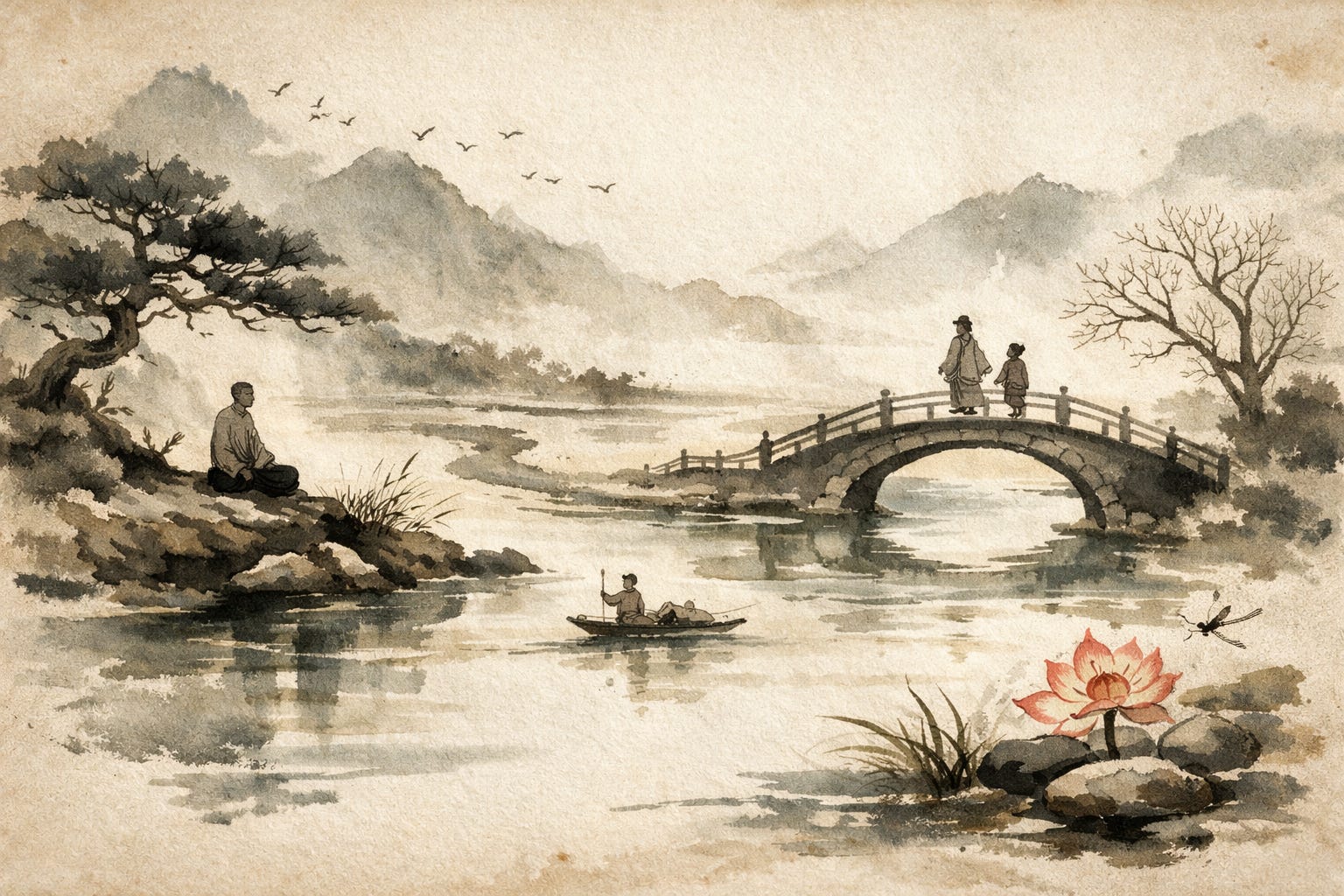
We have all been here, the moment when love stops feeling natural and starts to feel heavy. We are helping, fixing, advising, and holding everything together. Yet quietly, something tightens. Our energy drains, our patience shortens, our confidence weakens. In the background, our Inner Child whispers an old belief: “If I stop carrying others, I will be rejected.” So, we keep going. We call it devotion. We call it loyalty. We call it being good. But there is a cost.
When responsibility becomes confused, we walk into the ‘Maze of Confusion’. When protection turns into belief, we step onto the ‘Carousel of Despair’. When guilt becomes our compass, we lose our wu wei. This is the truth: we are not struggling because we love too much. We are struggling because our love is misaligned, entangled with fear, control, and the need to prove our worth.
In this post, we explore the difference between instinct and integrity, how roles can reverse, and why this can lead to emotional exhaustion. We will uncover how the belief “the world is dangerous when we are alone” quietly shapes our choices, and how red-light emotions are not problems, but signals guiding us back to Shen. Most importantly, we will see how wu wei is not an idea, but a way of living, expressed through simple, aligned choices.
When Love Swaps Roles
Let us begin with the first edge of this teaching, the part that can stir strong reactions. A mother instinctively protects her child from danger. In nature, the young are protected because they represent growth and continuation. But it is easy to turn that natural instinct into a hierarchy of our worth, as if value is based on usefulness, productivity, or age.
Taoist wisdom offers a different view. The Tao does not measure worth. Shen is not earned, and dignity is not negotiated. No one is more or less valuable. That is not how alignment works. Yet Taoism is practical. It honours balance, roles, timing, and what happens when we move against the natural order.
So, we do not need to debate who should be saved first. The deeper teaching is this: when roles invert, life becomes distorted. When a child carries an adult, or an adult takes responsibility for another adult’s emotions and choices, the system becomes unstable. Not because caring is wrong, but because responsibility is misplaced.
Many of us learned this pattern early. We were praised for being “mature,” for being easy, aware, and emotionally supportive. We learned to manage others, anticipate needs, and keep the peace. This is emotional logic: “If I manage everything, I will be safe.” Shen’s logic is different: “When I align with truth and integrity, I remain authentic.” Role reversal is not always obvious. Sometimes it is subtle. A parent leans on us as an equal. We become their listener, their support, their reassurance. When we set a boundary, they struggle, so we step back into the role. In adult life, this continues; we become the fixer, the stabiliser, the emotional support, and we call it love.
Love becomes distorted when it is demanded. It becomes distorted when driven by guilt. It becomes distorted when our Inner Child believes, “If I stop rescuing, I am bad.” From this belief, red-light emotions arise, guilt, anxiety, and shame, and then those emotions appear to confirm the belief. So, the cycle tightens.
The Tao invites us to restore ‘Role Integrity’, which means returning responsibility to where it belongs. It means no longer confusing rescue with care. We can still support, still be kind, still show up, but we no longer abandon ourselves to perform goodness. This is where self-love becomes essential. Not as selfishness, but as self-respect in action. Self-love says: “I matter too.” It says: “I will not disappear to keep the peace.” It says: “I will not trade my life for approval.” Without this, our Inner Child tries to earn safety through sacrifice, and sacrifice becomes a quiet form of self-abandonment.
So, we pause and ask honestly: “Is this choice coming from Shen, or from fear of guilt and criticism?” “Is this true care, or fear dressed as virtue?” The Tao does not judge our confusion. It simply invites us to see clearly. As the Tao Te Ching teaches: “The most effective guidance is barely seen.” True care does not control. True support does not dominate. True love does not demand. It allows.
When we over-function in others’ lives, it is often because our Inner Child believes control creates safety. But Shen does not strain. Shen trusts. So, ‘Role Integrity’ is not withdrawal or coldness. It is trust. The courage to let others carry their own lives, and the humility to stop carrying them for them.
The Trap of Protective Beliefs
The second part of this teaching is simple but easy to miss: when we believe the world is dangerous and that we are victims, we lose our curiosity. We stop exploring, questioning, and learning. This is how our Inner Child tries to protect us. “Stay where it’s familiar.” “Don’t risk it.” “If you fail, you’ll be ashamed.” “If you try, you’ll be judged.” This is emotional logic. It treats uncertainty as danger and avoidance as wisdom.
But caution becomes a prison when it becomes a belief. We begin to confuse certainty with safety. We choose familiar roles, even when they drain us. We avoid honest conversations in case they change things. We stay small because at least it feels predictable. Underneath this is belief. And belief creates emotion.
So, when anxiety appears at the edge of something new, we assume it is a warning. Often, it is not. It is our Inner Child protecting an outdated story. The Tao does not ask us to be reckless. It asks us to be real. To question what we believe, and to stop treating discomfort as truth. When life ‘feels’ dangerous, our Inner Child narrows everything, fewer risks, fewer questions, fewer possibilities. But Shen expands through honest engagement. It grows through truth, through steady curiosity that asks, “What is real here?” not “How do I control this?” Curiosity is not childish. It is natural. It is the Tao moving through us. And here is the paradox: When we live from fear, we do not become safer; we become smaller. We do not become wiser; we become rigid. We do not find peace; we become controlling, resentful, and exhausted. This is where ‘Role Integrity’ returns.
If we believe the world is dangerous, we try to control people, outcomes, and environments. But forcing creates friction, and friction drains us. So, the shift is simple, but profound: not to control more, but to align more. Alignment does not mean approval. It means honesty. We stop pretending. We stop abandoning ourselves to keep things stable. We stop using “being helpful” to avoid our own lives. And we begin, gently, with curiosity. Not through big leaps, but small steps. One honest question. One new choice. One boundary we’ve been avoiding. When fear arises, we do not fight it. We understand it. We show our Inner Child, through steady action, that uncertainty is not danger. This is wu wei. We do not force bravery. We align with truth and take the next step.
Red Light Emotions as a Compass
Now we arrive at one of the most practical insights in this teaching: Red-light emotions are not problems. They are signals of misalignment. When we are aligned, life flows. There is ease, clarity, and simplicity. When we are not, tension appears. But this is often misunderstood. Many hear “misalignment” and think, “Something is wrong with me.” That is not the teaching. Emotions are not verdicts. They are natural feedback. We create our emotions through what we believe. No one can place an emotion inside us, and we cannot place one in them. What we experience is shaped by our interpretation, not the event itself. This is not to blame. This is empowerment. It means we are not trapped.
Some emotions, like peace and contentment, reflect alignment with Shen. Others arise from our Inner Child’s beliefs and point to something unresolved. The work is not to suppress the emotion, but to understand its source. Emotional logic says: “If it hurts, it must be true; let’s stop it!” Shen logic says: “If it hurts, we have to find why.” Emotional logic reacts. Shen pauses and asks. This is why red-light emotions are valuable. They show us where a belief is out of alignment. The emotion is not the issue. The belief beneath it is.
Yet many try to manage emotions directly. They try to calm down without clarity, think positively without truth, or let go without understanding. And so, the same patterns return. The Tao offers a simpler path: Not “How do I get rid of this emotion?” But “What must I believe to be creating it?” This question changes everything. It removes blame. It invites honesty. It returns responsibility without punishment. If we create guilt, we may believe, “I am responsible for others.” If we create resentment, we may believe, “I must say ‘yes’ when I mean ‘no’.” If we create anxiety, we may believe, “I must control everything to be safe and certain.”
These are not truths. They are learned strategies. And strategies can change. When we clearly see the belief, we return to Shen. The tension softens. The flow returns. This is wu wei. Not passivity, but alignment. Not forcing, but moving without inner conflict. And here is a truth many miss: Guilt often disguises itself as duty. We think we are being good. But we are being driven by an old belief. We confuse pressure with morality. Anxiety with love. Self-abandonment with care. The Tao does not ask for sacrifice. It asks for the ‘Power of Three,’ truth, honesty and integrity, which leads to balance and harmony. So, we ask: “Is this aligned… or is this guilt wearing the mask of responsibility?” In that answer, clarity begins.
Clean Care, Small Steps
Now we bring this into real life. The teaching began with broad ideas, nature, protection, and role reversal. Still, its truth lives in the quiet details of our everyday relationships: with family, partners, friends, colleagues, and within our own inner world. ‘Role Integrity’ restores a natural order, both within us and around us. It shows us where responsibility has become confused. It reveals how protective beliefs, often rooted in fear, quietly narrow our lives. And through this, red-light emotions begin to shift, from something we resist to something that guides us back to Shen.
So, what do we do from here? We begin with learning to support without controlling, to love without losing ourselves, to give without keeping a hidden score. We say “yes” when it is true, and “no” when that is true. We stop negotiating our worth through sacrifice and start allowing our actions to come from alignment, not approval.
Then we practise the pause. When a red-light emotion arises, we no longer rush to react or silence it. We pause and ask, “What belief is creating this?” We allow that belief to come into awareness without judgment and gently question whether it reflects truth or an emotional habit. From there, we choose again, not perfectly, but consciously. We also begin to practise curiosity. Not through dramatic change, but through small, steady steps. One honest conversation. One boundary we have been avoiding. One new choice that gently challenges the familiar. These are not grand gestures, but they are powerful because they are real and authentic.
And we walk this path without CCJ, Criticising, Comparing, or being Judgmental. Because the moment we fall into CCJ, we turn our growth into pressure. The Tao is not a courtroom where we measure progress or assign blame. It is a river. We do not stand at the edge and judge its flow; we learn its rhythm, and we move with it.
This is where we let go of urgency. The need to change everything immediately is not wisdom; it is fear. We do not need to rush to become different. Instead, we align, act, learn, adjust, and continue. There is a simple truth to carry forward: ‘no one can place emotions inside us, and we cannot place them in others.’ What we experience is shaped by what we believe. And in that understanding, we find something steady; our freedom is always one honest step away.
So, we meet ourselves where we are. If we are caught in a role reversal, perhaps the next step is to set a boundary. If we are held by fear, perhaps the next step is curiosity. If we are overwhelmed by emotion, perhaps the step is not to fight it, but to understand the belief beneath it. And if our Inner Child begins to criticise our pace, we answer it gently with truth: “We are not here to rush or to prove. We are here to live in alignment.”
This brings us back to the heart of ‘Role Integrity’. When responsibility becomes clear, love becomes lighter. When control softens into trust, life begins to open. When we allow our emotions to guide rather than define us, we stop fearing our inner world and begin learning from it. So, let this be simple. Choose one belief to question. Choose one role to release. Choose one small step toward the truth. And when we wobble, as we will, we do not punish ourselves. We return. We realign. We choose again, gently, consistently, without pressure.
This is the quiet power of wu wei. Not force, not striving, but a steady return to what is true. And in that return, step by step, our inner life begins to match our truth.
We all know that tightening in the chest when something small goes “wrong,” and our Inner Child immediately pressures us to prove we are still worthy. A late reply becomes a verdict, a minor mistake becomes a flaw, and an awkward silence becomes rejection. In those moments, it seems logical to chase achievement for safety, agreement for love, and a “perfect mood” for peace.
Yet Taoist wisdom returns us to a grounded truth: worth is not earned, love cannot be given or taken by another, and peace is not a reward for getting it right. What we experience emotionally is created through our beliefs and interpretations. We can create ‘fear’, and then create bursts of “happiness” to cover it, or return to clarity and steadiness through Shen.
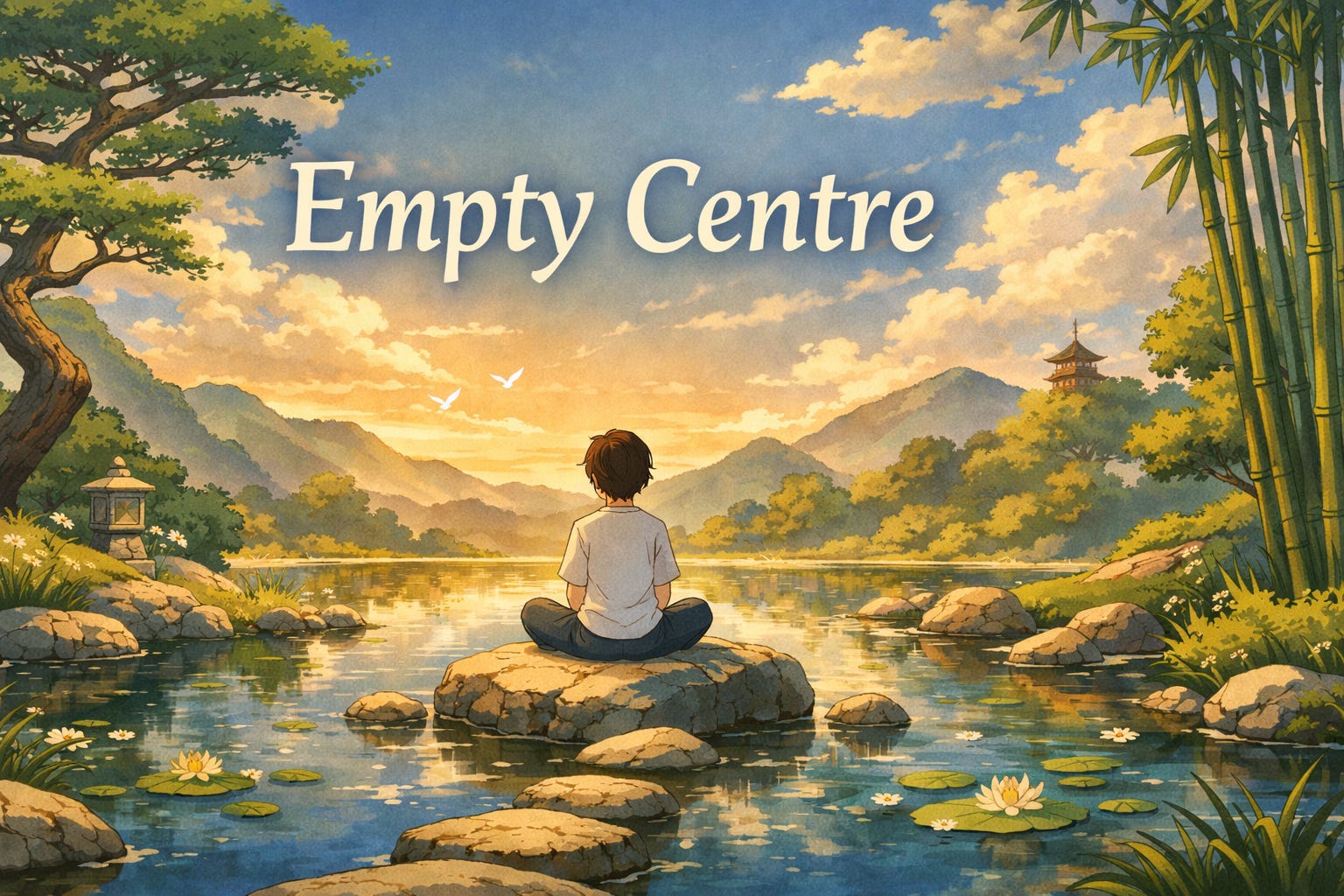
In this journal post, we practise a simple but powerful shift: stepping off the pendulum of emotional logic and returning to the middle, where truth, honesty, and integrity lead. We explore how relationships rest on emotional sand when built on unresolved patterns, and why we keep creating “fear” and “happiness” as counterweights. Most importantly, we return to the empty centre within, where wu wei allows life to move from forced performance to authentic expression.
Worth Without Proof
When we are young, we learn patterns before principles. If praise follows achievement, we begin to believe achievement creates value. If affection seems tied to performance, we conclude that performance creates lovability. If tension appears when we struggle, we decide that struggling is unsafe. Our Inner Child does not reason carefully; it builds through emotional logic, where intensity seems like evidence. This is why “worth must be earned” can seem unshakeable, becoming a personal law when it is only a childlike interpretation.
Shen never agreed to that law. It is steady and does not rise or fall with outcomes. Taoist teaching returns us to what is inherent, not to what is earned. We can still grow, practise, and create a meaningful life, but we no longer treat achievement as proof of our right to exist. Achievement builds competence and experience; worth is different. Worth is the baseline, the beginning, and the constant.
A common question arises: “If we separate worth from achievement, will we lose motivation?” Taoist wisdom points us toward a truer kind of motivation. When our worth is no longer in question, we stop striving to prove we deserve life and begin acting from what is true. We still create, contribute, and grow, but the inner pressure dissolves. We are no longer trying to earn peace through performance. We are no longer negotiating with life. This is wu wei, effortless effort. Not passivity, but alignment and flow.
This shift transforms how we speak to ourselves. In our teaching ‘Language of Power’, we remind ourselves: “Each day, when we speak with the voice of our Shen. We choose clarity, we think with honesty, and we believe in our resilience.” When we live this, we stop labelling ourselves as flawed and instead describe what we are creating. Rather than “I am not enough,” we recognise that we are creating shame because we believe we must be perfect to be worthy. This does not dismiss emotion. It honours it as a signal, then gently returns us to the deeper question: “What do we believe, and is it true?”
Under the old belief system, our Inner Child asks for constant proof. It urges us to do more, fix more, be more, and sees rest as failure and mistakes as risk. It speaks in pressure, not truth. Taoist wisdom does not reject this voice; it understands it. These patterns were learned when safety seemed to depend on performance. Our role now is not to silence our Inner Child, but to guide it. To show, through steady awareness, that worth is already present, and that our choices are not judgments of our value, but simple expressions of who we are becoming.
Emotional Logic Bonds
Many of us have experienced relationships that begin with an instant sense of familiarity. We might believe, “They understand me,” or “We are the same.” Yet over time, we begin to see that what seemed like closeness was often shared emotional reactivity. Not shared truth, but shared unresolved patterns. Not a grounded commitment to integrity, but a quiet attachment to emotional certainty. This is not judgment; it is simple pattern recognition.
When our Inner Child leads our relationships, we often try to place our emotions into another person. We seek validation and call it love. We seek agreement and call it loyalty. We seek reassurance and call it intimacy. Yet emotions are not transferable. No one can make us feel loved, validated, or rejected, and no one can take those experiences away. What we emotionally experience is created through our beliefs and interpretations. When we forget this, we hand over our power, then blame others for not carrying it the way we hoped.
This is where codependency quietly takes shape. It can seem like devotion and even sound noble, yet beneath it is often a shared fear, an unspoken agreement to stay emotionally fused. Hence, neither person has to question the belief beneath the emotion. In this space, disagreement can seem threatening because the connection is not anchored in truth but in emotional sameness. Two people can experience the same moment differently, yet argue as if one must be right. What is truly happening is far more human: both are creating emotions from belief, both seeking safety by controlling meaning.
This aligns beautifully with our deeper teachings that emotions are creations, not commands, and that when we mistake them for truth, we drift from alignment. Taoist wisdom does not ask us to become emotionless. Emotions are natural. Some, like peace, contentment, and joy, arise from Shen and reflect its alignment. Others are created by our Inner Child’s beliefs, signalling disharmony or unresolved patterns. The skill lies in recognising the source. Emotions from Shen are steady and clear. Those from the Inner Child tend to surge, accuse, and demand. They can seem truthful, yet often act as deflections, seeking attention, control, or sympathy while protecting flawed beliefs from being questioned.
This is why we return to the belief beneath the emotion. If jealousy arises, what is the belief? If panic arises, what is the belief? If resentment arises, what is the belief? Without this enquiry, we remain on the ‘Carousel of Despair,’ emotionally reacting while insisting the cause lies outside us. When we do ask, the storm becomes guidance rather than a life sentence. We stop asking others to carry our inner world and begin standing in our own integrity. From here, we meet others with honesty and clarity, not as emotional life rafts, but as equals.
Strong relationships are not built on constant agreement, but on a shared commitment to truth, honesty, and integrity. When both people return to Shen, emotional storms pass without becoming identity. Conflict no longer becomes a struggle for dominance, but a conversation rooted in reality rather than reactivity. This is where we meet in the middle, where emotion is understood, not obeyed, and where Shen guides love.
The Centre That Works
Now we come to the heart of ‘Empty Centre’. The centre is empty, and that is why it functions. Our translation of the Tao Te Ching offers a teaching that is practical and beautifully grounded in daily life. In Verse 11, we read: “Inspect the centre, and there is nothing there, And that is why it works.” The image is simple: a wheel turns because the hub is open. Yet the lesson reaches into our psychology. Space allows movement. Stillness allows clarity. Emptiness allows function.
When we live from emotional logic, we crowd the centre. We fill it with interpretations, rehearsals, mental debates, and fearful predictions. Our Inner Child often overfills the mind because it believes fullness is protection. Yet an overfilled mind cannot receive Shen clearly. An overfilled identity cannot practise wu wei because effortless effort requires space. It requires the ability to pause, notice, and choose, rather than react and justify.
This is where the paired illusion becomes visible. Many of us first create “fear”, then create “happiness” to offset it. Fear arises when we believe survival depends on earning worth, earning love, earning security, and being in control. Then we create “happiness” as a reward, a temporary high that seems to cancel “fear”. Yet both are built on the same belief model, and both keep us swinging on the emotional pendulum. Taoist wisdom does not tell us to chase a permanent high. It invites us to return to the middle, where we stop manufacturing extremes to manage other extremes.
In the empty centre, we do not become blank. We become truthful. We can notice, “We are creating fear because we believe a mistake reduces our worth.” Then we can challenge that belief with Shen logic, which is truth-based and integrity-based rather than intensity-based. We can notice, “We are creating ‘happiness chasing’ because we believe we must ‘stay up’ and be positive to be lovable.” Then we can choose again. The empty centre is the gap between stimulus and response, and that gap is where freedom of choice lives.
The greatest guidance we can offer a physical or Inner Child is not perfection. It is integrity. It is a life that demonstrates truth, honesty, and repair. A life that shows we can make mistakes and remain worthy, that we can be corrected without collapsing, that we can be strong without being hard. When a child witnesses that, they learn a deeper lesson than imitation. They learn authenticity.
Small Steps, No CCJ
This teaching becomes real through small, consistent steps, taken without expectation and without Criticism, Comparing, and being Judgmental (CCJ). This is the rhythm of wu wei; it does not mean inaction. It means we stop forcing things that do not align. We stop pushing from fear and begin moving from truth.
Our Inner Child often resists this. It wants certainty, immediate proof, and a perfect plan without risk. Yet Taoist wisdom reminds us that growth is gradual and that steadiness carries more power than intensity. When we accept this, we stop punishing ourselves for being human and stop turning growth into another achievement to win. So, we practise a simple cycle. First, we change our language to reveal the belief. Instead of “I am overwhelmed,” we say, “We are creating overwhelm because we believe we cannot cope.” Instead of “They made us angry,” we say, “We are creating anger because we believe something unfair is happening.” This is not blame; it is responsibility. It returns us to choice.
Second, we ask the question that brings us back to Shen: what must we believe for this emotion to make sense? Here, our Inner Child becomes visible. Fear may point to “If we fail, we lose worth.” Jealousy may suggest, “If we are not chosen, we are not lovable.” Resentment may reveal “If we give, we must be repaid.” Once seen, we test the belief through Shen logic. Is it true? Is it honest? Does it align with integrity, or is it seeking control?
Third, we return to the empty centre through a pause. We breathe, soften, and create space. This pause is not a technique; it is the centre of the wheel, what allows movement without chaos. In that space, we see clearly that our Inner Child is not offering wisdom but protection through control. It urges us to react, to prove, to demand, to hide. In the pause, we choose differently.
Finally, we take one aligned action, not a dramatic overhaul. We tell the truth with kindness. We set boundaries with clarity. We apologise when we move out of integrity. We rest without guilt and work without self-punishment. We stop tying our worth to impressive outcomes. These are small steps, yet this is how rivers shape stone. The Tao does not ask for grand gestures; it invites honest alignment.
As we practise, our relationships begin to shift. We move from emotional fusion to authentic connection. We stop asking others to prove love through perfection and start valuing truth. We meet in the middle, where emotion and logic come together. We begin to see that clarity is not cruelty, that love can include boundaries, and that integrity can hold tenderness.
Let us carry a simple affirmation, not as a slogan, but as a daily practice we return to gently: “We create our emotions through what we believe. We return to the empty centre and choose truth, honesty, and integrity. We take small, consistent steps without expectation and CCJ.” We were never meant to live as a performance. We were never meant to replace worth with achievement, outsource emotional responsibility to relationships, or treat challenging moments as tests we must pass. These are the strategies of emotional logic, learned innocently by our Inner Child in its attempt to stay safe. But we are no longer bound to those outdated patterns.
The Tao offers a steadier way, not a dramatic escape, but an honest homecoming. In the emptiness of the centre hub, the wheel turns. In the quiet space within, Shen becomes clear. In the pause between impulse and action, wu wei becomes natural. We stop forcing “happiness” to cancel “fear”. We stop bargaining with life. We stop trying to earn what was never for sale.
So, let us keep it simple and stay consistent. If doubt arises, we do not need to defeat it with intensity. We only need to name the belief beneath it, create a moment of emptiness, and take one manageable step forward without expectations and CCJ. We do not need to be perfect to be aligned. We only need to be honest enough to return. And as we step into the days ahead, let’s remember the title of this journal post, ‘Empty Centre’, not as an idea to admire, but as a practice to live. Let’s never doubt ourselves. Let’s take small, consistent, manageable steps. Let’s keep choosing the ‘Power of Three,’ truth, honesty, and integrity. What grows from that centre is not a performance. It is authenticity, and it has always been enough.
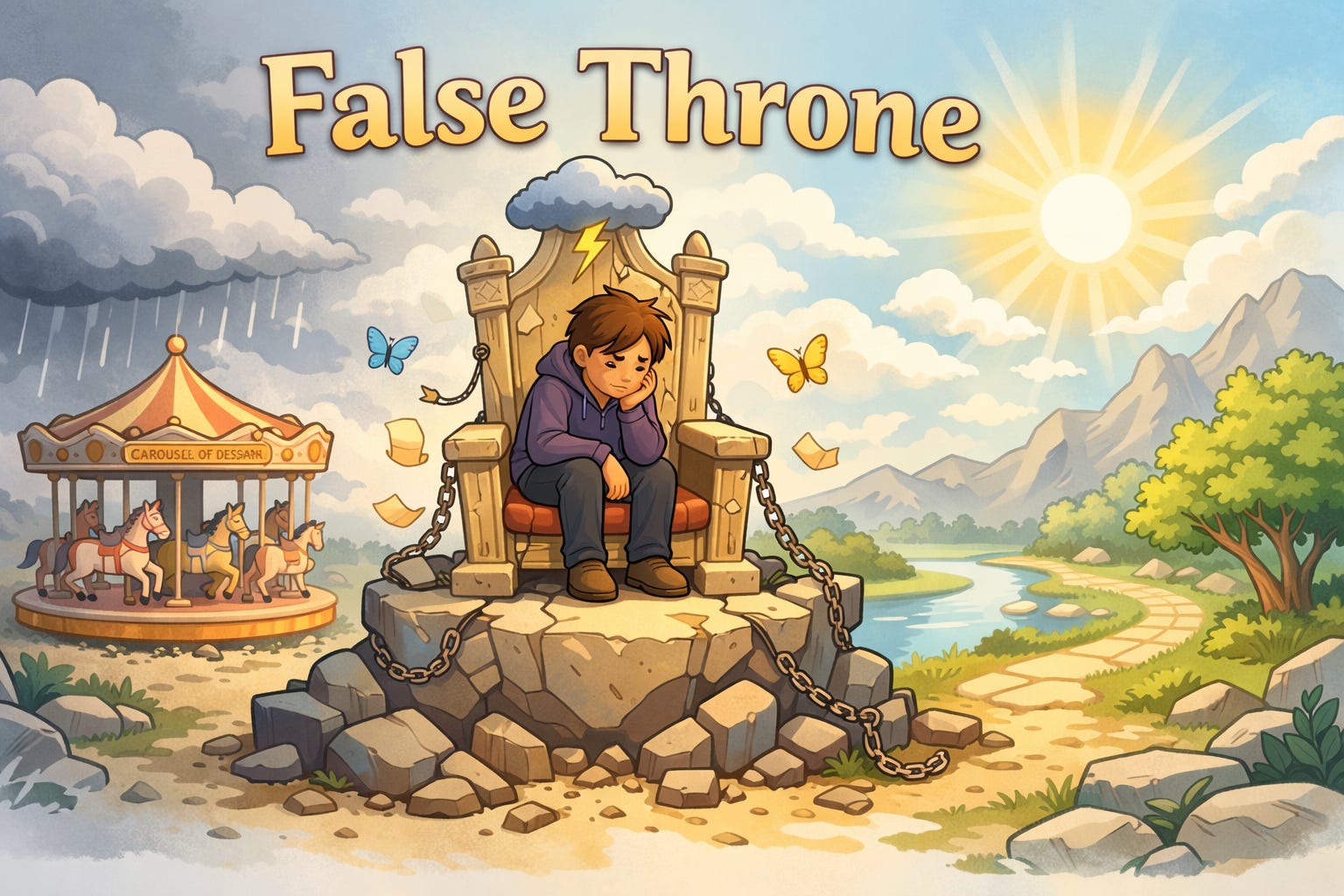
Have you ever noticed how pain can sometimes seem strangely persuasive, almost as if our upset gives us a louder voice, a sharper edge, or a secret kind of leverage? Have you ever caught yourself hoping that if we become hurt enough, withdrawn enough, disappointed enough, or emotionally intense enough, someone will finally understand, change, apologise, or come closer? This is one of the most subtle crossroads on the Taoist path, because what seems like strength may actually be a form of disguised dependency, and what seems like protection may quietly drain our Shen. In this teaching, we will explore why our Inner Child can mistake emotional pressure for power, why victimhood can seem safer than honesty, and how wu wei returns us to something far more stable than control: truth, intrinsic worth, and authenticity. When we understand where our emotions come from, we step off the ‘Carousel of Despair’ and stop trying to rule life from a ‘False Throne’.
When Pain Pretends to Lead
Our Inner Child does not create emotional drama because it is wicked. It does so because its logic is innocent, urgent, and deeply invested in safety. If it believes direct truth will not work, it often turns to protest. It may nag, reproach, complain, withdraw, sulk, intensify, or pressure, all in the hope that someone else will finally respond in the desired way. Yet what seems like power is often a borrowed form of influence, because it depends on another person’s reaction to keep it alive. The moment they do not respond as hoped, the whole structure starts to wobble.
This is why Taoist teachings on control are so precise. In Verse 38 of our Tao Te Ching translation, we are reminded that imbalance seeks “reassurance, gratification and approval from others” and that the insincere end up “trying to manipulate and control others along the way.” This is not merely about grand acts of control. It points to the ordinary habits of emotional pressure, subtle guilt, righteous disappointment, and silent punishment that many of us learned long before we had the maturity to speak plainly. The verse goes further and directs us back to the centre, urging us to “clear your superficial confusion and yu wei imbalance, and touch the root and core of your unique Shen nature.”
That movement back to the root matters because our emotions are not all created in the same place. Some arise from Shen and carry a quiet, steadying quality such as peace, contentment, or joy. Our Inner Child’s beliefs create others, and they often surface when we want reality to bend to an old fear or preference. These emotions can seem convincing, but they are often deflections, ways of avoiding the belief beneath them. The moment we stop asking, “How do I make them change?” and begin asking, “What do I believe that is creating this?” the whole teaching opens.
This is why our previous teachings have emphasised that we are the creators of our emotions, not their victims. Red-light emotions are not dictators. They are signposts. They point toward a belief, and the belief is where the work begins. As one of our earlier teaching put it, “You are the creator of your emotions, not the victim.” That sentence is not harsh. It is liberating because it frees us from helplessness and returns us to authorship.
The Illusion of Borrowed Power
Borrowed power always comes with a hidden price. It may produce temporary movement in others, but it weakens our centre. It teaches our Inner Child that truth is not enough, that honesty cannot stand on its own, and that our value depends on what we can extract from another person through emotion. Over time, this becomes exhausting. We may call it sensitivity, righteousness, or deep caring, but often it is a strategy of control dressed in noble language.
The deeper issue is not the tactic itself, but the belief beneath it. Usually, that belief sounds something like this: “If they do not respond the way I want, I am unsafe.” Or, “If they do not reassure me, I am not enough.” Or, “If I cannot influence them, I have no power.” This is why the desire to control so often sits beside a hidden doubt about worth. We try to manage outcomes when we do not trust our own innate worth and value.
That is why the remembrance of Shen is so important. Our worth and value are intrinsic, not negotiable, not earned through suffering, and not increased by another person’s approval. In one teaching, this truth was expressed with beautiful force: our worth was “never borrowed; it was always ours.” When we truly understand that, emotional tactics begin to lose their attraction. Why would we manipulate for proof of value when value is already present? Why would we pressure to secure what cannot be taken?
There is also a hard but necessary counterargument here. Some may say, “But emotional intensity proves my sincerity.” Not always. Sincerity and intensity are not the same. A child can sincerely believe something inaccurate. Our Inner Child can sincerely believe that guilt will bring love, that silence will bring safety, or that upset will bring control. But sincerity does not make the belief true. Taoist wisdom does not ask whether a reaction is intense. It asks whether it is aligned.
This is where the ‘False Throne’ reveals itself. Victimhood can offer a dramatic seat from which we accuse, protest, and say, “See what you made me become.” Yet it is unstable, because it depends on denying our creative role in the emotion. Once we admit that the emotion came through our interpretation, the throne disappears. That can bruise pride, but it restores dignity. We stop performing power and begin living it.
Following the Golden Thread
If we want freedom, we must become more interested in the belief than the reaction. This is the practical heart of the teaching. When anger rises, when disappointment tightens, when our Inner Child begins to pressure or punish, we do not simply ask what the other person did. We ask, “What do I believe, and why do I believe it?” That question, repeated with sincerity, is the ‘Golden Thread Process’. It traces the emotion back to the thought that gave rise to it.
Perhaps we find, “I believe being ignored means I do not matter.” Perhaps, “I believe disagreement means rejection.” Perhaps, “I believe uncertainty means danger.” These beliefs often formed early, when our Inner Child interpreted life through emotional logic. That logic was innocent, but innocence is not the same as truth. If left unexamined, it keeps us in loops of protest, control, and self-justified pain.
This is why one of our previous teachings said, “The words we use are the bricks that build the house we live in.” When we say, “You made me feel rejected,” we build a house of helplessness. When we say, “I am creating the emotion of rejection from what I believe this means,” we build a house of truth. That language change is not cold or clinical. It is accountable and spiritual. It returns us to the real place of influence, our own beliefs.
Verse 38 helps again here because it does not leave us at the surface. It directs us beyond confusion and appearances, back to the root of our unique Shen nature. That is exactly what the ‘Golden Thread Process’ does. It helps us distinguish between emotions arising from Shen and those generated by our Inner Child’s attempts to avoid uncomfortable truths and control. Shen-based emotions stabilise. Inner Child reactions often agitate, deflect, and demand.
We can also apply the ‘Shen Test’. Would we say to a physical child, “You need to make someone else behave differently before you can believe you are enough”? Of course not. We would say, “You are already enough, now let us choose an honest response.” This is where so much borrowed power collapses. The issue was rarely the other person alone. The issue was the belief that their behaviour had the authority to define our values.
Stepping Down with Grace
To step down from the ‘False Throne’ is not to become passive. It is to be truthful, honest, and to use our integrity. Wu wei does not mean doing nothing. It means no longer pushing from fear, no longer trying to bend life through emotional force, no longer confusing agitation with authenticity. It is directness without drama, truth without theatre, honesty without performance.
That may sound less powerful than emotional intensity, but it is far more stable and grounded. Real power says, “I choose.” It says, “I believe this, and I am willing to examine whether it is true.” It says, “I can speak plainly without making my pain into a weapon.” It does not collapse into blame, nor does it harden into superiority. It remains connected to integrity.
There is deep relief in this. When we stop trying to put our emotions into another person’s body, we stop asking them to carry what was never theirs. No one can make us validated, rejected, loved, or diminished. They can act. They can speak. They can disappoint. But what we create emotionally comes from the meaning we assign to it. As another teaching reminded us, “No one can put their emotions into our body, just as we cannot put ours into theirs.” This truth is not isolating. It is freeing. It means our peace is no longer held hostage by another person’s mood, approval, or confusion.
So, what do we do when the old pattern rears its head again? We pause. We notice whether our Inner Child wants to complain, badger, pressure, withdraw, or perform. We do not shame it. We guide it. We ask what belief it is trying to protect. We follow the ‘Golden Thread Process’. We apply the ‘Shen Test’. Then we choose one honest step. Not a grand leap, just one small step.
This is where the I Ching also supports the teaching. Hexagram 57 speaks of gradual influence and persistent effort, reminding us that gentle, consistent action reshapes life over time. “With each gentle step, we steadily transform our world, embodying the quiet power of persistence.” That is the Taoist way forward. Not force, not performance, not self-criticism, but steady alignment.
And so, we come back to ‘False Throne’. The throne was never a real power. It was pain dressed as authority, fear dressed as control, and protest dressed as truth. Real power lives somewhere quieter. It lives in Shen. It lives in our willingness to stop bargaining with emotion and start following truth, honesty, and integrity to the root.
Let this be our closing reminder. We do not need to become cold to become accountable. We do not need to become hard to become honest. We only need to stop the illusion of borrowing power from pain and return to what has always been ours. Let us never doubt ourselves, even when old patterns rise. Let us keep taking small, consistent, manageable steps without expectations and without CCJ (Criticism, Comparing, and being Judgemental). Let us speak more clearly, choose more honestly, and trust that wu wei will meet us there.
As we leave this teaching, let us carry a simple affirmation into the day: “I no longer borrow power from emotional pain. I return to my Shen, I choose truth over emotional tactics, and I walk in alignment, one gentle step at a time.” That is how we step off the ‘Carousel of Despair’. That is how we leave the ‘False Throne’. And that is how we return to authenticity, balance, and flow.
Moments of Inspiration…
Beyond CCJ
Have you ever noticed that Criticising, Comparing, and being Judgmental promise improvement, yet leave us smaller, tighter, and further from the truth? Our Inner Child often believes CCJ will protect us. It assumes criticism will sharpen us, comparison will motivate us, and judgment will keep us safe from failure. Yet these habits rarely create wisdom. More often, they create shame, defensiveness, and distance from our Shen.
Taoist teaching offers us a gentler and truer way. In Verse 17, we are reminded: “Only answering when asked, / Without criticism, comparing or being judgemental.” This is not a weakness. It is spiritual maturity. It is the quiet strength of wu wei, where we stop forcing growth through harshness and begin allowing it through the ‘Power of Three’ truth, honesty, and integrity.
CCJ has never truly healed us. It has only kept our Inner Child busy, as though pressure could produce peace. But peace does not grow in a climate of inner attack. Our spirit opens in the atmosphere of kindness. When we stop comparing our path, criticising our pace, or judging our humanness, we begin to hear something deeper. We hear the calm voice of Shen saying, “We are already enough to begin.”
So today, let us choose curiosity over criticism, compassion over comparison, and honesty over judgment. Let us walk our path without making ourselves a project to fix. Growth does not need cruelty. It needs alignment. And when we live this way, we do not become passive; we become peaceful, clear, and quietly powerful.
Affirm: “We release CCJ, return to Shen, and let kindness guide our growth in truthful, effortless alignment.”
As we move through this week, let us notice one moment where we would usually tighten against ourselves, and instead meet it with grace, patience, and a softer truth.
In the Next ‘Inner Circle’ (Paid) Journal…
Belief Compass
The Quiet Order
Mitigation Myth
Moments of Inspiration
In the Next Free Journal…
Misread Danger
Borrowed Alarm
Forecast Is Not Fate
Moments of Inspiration
Journal #F073 23/03/2026
Contact: info@wuweiwisdom.com
Website: www.wuweiwisdom.com
YouTube: www.youtube.com/user/WuWeiWisdom
Facebook Community: www.facebook.com/groups/wuweiwisdomcommunity/