
The Private Kingdom
This week, does your Inner Child live in their private kingdom? Emotions can demand attention, and is “Keeping the peace” always correct? Finally, who’s doubting?

“We do not discover lasting peace by persuading life to follow our wishes; we discover it when we gently return to the quiet wisdom already waiting within our Shen. Today, let us loosen our grip on the little kingdoms built by fear and walk together towards the effortless flow of truth, honesty, integrity, and authentic freedom.”
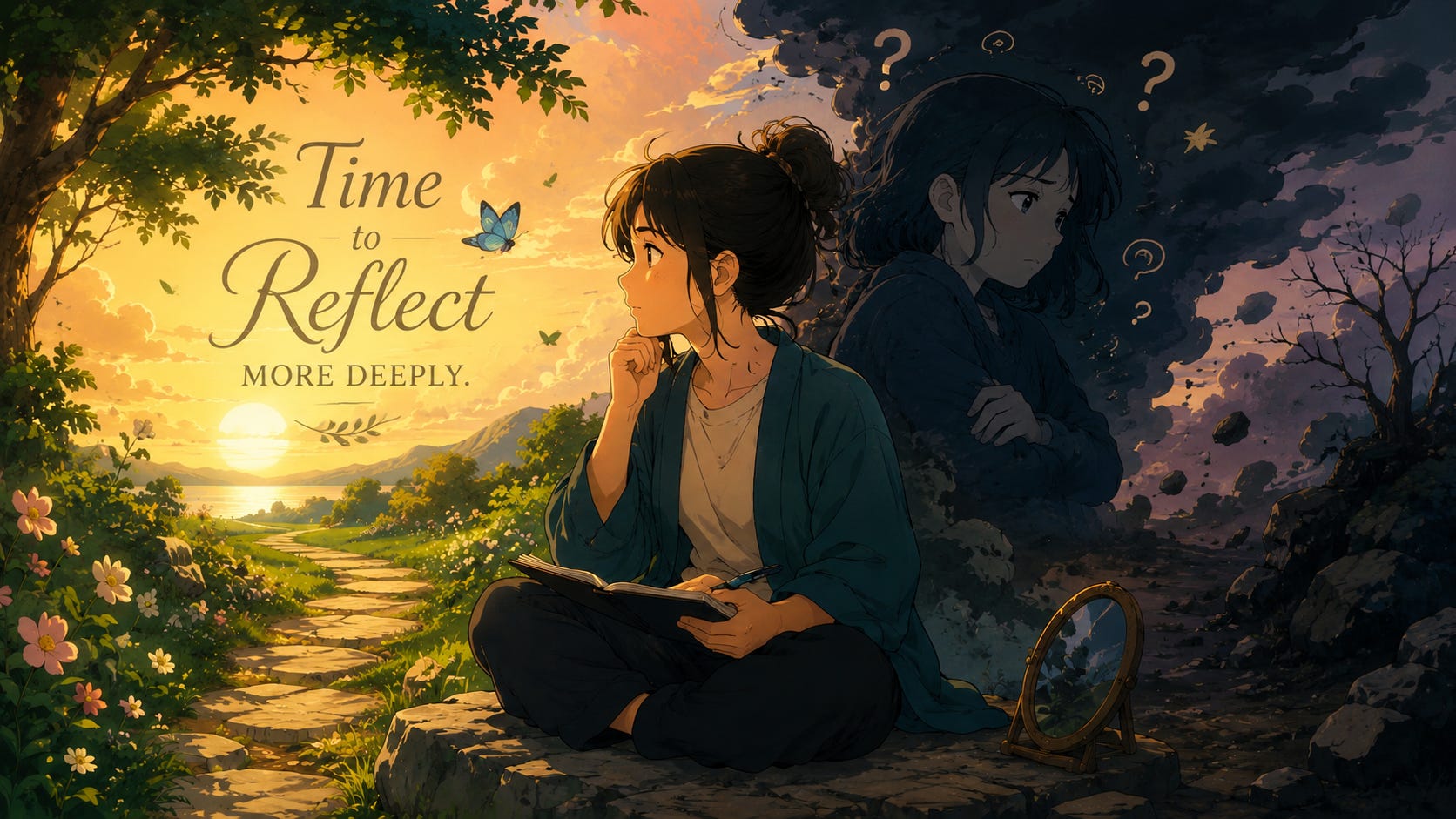
Have you ever noticed how quickly a simple preference can become a private law? We may begin with something ordinary, such as wanting someone to understand us, wanting a plan to unfold smoothly, wanting criticism to disappear, or wanting reassurance at exactly the right moment. Then, without noticing, our Inner Child starts turning that wish into a demand. It nags, criticises, complains, pesters, and pressures us as though life has broken a sacred rule by not giving us what we wanted, when we wanted it. A delayed message becomes a rejection. A different opinion becomes disrespect. A mistake becomes failure. A moment of uncertainty becomes danger. This is how our Inner Child begins building ‘The Private Kingdom’, an inner world where emotional safety is confused with control, and peace is postponed until reality agrees to obey.
In this journal post, we will explore a fresh and important doorway in our Taoist and Wu Wei Wisdom teachings: the hidden belief that emotional safety means getting ‘what we want, when we want it’. We will look at why our Inner Child may lie, avoid, distort, or hide the truth, not because it is trying to be cruel, but because it cannot yet face the truth of what it believes itself to be. We will also explore how red-light emotion can be used as a shield against accountability, how ‘Emotional Logic’ mistakes preference for truth, and how ‘Shen Logic’ guides us back to ‘The Power of Three’: truth, honesty and integrity. This teaching matters because many of us are not only trying to reduce emotional suffering; we are unknowingly trying to rule a little private kingdom where life must keep our Inner Child comfortable. The Tao offers a wiser path.
The Inner Child’s Hidden Throne
In ‘The Private Kingdom’, our Inner Child quietly places itself on the throne of reality. It does not usually announce this with arrogance. More often, it arrives disguised as fear, fairness, sensitivity, loyalty, or concern. It says, “I only want to feel safe,” yet when we look more honestly, the request may really mean, “I want people to behave as I expect; I want uncertainty removed; I want criticism softened; I want my discomfort taken seriously enough that everyone changes around me.” This is not wickedness. It is immaturity. Our Inner Child is trying to create emotional safety using the only tools it knows: control, avoidance, performance, and emotional intensity.
This is where ‘Emotional Logic’ becomes so persuasive. Our Inner Child does not begin with truth and calmly reason its way forward. It begins with an emotional reaction and then builds a case around it. Similar to firing an arrow at a tree and then painting a bullseye target around it. If we create anxiety, it says, “This proves something is unsafe.” If we create hurt, it says, “This proves they rejected us.” If we create shame, it says, “This proves we are not good enough.” The emotion becomes the evidence, and the evidence becomes the law of the kingdom. This is how the ‘Maze of Confusion’ forms, because once emotion is treated as truth, every red-light emotion becomes a command rather than a signal.
Our Tao Te Ching translation, Verse 17, offers a powerful correction: “Trying to dominate and control, it only creates fear and gains disrespect. Those who believe they are superior and know best end up being separated from the Oneness.” This verse is often read as guidance for leaders, parents, teachers, and communities, yet it also speaks directly to our inner world. When our Inner Child believes it knows best for everyone, it separates us from Oneness within ourselves. Shen no longer leads through clarity. Our Inner Child rules through urgency, pressure, and emotional protest.
‘When preference becomes law, peace becomes impossible.’
The Lie That Protects an Identity
One of the deepest insights in this teaching is that our Inner Child often lies because it cannot face the truth of who it believes itself to be. This kind of lying is not always dramatic or calculated. It may appear as a half-truth, a vague answer, a carefully edited version of events, an excuse, a silence, a performance, or the familiar phrase, “I don’t know,” when something inside us knows exactly what it is trying to avoid. The lie is usually meant to protect an identity. It protects the belief, “If they see the truth, I will lose worth.” It protects the fear, “If I admit this, I will be criticised.” It protects the old conclusion, “If I am honest, I will lose control.”
This helps us understand the childlike dishonesty with more maturity. We are not excusing it, and we are not using compassion as a hiding place. We are looking more deeply so we can guide our Inner Child rather than shame it. A lie often says, “I do not yet trust truth to hold me safely.” It reveals where our Inner Child still believes truth will destroy the image it depends on. Yet Shen does not need an image. Shen has nothing false to defend. Shen can meet the truth because Shen knows that our worth and value are innate and unchanged by confession, correction, vulnerability, or accountability.
So, when we notice ourselves hiding, exaggerating, performing, or softening the truth to manage another person’s response, we can pause and ask a wiser question: “What truth am I afraid to face within myself?” This question is not harsh. It is loving and direct. It returns us to authorship. It helps us see that the lie was never only about another person. It was about our Inner Child trying to avoid the emotional consequence of facing a belief it had protected for years.
This is where ‘The Shen Test’ becomes essential. We ask, “Is this true? Is it honest? Is it aligned with integrity?” If the answer is “no”, then we have found a doorway. We do not need to collapse into shame, because shame is often another red-light emotion our Inner Child uses to distract us from responsibility. We return to ‘The Power of Three’: truth, honesty and integrity, and take the next small step.
Emotional Safety and Control
Many people speak about emotional safety, and of course, kindness, respect, boundaries, and steadiness matter deeply. Yet our Inner Child can quietly turn emotional safety into something impossible. It may decide that safety means never being challenged, never being misunderstood, never having to wait, never being criticised, never being disappointed, and always receiving the outcome it wants. When emotional safety becomes dependent on life obeying our preferences, we step onto the ‘Carousel of Despair’.
The ‘Dual Belief System’ is also clear here. Shen understands that peace, contentment, and joy can arise from spiritual alignment, while red-light emotions often point to a belief that needs examination. Our Inner Child, using ‘Emotional Logic’, believes the outside world must change before the inside world can settle. It says, “They must apologise before I can be peaceful. They must approve before I can be confident. They must agree before I can trust myself. They must behave differently before I can create calm.” Yet we cannot put emotions into another person’s body, nor can others put emotions into ours. What we experience emotionally is created through our interpretations, beliefs, and meanings.
This is the “aha” moment. Emotional safety is not the world giving our Inner Child everything it wants. Emotional steadiness grows when we stop handing our inner authority to outcomes. If someone disagrees with us, we can still return to Shen. If a plan changes, we can still align with the Tao. If criticism appears, we can still examine it without turning it into a verdict on our values. If truth asks us for something uncomfortable, we can still respond with integrity rather than hide behind emotion.
This does not mean we accept poor behaviour or abandon wise boundaries. It means we stop confusing boundaries with emotional rule-making. A boundary says, “This is what I choose in alignment with my values.” Control says, “You must behave this way so I do not have to challenge my beliefs.” That distinction is vital. Wu wei, the effortless effort, guides us to act clearly without force. We speak honestly, choose wisely, and allow others their path without needing to become the ruler of their choices.
Leaving the Private Kingdom
Leaving ‘The Private Kingdom’ is not a grand, dramatic escape. It is a daily return to proportion. Our Inner Child may still complain and badger us when life does not follow its script. It may still create red-light emotion to gain attention, control, or sympathy. It may still use fog, confusion, or “I don’t know” to avoid accountability. Yet we can now meet these patterns with steadiness. We can say, “We are not here to punish you; we are here to understand the belief beneath this emotion.”
The ‘Golden Thread Process’ becomes our gentle method. We trace the emotion back to the belief. We ask, “What am I believing right now that makes this situation seem unsafe?” Then we listen without Criticism, Comparing and being Judgemental (CCJ). Perhaps the belief is, “I must be right to be worthy.” Perhaps it is, “If I am criticised, I am exposed.” Perhaps it is, “If I do not control this, I will not cope.” Once the belief is named, it can be tested. Once it is tested, it can be realigned.
‘Truth does not destroy us; it releases the identity fear was protecting.’
The Tao does not ask us to defeat our Inner Child. It invites us to re-educate it. We show our Inner Child that truth can be held gently, that accountability can be clean, that discomfort is not danger, and that not getting what we want does not reduce our worth. This is how we step out of ‘The Pit of Familiarity’, where old emotional patterns seem safer simply because they are known. Familiar does not mean aligned. Repeated does not mean true.
So, let us practise with the ordinary moments of life. When we want someone to respond differently, we pause. When we notice a lie forming, we soften and tell the truth in the smallest, most honest way possible. When our Inner Child pressures us to control another person’s path, we return to our own. When red-light emotion rises, we do not make it king. We interpret it, trace it, and learn from it.
As we close ‘The Private Kingdom’, let us remember that our Inner Child does not need a throne; it needs guidance. It does not need reality to obey; it needs Shen to lead. It does not need lies to survive; it needs truth spoken with compassion and courage. Never doubt yourself, even when an old emotional pattern seems loud. Loudness is not wisdom. Urgency is not truth. Keep taking small, consistent, manageable steps without expectations or Criticism, Comparing, or being Judgemental (CCJ). Let wu wei guide your next honest action. Let ‘The Power of Three’: truth, honesty and integrity become your compass. And let the little private kingdom of control open, gently and steadily, into the wide flowing landscape of the Tao, where authenticity, alignment, and Shen-led living are always waiting for us to return.
Have you ever noticed how quickly an emotion can become a performance, even when we do not consciously mean to perform? Have you ever created anger, sadness, anxiety, hurt, or shame, and then found yourself almost rehearsing the same story, tone, argument, and the same inner complaint, until the emotion seems to have taken on a life of its own?
This is a sensitive subject because we are not accusing ourselves of pretending. The emotions are real because we create them through our beliefs and interpretations. Yet the question we open in ‘The Emotional Stage’ goes beyond whether the emotion exists. We are asking what the emotion is trying to achieve, what belief it is protecting, and whether our Inner Child is using intensity as a substitute for truth. This matters for those who are just beginning to understand that no one can put emotions into their body; it also matters for those who know the teaching clearly, yet still find themselves pulled back into the old performance when their Inner Child nags, complains, pressures, and reproaches them into reacting.
When Emotion Takes the Lead
Our Inner Child often believes that if an emotion is strong enough, it must be important enough to obey. This is the foundation of ‘Emotional Logic’. It says, “This hurts, so someone must have hurt us.” It says, “We are angry, so we must be right.” It says, “We are anxious, so danger must be near.” The emotion then becomes the leading actor on the inner stage, speaking loudly, waving its arms, demanding attention, while Shen remains quiet, steady, and available beneath the noise. The problem is not the emotion itself. Emotions are natural and normal. Some, like love, peace, contentment, and joy, can originate from Shen and reflect spiritual alignment. Others are created by our Inner Child’s beliefs and signal disharmony or unresolved issues. The real teaching is learning to distinguish the source before we act.
This is where many of us become confused. We may believe that expressing an emotion proves we are being authentic. Yet authenticity is not simply saying whatever our emotional system produces in the moment. Authenticity requires ‘The Power of Three’: truth, honesty and integrity. Without these, expression can become a performance of pain rather than a pathway to clarity. Our Inner Child may create a red-light emotion and then use it to gain attention, sympathy, control, reassurance, or escape from accountability. This does not make us wrong or bad. It shows us that an old strategy is still trying to manage life from a childlike perspective. The moment we notice this, we have already taken a step closer to Shen and flow.
‘The loudest emotion is not always the deepest truth.’
The Hidden Purpose of Intensity
Emotional intensity can seem convincing because it takes up so much inner space. When our Inner Child creates a strong reaction, it can seem to explain everything. We say, “I am upset because they ignored me.” We say, “I am anxious because this situation is uncertain.” We say, “I am angry because they were unfair.” Yet in Wu Wei Wisdom, we keep returning to the deeper language of belief. We learn to say, “I created upset because I believed being ignored meant I was unimportant.” “I created anxiety because I believed uncertainty meant I could not cope.” “I created anger because I believed life must follow my rule of fairness before I can be peaceful.” This language change is not a small detail. It is the doorway out of the ‘Maze of Confusion’.
In our previous teaching, we asked a simple and transformative question: “What do we believe, and why do we believe it?” That question removes the context of the emotion. It helps us see what the emotional performance is protecting. Perhaps our Inner Child is protecting the belief that we must be chosen to be valuable, or that criticism reduces our worth. Maybe it is protecting the belief that being misunderstood proves we are alone. These beliefs can sit quietly beneath the surface for years, shaping our emotional system, until one small comment, a delayed reply, a disappointed expectation, or one uncomfortable conversation brings them back onto the stage.
A counterargument may arise here. Someone may say, “But surely we should express how we feel.” Yes, honest communication is part of alignment. Yet we must look carefully at the word honest. If we say, “You made me feel rejected,” we are not speaking from a place of accountability. We are describing an emotional experience while hiding the belief that gave rise to it. A more truthful sentence would be, “When you did not respond, I created rejection because I believed your silence meant I was not important.” That sentence is mature, honest, and more aligned with Shen. It does not blame the other person or shame ourselves. It brings the belief into the light.
Leaving the Audience
One of the most subtle ways our Inner Child keeps the performance alive is by needing an audience. Sometimes the audience is another person, or maybe it is our own mind, endlessly replaying the scene. Sometimes it is an imagined courtroom where we present evidence to prove we were hurt, wronged, rejected, or misunderstood. Our Inner Child can badger us into keeping up the explaining, proving, defending, and rehearsing. It believes that if the audience finally agrees, we will be safe. Yet Shen does not need a jury to know our worth. Shen does not need applause, rescue, or validation to remain whole.
This is where ‘The Shen Test’ becomes deeply practical. When a red-light emotion rises, we can pause and ask, “Would I teach this belief to a physical child?” Would we teach a child that another person’s approval decides their value? Or that anger is proof of strength? Would we teach a child that emotional overwhelm excuses them from truth, honesty and integrity? Or to perform suffering so others will notice them? These questions are not harsh. They are loving because they guide our Inner Child away from the old stage and back toward the steady spotlight of Shen.
Our Tao Te Ching translation offers a beautiful doorway through Verse 47: “Without stepping outside, you can know the whole world. Without looking through your window, you can know the way of the heavens.” This verse reminds us that the wisdom we seek is not found by chasing outer confirmation. We do not need to keep looking outward to prove what is happening inward. When we turn toward our own beliefs, we begin to understand the whole emotional world we have created. The more we search outside for validation, the easier it becomes to lose contact with Shen. The more honestly we look within, the more clearly we see the belief, the pattern, and the next aligned step.
This is also where wu wei, effortless effort, becomes a living practice. We are not forcing ourselves to stop emotion. We are allowing the emotion to reveal the belief without letting it take command. We pause, breathe, ask, listen, and we choose. This is a gentle, consistent, spiritual discipline. It is not dramatic, and perhaps that is why our Inner Child resists it. Our Inner Child often wants the emotional fireworks because fireworks attract attention. Shen is more like the dawn. It changes everything quietly.
‘When we stop performing the emotion, the belief finally has nowhere to hide.’
Returning to Shen
The purpose of ‘The Emotional Stage’ is not to make us suspicious of every emotion or embarrassed by our sensitivity. It invites us into a more honest relationship with our emotional system. We can honour our emotions without allowing them to become masters. We can listen to our Inner Child without giving it the script of our life. We can express ourselves clearly while remaining accountable for the beliefs that shape our experience. This is how we step off the ‘Carousel of Despair’. We stop asking, “Who made me feel this way?” and begin asking, “What interpretation did I choose, and does it align with my Shen?”
There is a profound freedom in recognising this truth. If no one can place rejection within us, then no one can take our worth away. If no one can create our sense of being loved, then no one can make us unlovable. If our peace arises from alignment with our Shen rather than circumstances, then it cannot be stolen by the choices, opinions, or behaviour of others.
This understanding does not distance us from people; it transforms the way we relate to them. We no longer seek emotional security through control, approval, or expectation. Instead, we meet others with openness and authenticity. We can love without clinging, speak honestly without attacking, establish healthy boundaries without resentment, and, when necessary, walk away with quiet dignity rather than turning our departure into a display of superiority, self-pity, or victimhood.
So, our practice is beautifully simple, although not always easy. When a red-light emotion appears, we pause and use the ‘Golden Thread Process’, gently tracing the emotion back to the belief that gave it life. We name that belief honestly, examine it through the wisdom of Shen, and ask whether it aligns with truth, honesty, and integrity, or whether it has arisen from our Inner Child’s ‘Emotional Logic’. From there, we choose one small, consistent, manageable step that moves us back into alignment.
That step may be as simple as leaving the reactive message unsent. It may be speaking one honest sentence instead of ten defensive ones. It may be letting go of the endless replay of a difficult conversation and turning our attention towards the belief that created the emotion in the first place. Sometimes it is having the humility to apologise for blaming someone else for an emotion we created ourselves. None of these actions seems dramatic on their own, yet together they reshape the direction of our lives.
Every truthful choice gently reassures our Inner Child that authenticity is safer than performance, that accountability is kinder than avoidance, and that peace is never found by controlling life but by living in harmony with the Tao. This is how we cultivate the effortless effort of wu wei, one honest choice, one compassionate insight, and one manageable step at a time.
As we close ‘The Emotional Stage’, let us leave with compassion rather than criticism. Our Inner Child never needed condemnation; it has always needed patient guidance, understanding, and the quiet reassurance that it no longer has to perform to be worthy. Every moment of awareness is already a step towards freedom, every honest insight a gentle return to ourselves, and every choice rooted in truth strengthens the steady wisdom of our Shen.
The Tao has never asked us to become perfect. It simply invites us to become more authentic, more present, and willing to live in harmony with truth, honesty, and integrity. This is the effortless effort of wu wei: not forcing life to change, but allowing ourselves to change the way we meet life.
So let us leave this stage with gratitude, knowing we no longer have to perform for acceptance, applause, or approval. We can be who we truly are. With each small, consistent, manageable step, we move a little closer to the quiet confidence that has always lived within us. And as the noise of old beliefs begins to soften, we discover something wonderfully reassuring: the peace we have been searching for was never waiting beyond the next performance. It has been quietly waiting within our Shen all along, patiently guiding us home to the effortless flow of the Tao.

Have you mistaken silence for peace and emotional compliance for harmony? In this deeply reflective Journal Post, we explore the hidden emotional cost of people-pleasing, conflict avoidance, and the suppression of our truth to keep others comfortable. Drawing on Taoist wisdom and the effortless flow of wu wei, we uncover why authentic harmony cannot exist when we abandon ourselves in the process. Together, we will examine how our Inner Child learns to confuse safety with self-erasure, why calmness rooted in fear is not true peace, and how Shen gently guides us back toward truthful boundaries, emotional alignment, and authentic living.
Have you ever kept quiet to avoid upsetting someone? Have you ever walked away from a conversation, replaying everything you “should have said,” yet convincing yourself that staying silent was the “spiritual” thing to do? Do you find yourself exhausted by trying to keep everyone calm, comfortable, and emotionally settled while quietly neglecting your own needs? Perhaps you tell yourself you dislike conflict, but beneath that dislike lies something deeper: a fear that disagreement itself threatens your emotional safety, worth, or sense of belonging.
Many of us grow up believing harmony means avoiding tension at all costs. We learn to soften our opinions, swallow our frustrations, and carefully manage others’ moods, hoping that if we stay agreeable enough, life will remain peaceful. At first glance, this can seem kind, compassionate, and emotionally mature. Yet Taoist wisdom invites us to look deeper. What if much of what we call “keeping the peace” is not peace at all? What if it is fear disguised as harmony?
This is one of the great hidden misunderstandings of emotional life. Our Inner Child often learns very early that calmness in the environment equals safety. If raised around criticism, volatility, emotional unpredictability, or conflict, our Inner Child quickly becomes emotionally strategic. It studies faces, tones, reactions, and tensions like a weather forecast, trying to predict storms before they arrive. It learns to appease, soften, overexplain, and emotionally accommodate. Not because it is weak, but because it believes this is how survival works.
Over time, this emotional strategy becomes a personality trait. We begin calling ourselves “easy going,” “peaceful,” or “the calm one.” Yet inwardly, something else is happening. Resentment quietly builds. Anxiety rises before difficult conversations. Boundaries become blurred. We say “yes” when we mean “no”. We apologise for things that require no apology. We become emotionally exhausted from carrying the comfort of everyone around us while abandoning our own authenticity.
The Tao reminds us that true harmony cannot be built upon self-rejection. Wu wei, often translated as effortless effort, does not teach passive compliance. It teaches alignment. It teaches us to act naturally, honestly, and appropriately without force, performance, or emotional manipulation. Water flows gently around obstacles, yet over time, it reshapes mountains. It does not scream to prove its strength, nor does it shrink itself to avoid existence. It simply remains true to its nature.
This is the difference between authentic calm and fearful calm. One emerges from Shen, grounded in truth, honesty, and integrity. The other emerges from the Inner Child’s need to emotionally future-proof life by preventing discomfort before it happens. One is peaceful. The other is anxious beneath the surface.
Many people do not realise they are trying to control others emotionally through people-pleasing. This can seem confronting at first because the intention often appears caring. Yet our Inner Child secretly believes: “If I can keep them calm, then I will finally be safe.” This transforms kindness into emotional management. We begin to carry responsibility for emotions that were never ours to bear. We monitor reactions constantly. We become hyperaware of disappointment, criticism, silence, or tension. The emotional atmosphere of others begins to dictate our own inner state.
Taoist wisdom gently challenges this exhausting pattern. We cannot create authentic harmony by abandoning ourselves. We cannot create peace externally while remaining internally divided. The Tao asks us to stop gripping life so tightly and return to the natural centre of our Shen. As the Tao Te Ching reminds us, “Returning to the root is stillness.” Stillness is not emotional suppression. It is the calm clarity that emerges when we stop betraying our truth to maintain temporary comfort.
This does not mean becoming harsh, argumentative, or emotionally reactive. In fact, the opposite is true. Authentic boundaries are rarely loud. They do not require emotional explosions or dramatic ultimatums. They emerge quietly from self-respect and alignment. Yet for many people, this becomes difficult because they were never taught the language of calm boundaries.
Our Inner Child often learns only two emotional dialects: appease or explode. Silence or eruption. Compliance or resentment. So, when adulthood requires mature communication, many people feel emotionally lost. They know how to suppress themselves and how to react emotionally when overwhelmed, but they do not know how to remain calm while remaining truthful.
This is why boundaries can seem so uncomfortable initially. We are not simply changing behaviour. We are learning an entirely new emotional language. A language rooted not in fear, but in authenticity. Imagine calmly saying: “I understand your opinion, but I see this differently.” Or: “I am not comfortable with being spoken to that way.” Or even more simply: “No, that does not work for me.”
To Shen, these are balanced and natural statements. But to the fearful Inner Child, they may seem dangerous because they risk disapproval, tension, or rejection. The Inner Child reproaches us with old emotional logic: “If people become upset, we are unsafe.” Yet this belief belongs to the past, not the present.
One of the deepest Taoist teachings is recognising that emotions are not commands. They are signals. Anxiety before setting a boundary does not mean the boundary is wrong. It often means the Inner Child is confronting an old belief about safety and acceptance. This is why wu wei becomes so important. Rather than forcing ourselves aggressively or collapsing into avoidance, we practise effortless effort. We breathe, remain centred, and allow discomfort without becoming ruled by it. We respond from Shen rather than react out of emotional panic.
In our earlier teachings, we explored how our Inner Child creates emotional storms through inherited beliefs and interpretations. This understanding becomes transformative because it reminds us that emotional discomfort is not proof that we are doing something wrong. Often, it is evidence that an old emotional structure is loosening.
Many people remain trapped in emotional exhaustion because they confuse self-abandonment with kindness. Yet there is nothing spiritual about constantly betraying ourselves. There is nothing compassionate about allowing resentment to quietly poison our relationships while pretending everything is “fine.” Real compassion includes ourselves. Real harmony includes honesty. The Tao does not ask us to become emotionally absorbent. It asks us to align emotionally. This distinction changes everything.
When we stop taking responsibility for managing everyone else’s emotional reactions, something remarkable happens. We begin reclaiming energy we never realised we had lost. Conversations become simpler. Our nervous system softens. We stop rehearsing imaginary arguments in our heads. We stop analysing every facial expression or tone of voice. Life becomes less about emotional survival and more about authentic participation.
This also changes the way we understand conflict itself. Conflict is not always a sign that harmony has failed. Sometimes conflict is simply two truths meeting honestly. Our Inner Child fears disagreement because it interprets tension as danger. Shen understands that respectful disagreement is part of life’s natural movement. Day becomes night. Summer becomes autumn. Rivers rise and fall. The Tao flows through continuous contrast and change. Why should human relationships be any different?
This does not mean we seek conflict. It means we no longer fear it so deeply that we disappear in our attempts to avoid it. One of the most liberating truths we can remember is this: other people’s emotional reactions are not always evidence that we have done something wrong. Sometimes people become uncomfortable simply because they have stopped participating in unhealthy patterns. The person who benefited from our silence may resist our new honesty. The person accustomed to emotional compliance may struggle when we begin setting calm boundaries. This does not mean we are failing. It means the emotional dance is changing.
The Tao teaches us that alignment often requires releasing old patterns that once seemed necessary for protection. Like water leaving stagnant ground to flow freely again, we too must allow movement where fear once created emotional rigidity. This is not selfishness. It is authenticity.
Perhaps this is why so many people remain exhausted despite trying so hard to be “good.” Their goodness is rooted in fear rather than truth. Their calmness is conditional. Their peace depends entirely upon everyone else remaining emotionally manageable. But life does not work this way. People will disagree. Voices may rise. Opinions may clash. Expectations may not always be met. The Tao never promised control. It offered flow. And flow requires trust.
Trust that we can remain grounded even when others are upset. Trust that disagreement does not erase our worth. Trust that Shen remains whole even when external harmony temporarily disappears.
This is the deeper return to authenticity. Not becoming harder or emotionally distant. But becoming honest enough to remain ourselves within the movement of life. In one of our earlier teachings, we wrote: “We are already whole.” That truth matters deeply here because many people-pleasing patterns emerge from the hidden belief that worth depends upon being liked, approved of, or emotionally useful to others. Yet Shen does not beg for validation. Shen does not shrink itself to remain lovable. Like the Tao itself, Shen is truth, honesty and integrity.
So, perhaps the question is no longer: “How do we keep everyone happy?” Perhaps the deeper question becomes: “Can we remain truthful without abandoning ourselves?” That is authentic harmony. Not perfection, emotional control or universal approval. But the quiet ability to remain aligned with ‘The Power of Three’: truth, honesty, and integrity, even when life becomes emotionally uncomfortable.
As we continue walking this Taoist path together, let us gently release the old belief that peace must always come through silence. Let us stop measuring our spirituality by how much discomfort we can absorb or how often we abandon ourselves to keep others comfortable. Instead, let us discover the deeper stillness that naturally unfolds when authenticity and compassion walk hand in hand. For true harmony is not the absence of disagreement; true harmony is the absence of self-abandonment.
May we have the quiet courage to trust our Shen, even when our Inner Child questions the path ahead. Every honest conversation, healthy boundary, compassionate choice, and every moment we remain true to ourselves is another step towards living in effortless harmony with the Tao. We no longer need to prove our worth through pleasing, fixing, rescuing, or enduring. Our worth has never depended upon another person’s approval; it has always rested peacefully within us.
So, let us move forward with open minds and hearts, gentle confidence, and an unwavering commitment to truth, honesty, and integrity. Let us remember that authentic harmony is not something we must search for or earn. It quietly emerges each time we choose alignment over fear, understanding over reaction, and wisdom over emotional habit. As we trust the effortless flow of wu wei, we discover that life becomes lighter, relationships become more genuine, and our Inner Child gradually learns that it is finally safe to stop performing and rest in the quiet strength of our Shen.
Believe in yourself. Trust your unique path. You have always possessed the wisdom, resilience, and quiet strength needed for this journey. With every small, consistent, manageable step, you are already becoming a living expression of authentic harmony, and in doing so, you gently encourage others to discover that same peace within themselves.
Moments of Inspiration…
Which Self Doubts?
When we say, “Never doubt yourself,” it sounds inspiring, but let us look more deeply. What part of us is doubting? What part of us is being doubted?
This question opens an important doorway. Our Shen does not doubt our worth, our value, or our capacity to grow. Shen is steady. Shen is the quiet inner knowing that remains present beneath fear, confusion, and emotional noise. The part that doubts is usually our Inner Child, using old beliefs, past disappointments, and emotional logic to question what Shen already knows.
So, self-doubt is not proof that we are incapable. It is a signal that a frightened part of us needs guidance. Our Inner Child may whisper, “What if we fail?” “What if we are judged?” “What if we are not enough?” But these questions are not truth; they are echoes of old protection patterns.
Wu wei teaches us to respond with effortless effort. We do not fight the doubt or criticise ourselves for creating it. We pause, breathe, and ask with kindness, “Who is speaking within me right now?” Then we guide our Inner Child back towards truth, honesty, and integrity. Never doubt yourself does not mean pretending fear is absent. It means remembering that fear is not the leader. Shen is.
Affirm: “I trust the quiet wisdom of my Shen, and I gently guide my Inner Child from doubt into courage, clarity, and flow.”
Continue exploring this teaching in your own life today. Notice where doubt appears, ask which part of you is speaking, and return, one honest breath at a time, to the steady wisdom that has never left you.
In the Next ‘Inner Circle’ (Paid) Journal…
Wisdom Unlived
Feedback Without Fear
Bargaining With Truth
Moments of Inspiration
In the Next Free Journal…
Borrowed Chairs
Fiction We Defend
Borrowed Destiny
Moments of Inspiration
Journal #F088 06/07/2026
Contact: info@wuweiwisdom.com
Website: www.wuweiwisdom.com
YouTube: www.youtube.com/user/WuWeiWisdom
Facebook Community: www.facebook.com/groups/wuweiwisdomcommunity/